


Listening
[ to heal ]

Listening is part of our history.
The Freedom Fast is a celebration of the 250th Anniversary of the Signing of the Declaration of Independence. Fifty-six delegates from 12 colonies (Georgia didn’t participate) met in Philadelphia to determine their response to the Stamp Act and what became known as the Intolerable Acts. They were slave owners, merchants, doctors, lawyers, craftsmen, and one member of the clergy. They were Anglicans, Methodists, Baptists, Arminians, Congregationalists, Quakers, and other faiths, and some without any allegiance to a particular faith tradition.
What was required of them was the need to LISTEN.
Trust was a rare commodity in that environment. They needed to build trust and listen to each other. To facilitate listening they held dinner meetings, small group meetings, they traveled together and much more. Ben Franklin even opened his wine cellar to “grease” the conversation.
They knew that to get to E Pluribus Unum (Out of Many One), they needed to be together and to listen.
The tools that follow invite us into that same practice of listening, offering simple ways to create the time, space, and attention required to move from many toward one.

Listening sounds simple. Most of us would say we do it all the time. But if we’re honest, much of the time we’re only half listening.
While someone is speaking, there’s often another conversation running quietly in our minds. We’re forming a response. We’re deciding whether we agree. We’re correcting details. We’re preparing our next point.
This doesn’t make us
careless or unkind.
It makes us human.
But the way we listen shapes what becomes possible.
Listening to understand creates a different outcome than listening just long enough to reply. One builds trust and connection. The other often leaves people feeling unseen.
This practice of listening to heal is a gentle invitation to notice how you listen, and to experiment with listening differently.
Getting the Most out of Dialogue
Inside a conversation, listening has its own rhythm. Here are some ideas to find your own.
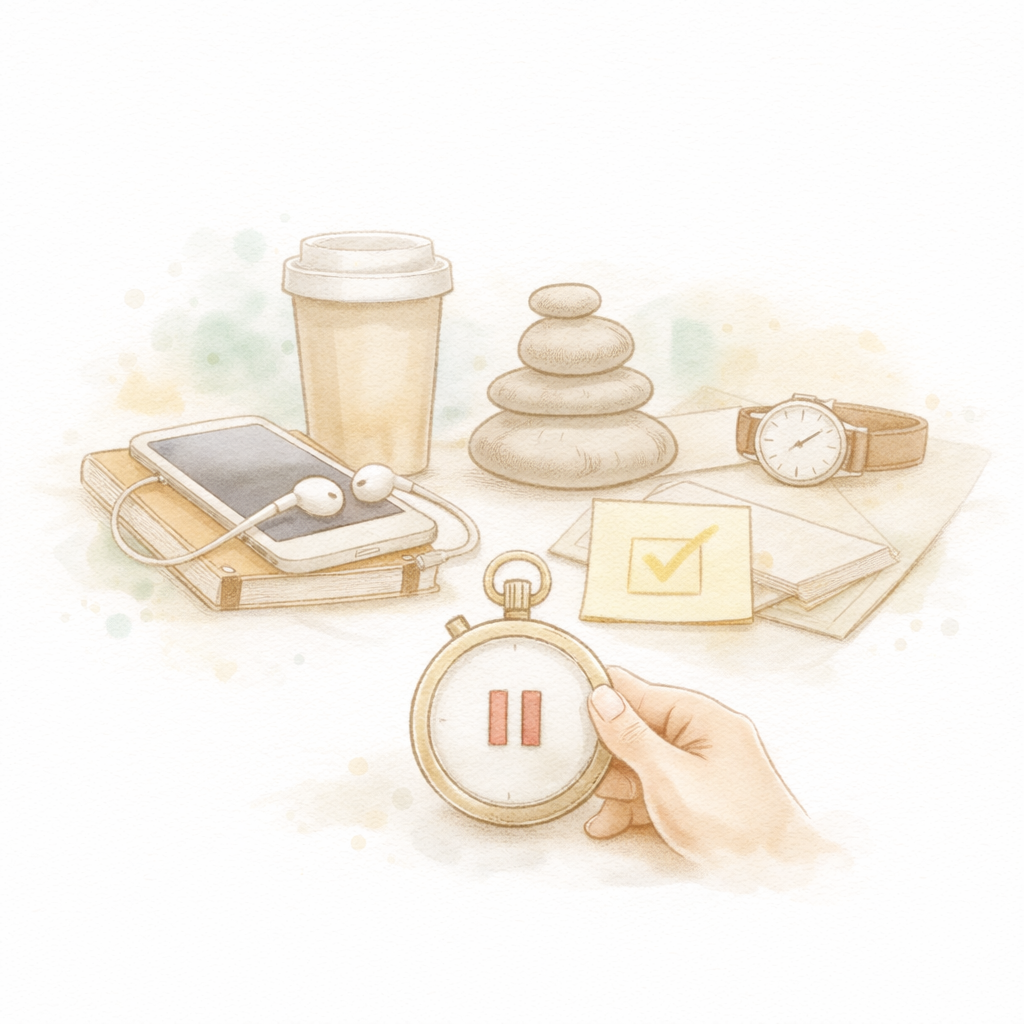
Set Your
Intention
BEFORE THE DIALOGUE
The pause itself is the practice.
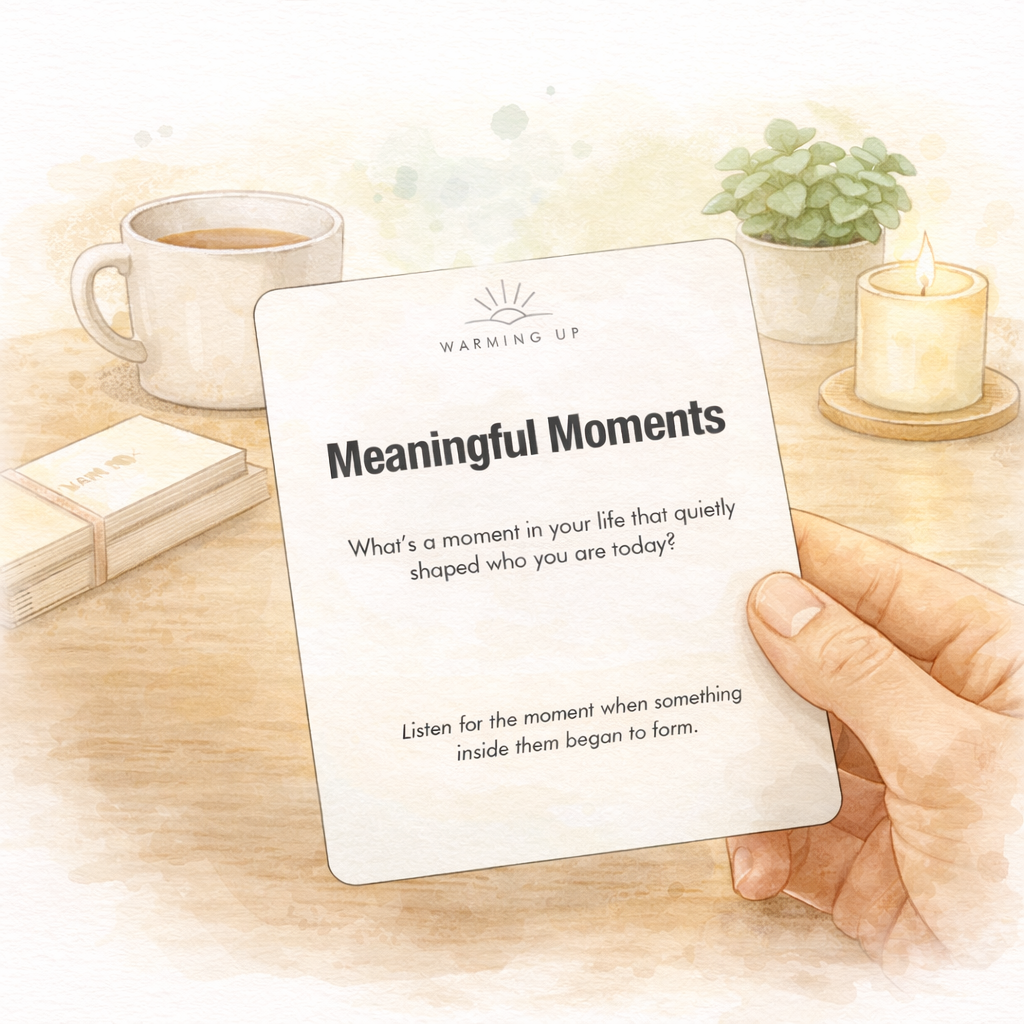
Begin by setting something down that makes listening harder for you. This might be:
The urge to respond right away
Multitasking during a conversation
Background noise or constant input
The need to explain, correct, or persuade
Rushing through moments that usually feel hurried
These are offered as possibilities, not instructions. Choose what feels relevant in your own life.
DURING THE DIALOGUE
Listen With
Your Heart
Listening itself is the work.
Find someone you’re willing to be present with, and begin there. Start your conversation with one simple posture: presence.
As you listen, hold this question lightly in the background:
What do I notice in myself when I slow down
and truly listen?
Remember, you don’t need to solve anything.
You don’t need to agree.

Take It
With You
AFTER THE DIALOGUE
Following your dialogue, take a moment to reflect.
You might ask yourself:
Where did I see/hear myself in the other person?
Where did I recognize an earlier version of myself in someone else?
What experiences or paths might have shaped the way they see the world?
How have I changed over time, and what helped me change?
Where did I notice myself reacting instead of listening?
Reflection helps us remember that none of us arrived fully formed. Everyone we meet is in the middle of becoming, just as we are.
Reflection is the insight.
It asks only that we stay open, even when it would be easier to retreat into what we already know, or think we know.
Listening to heal doesn’t require special skill.
The most basic and powerful way
to connect to another person is to listen.
Just listen.
~ Rachel Naomi Remen
Physician, author, and pioneer in relationship-centered care

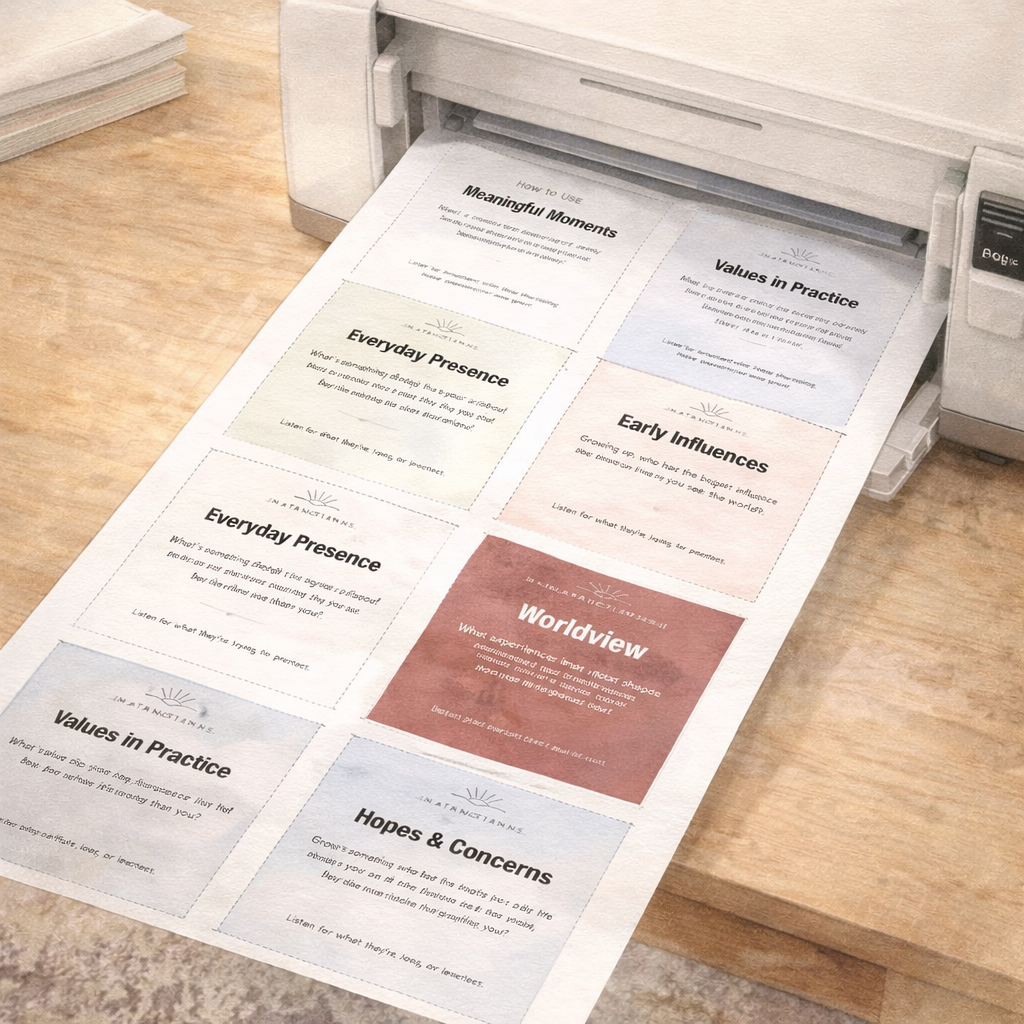
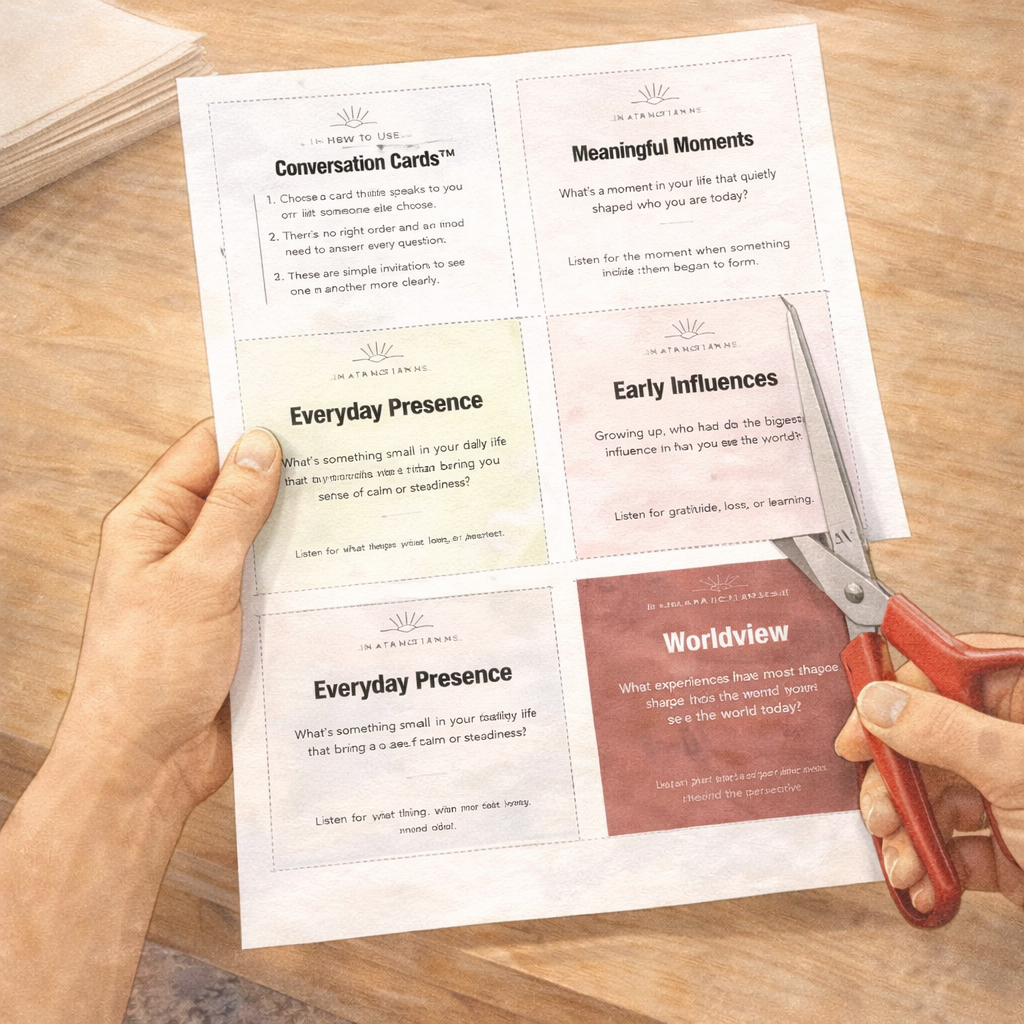
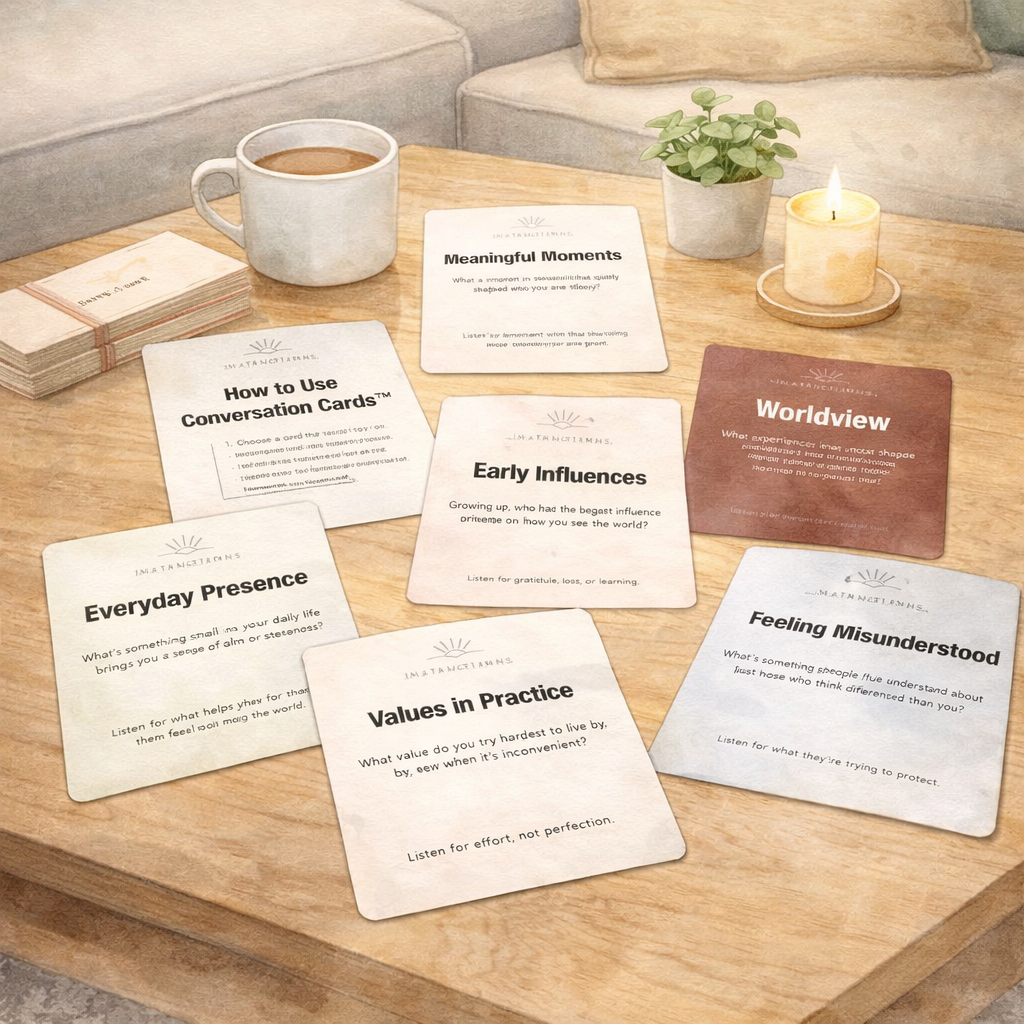
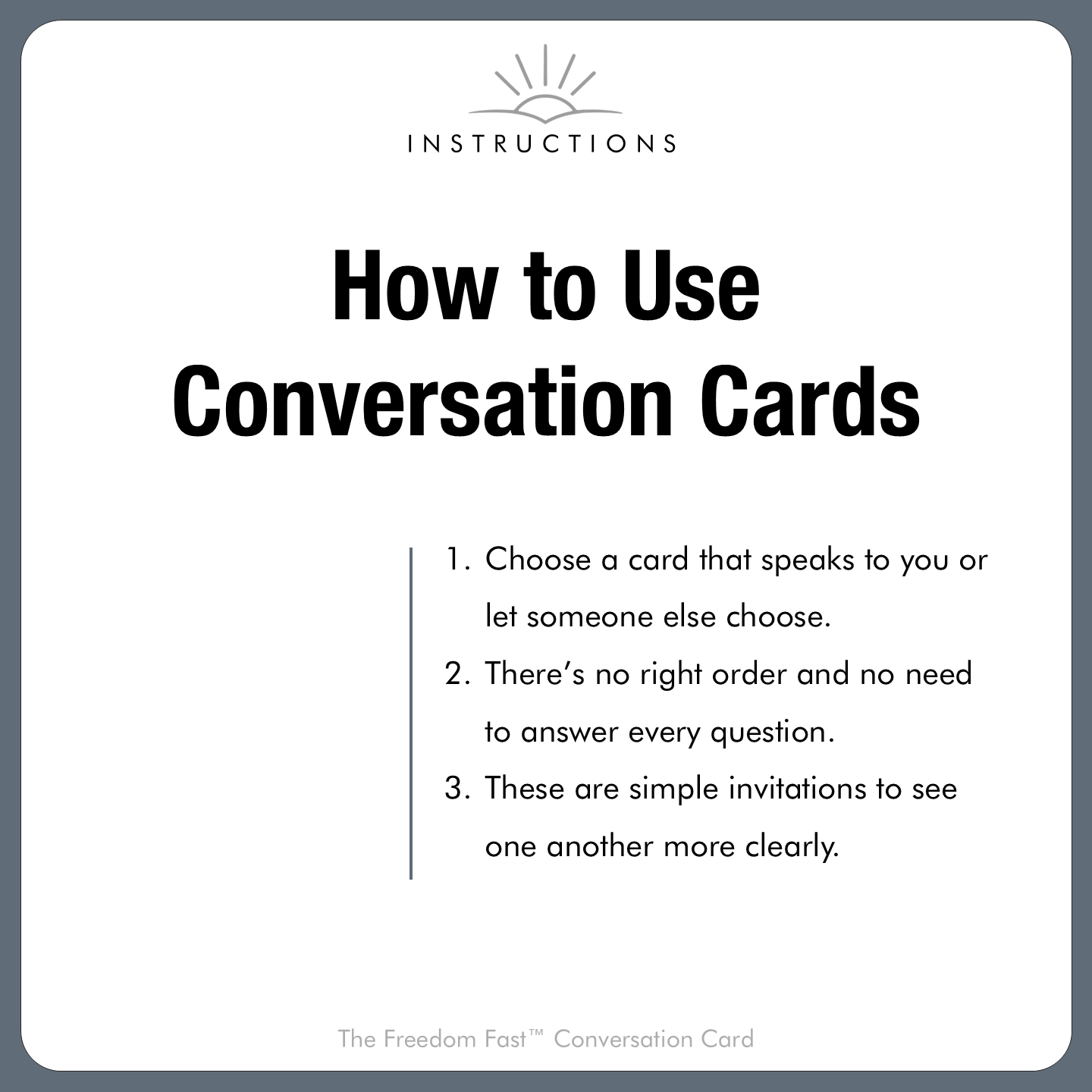
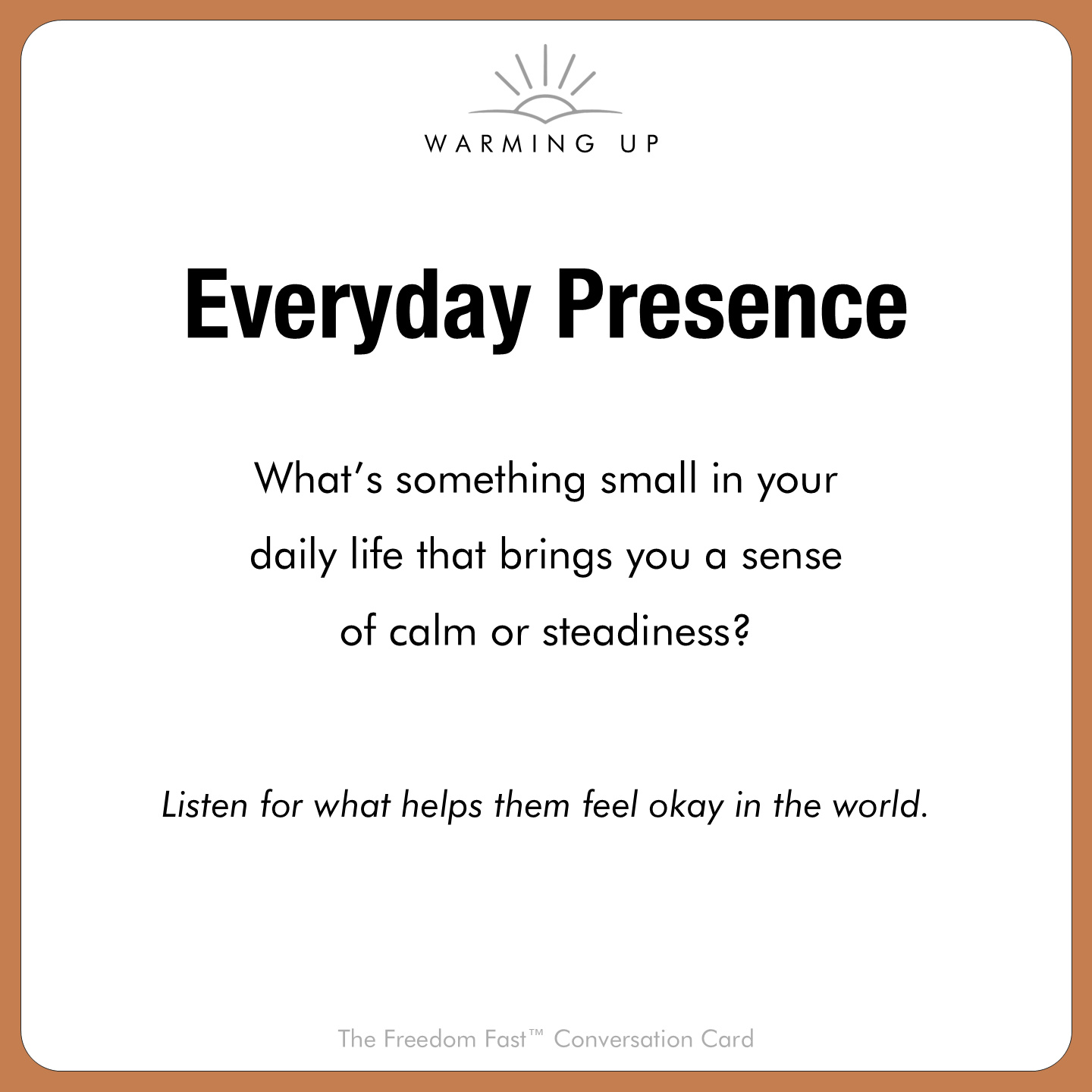
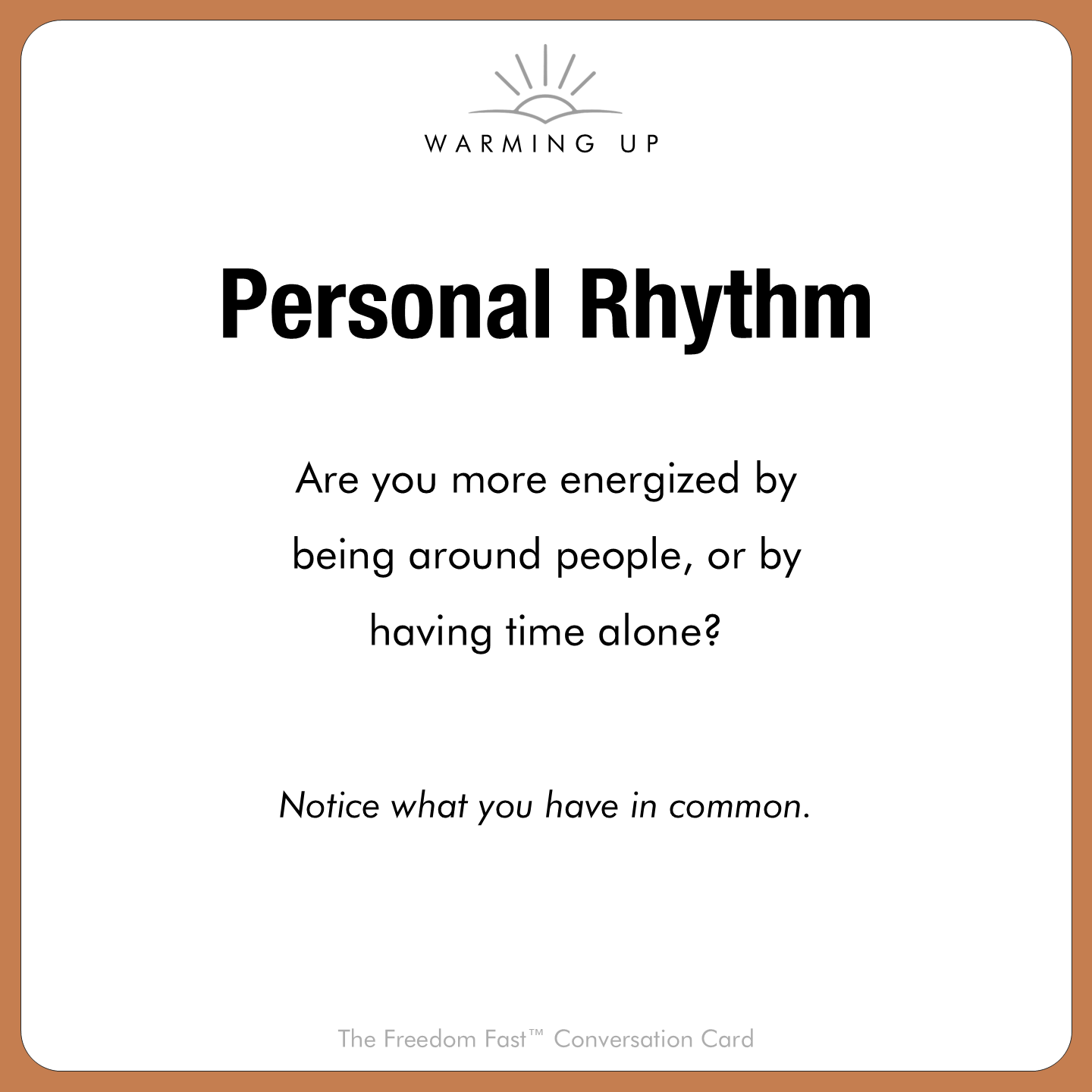
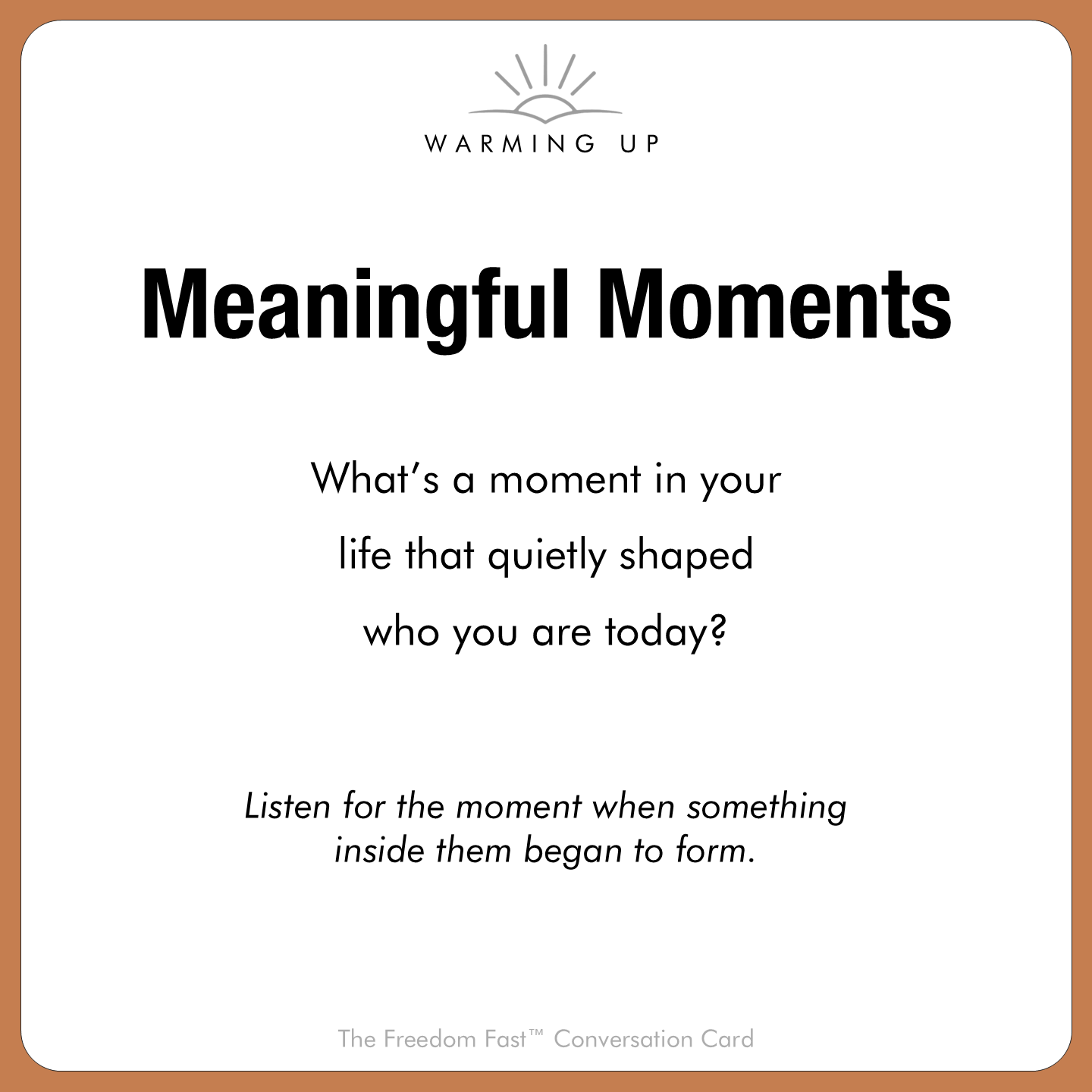
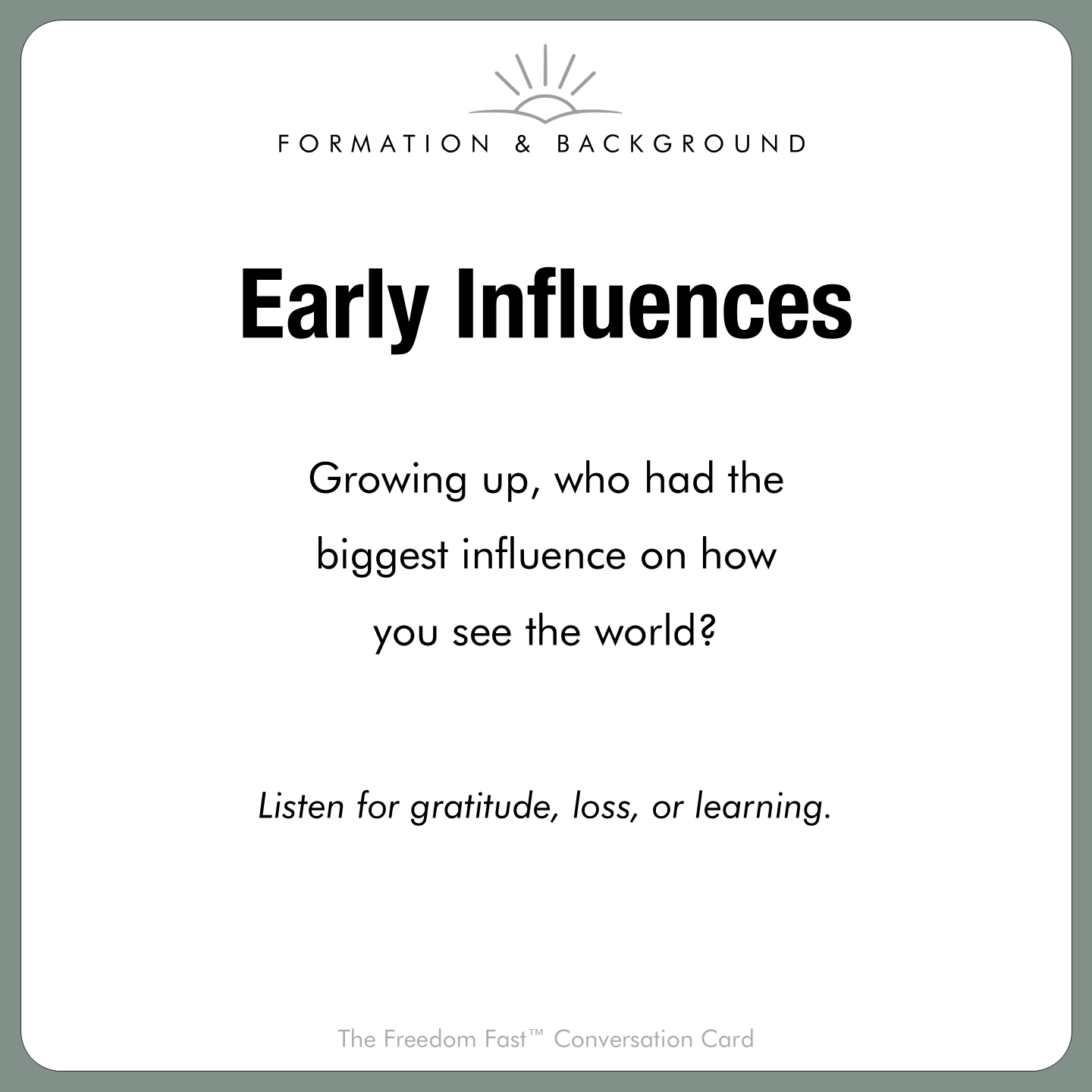
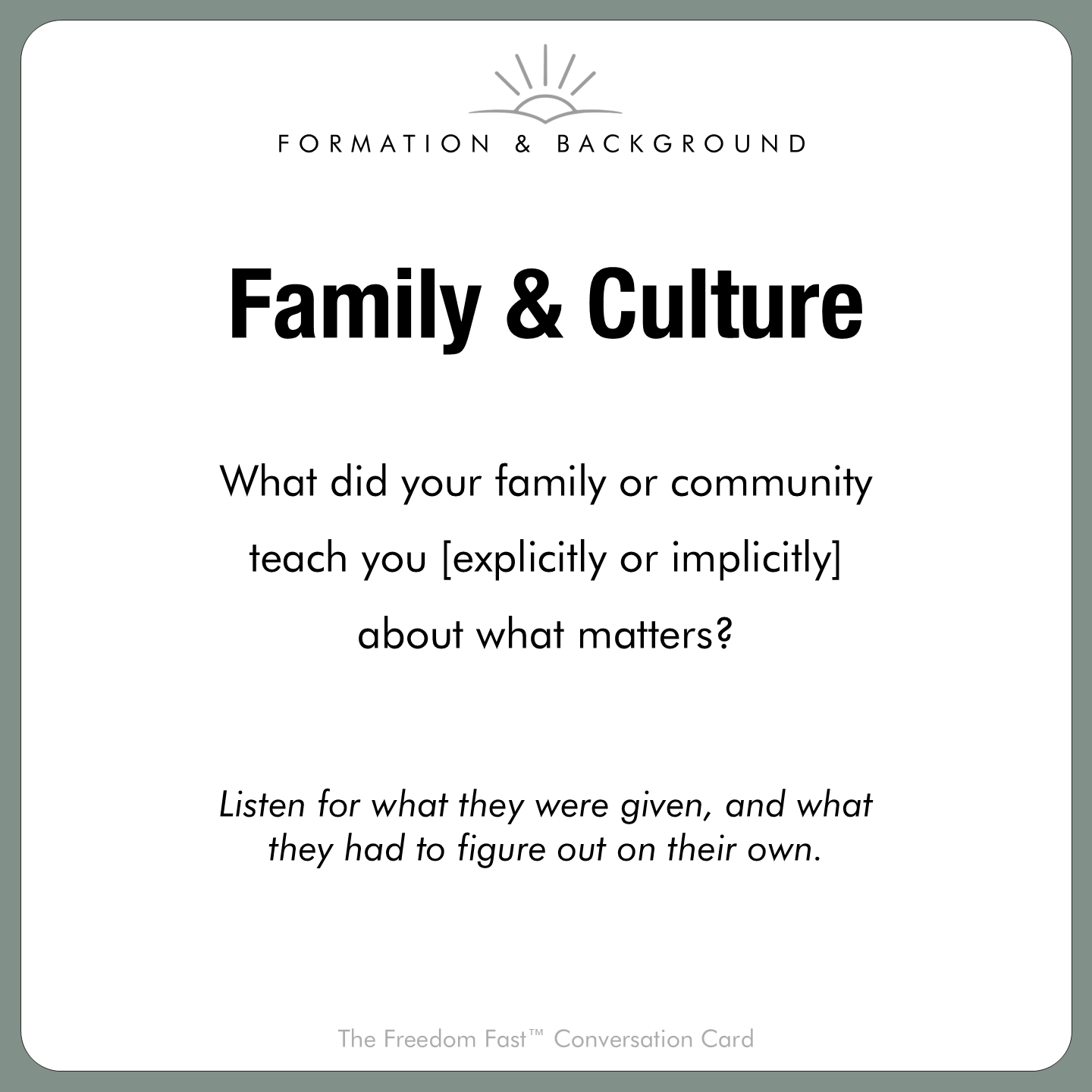
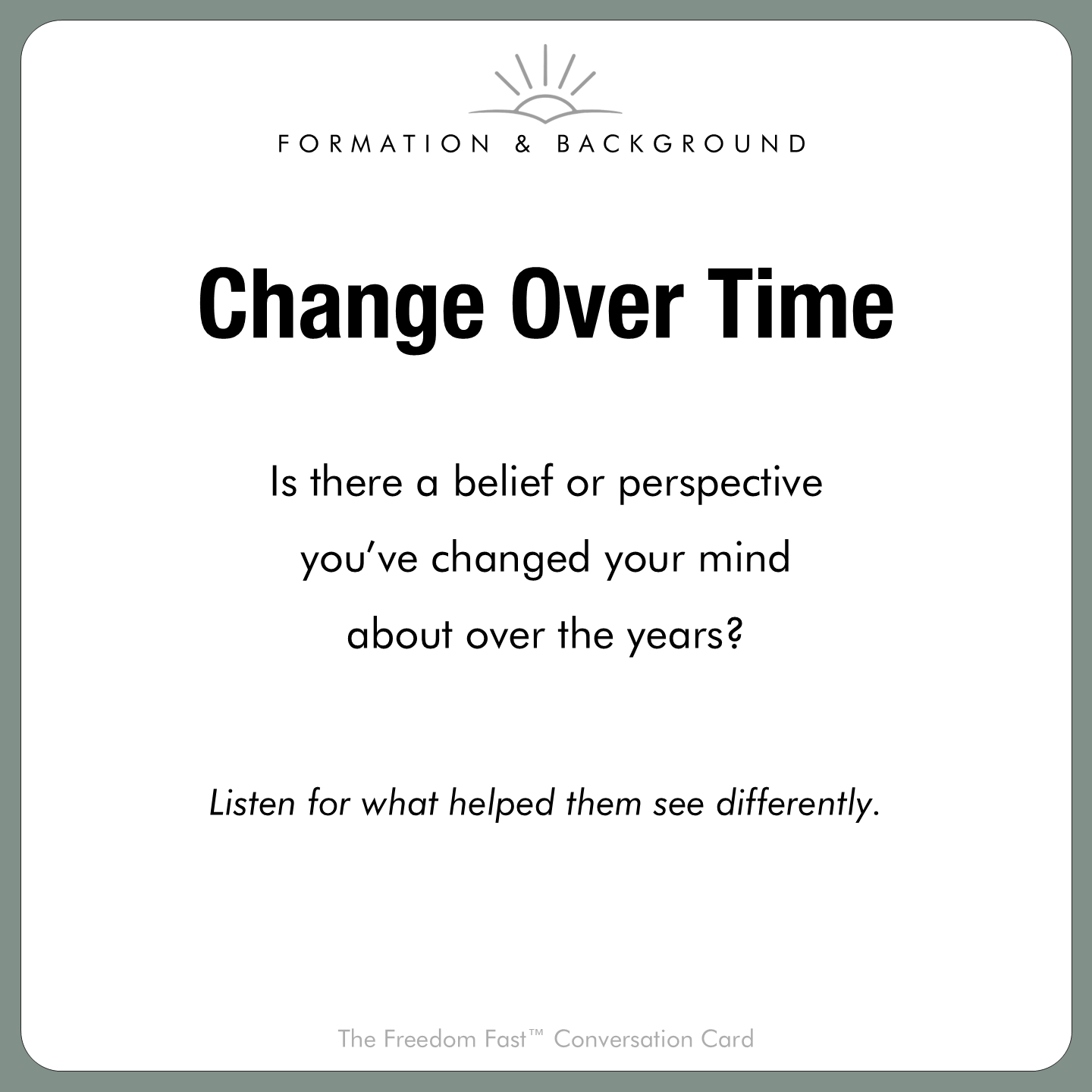
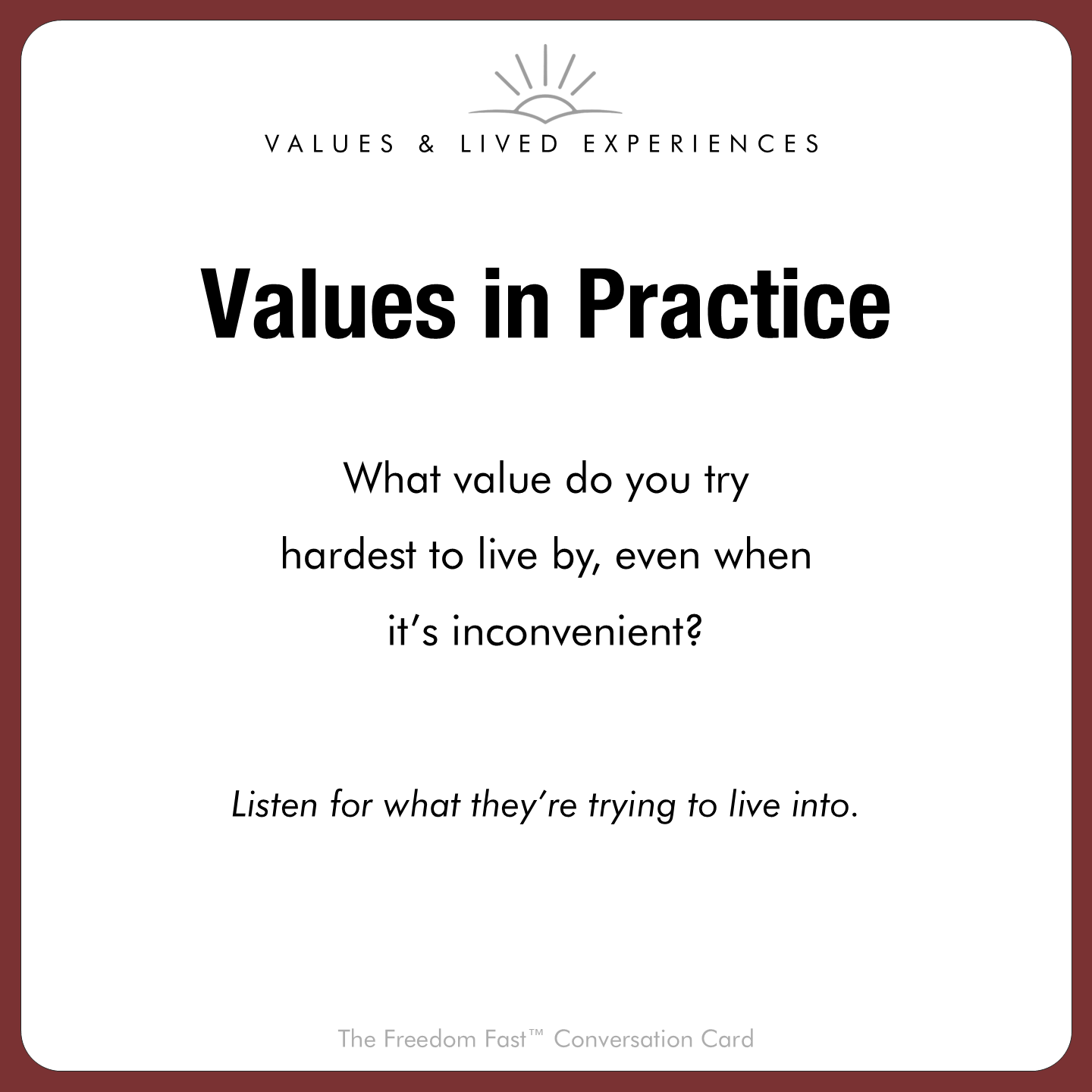
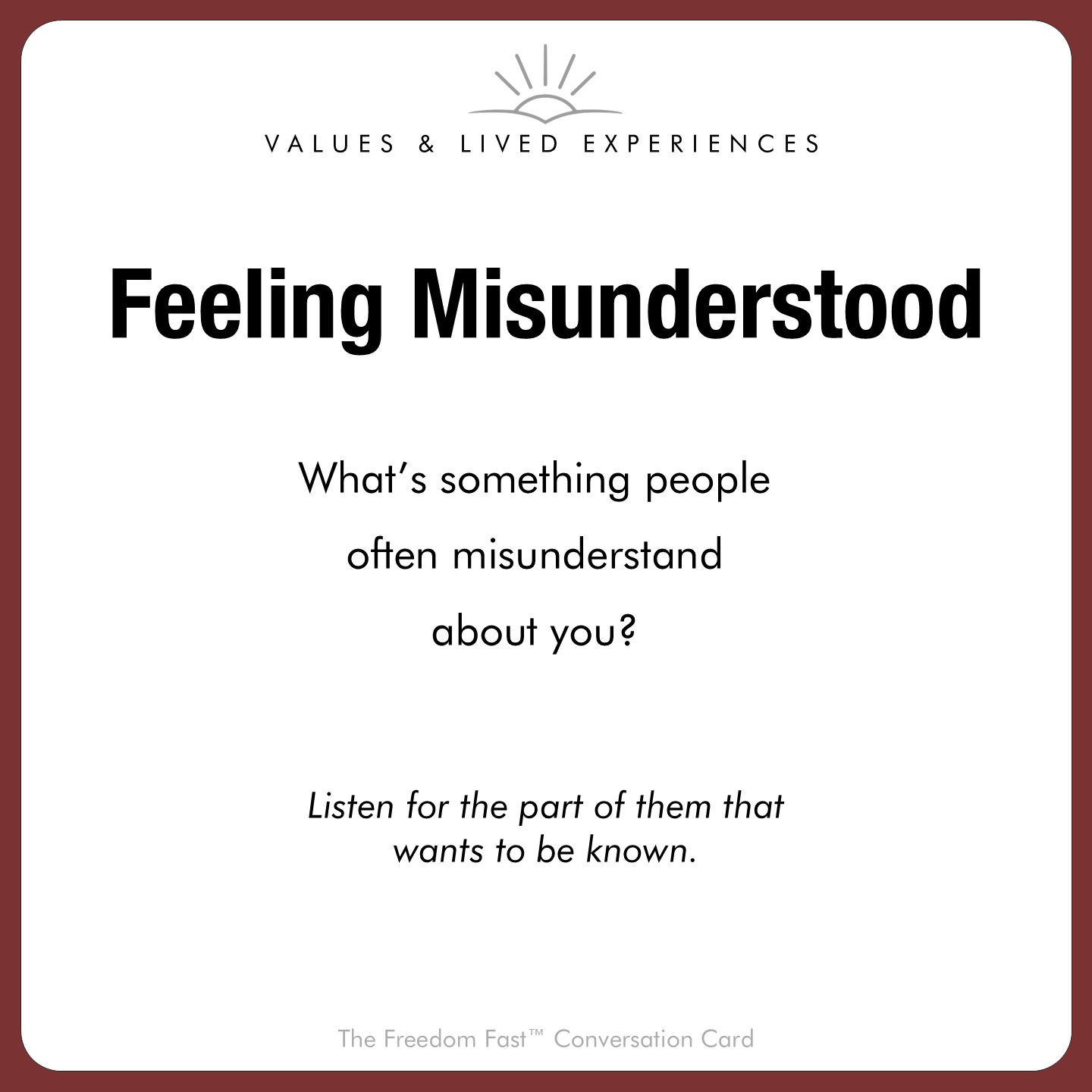
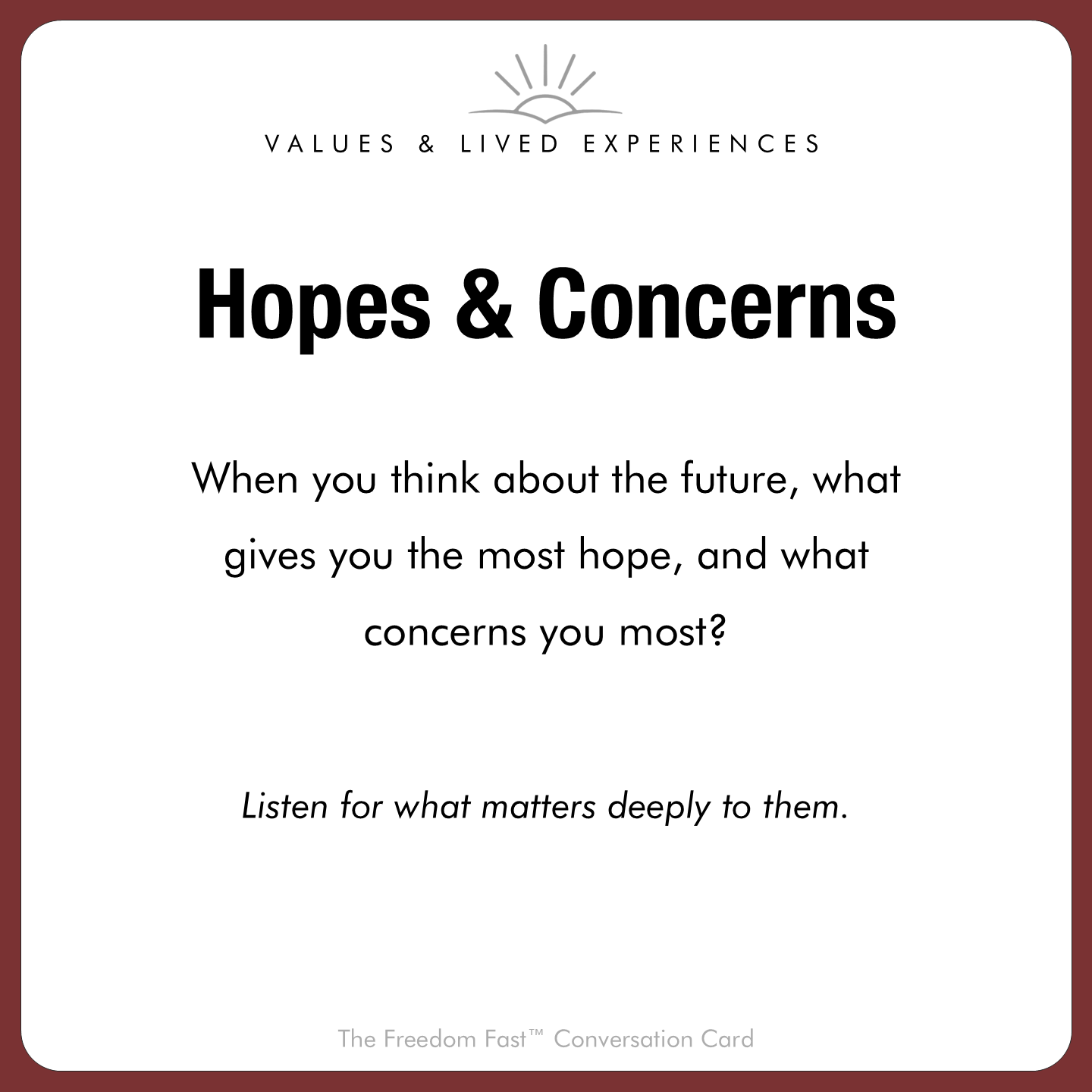
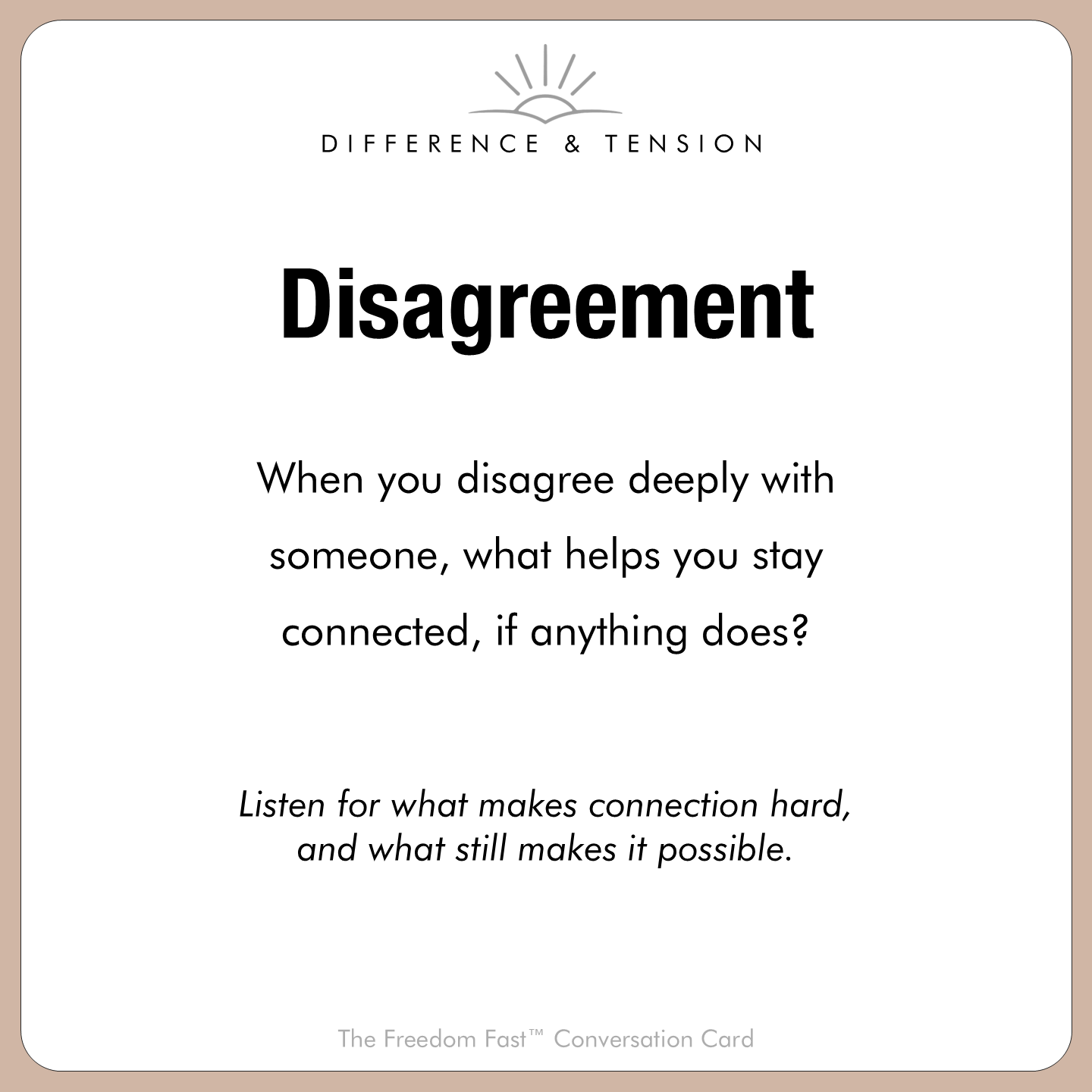
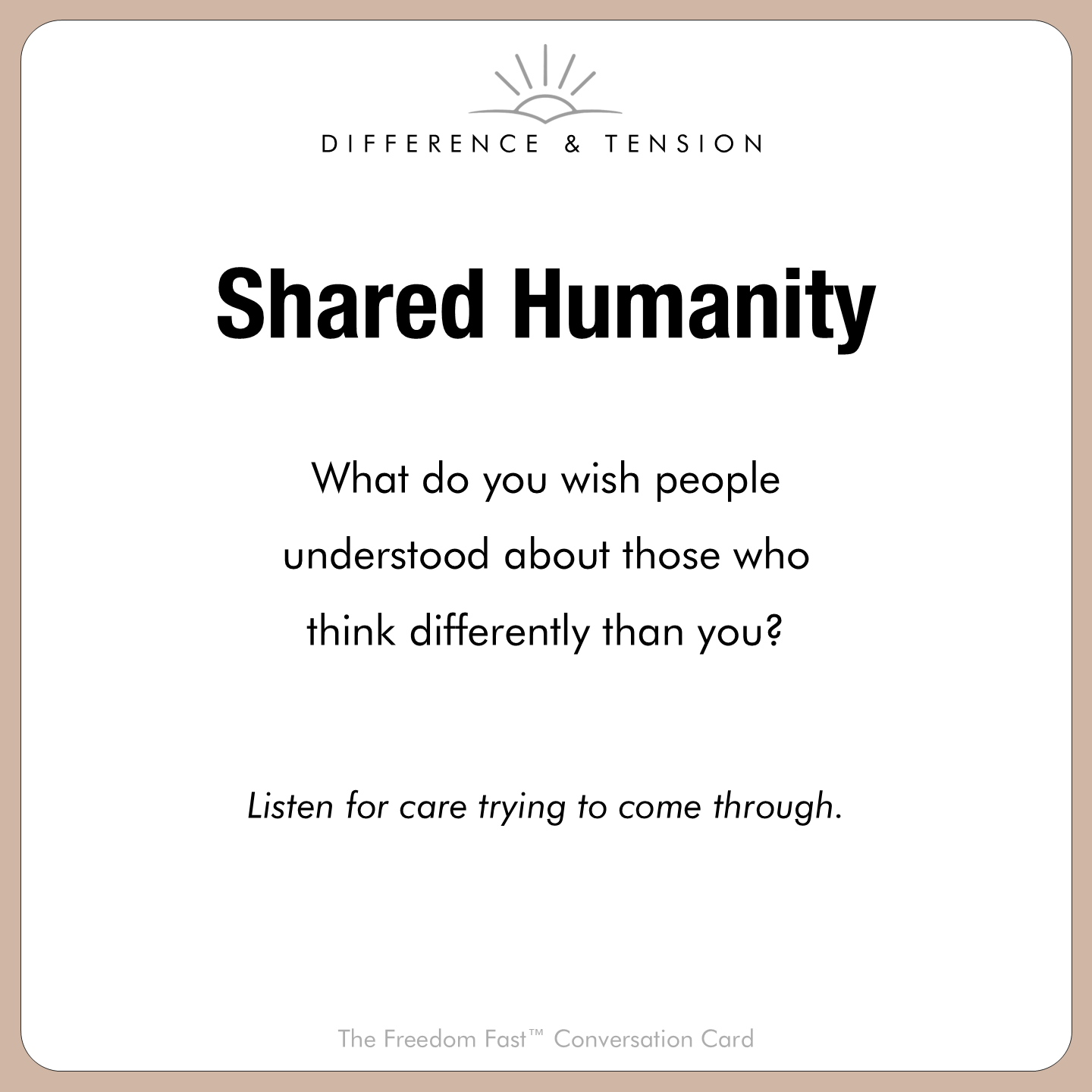
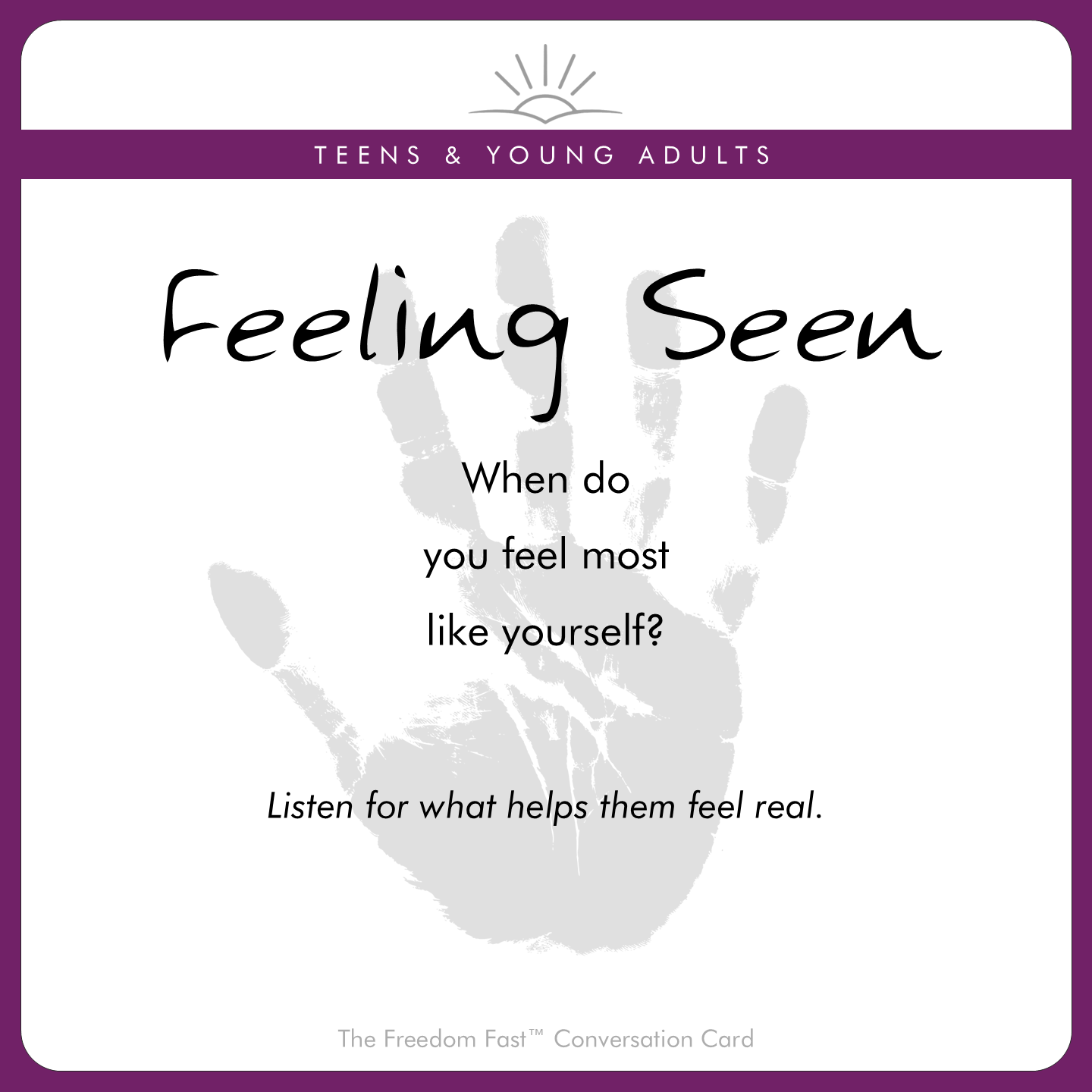
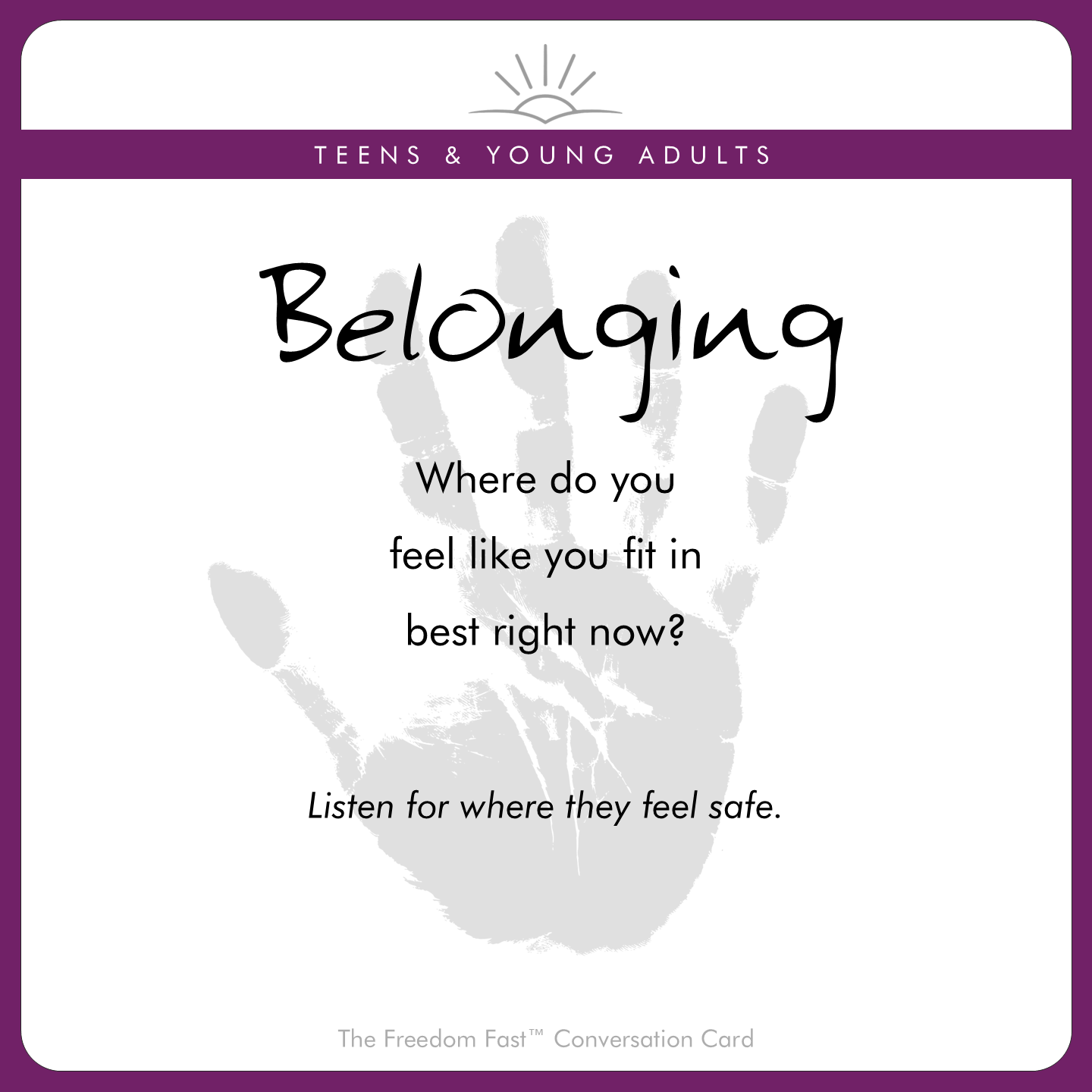
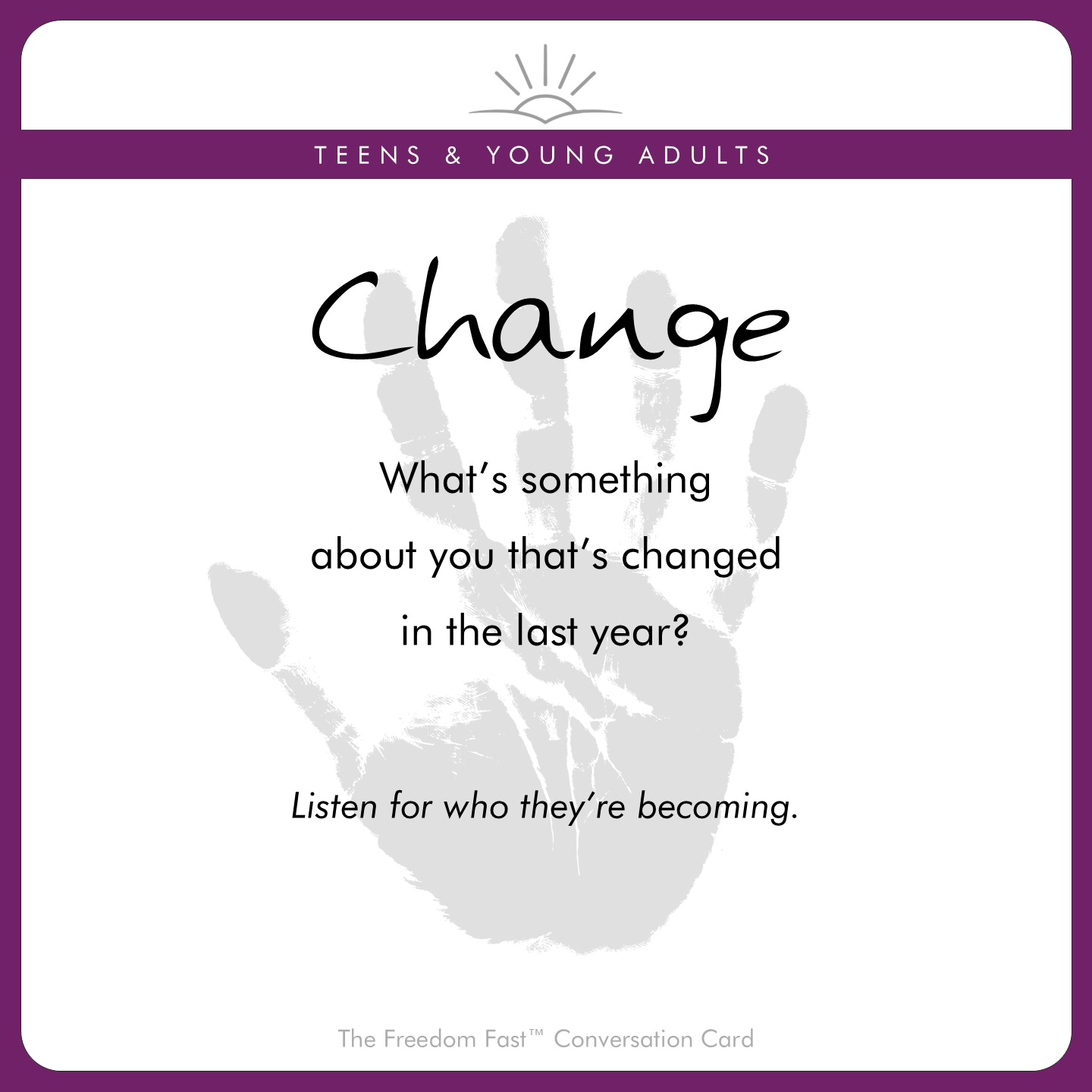
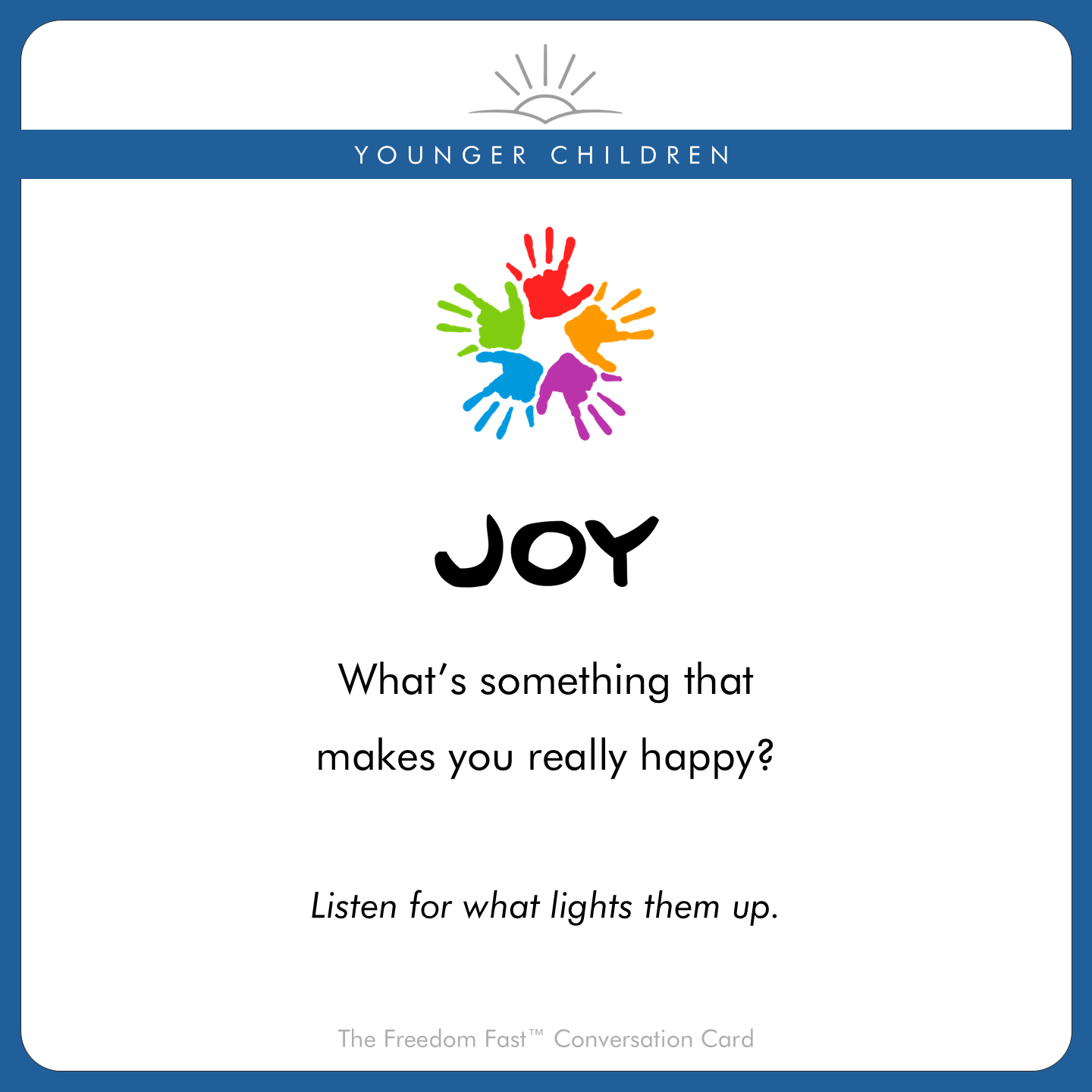
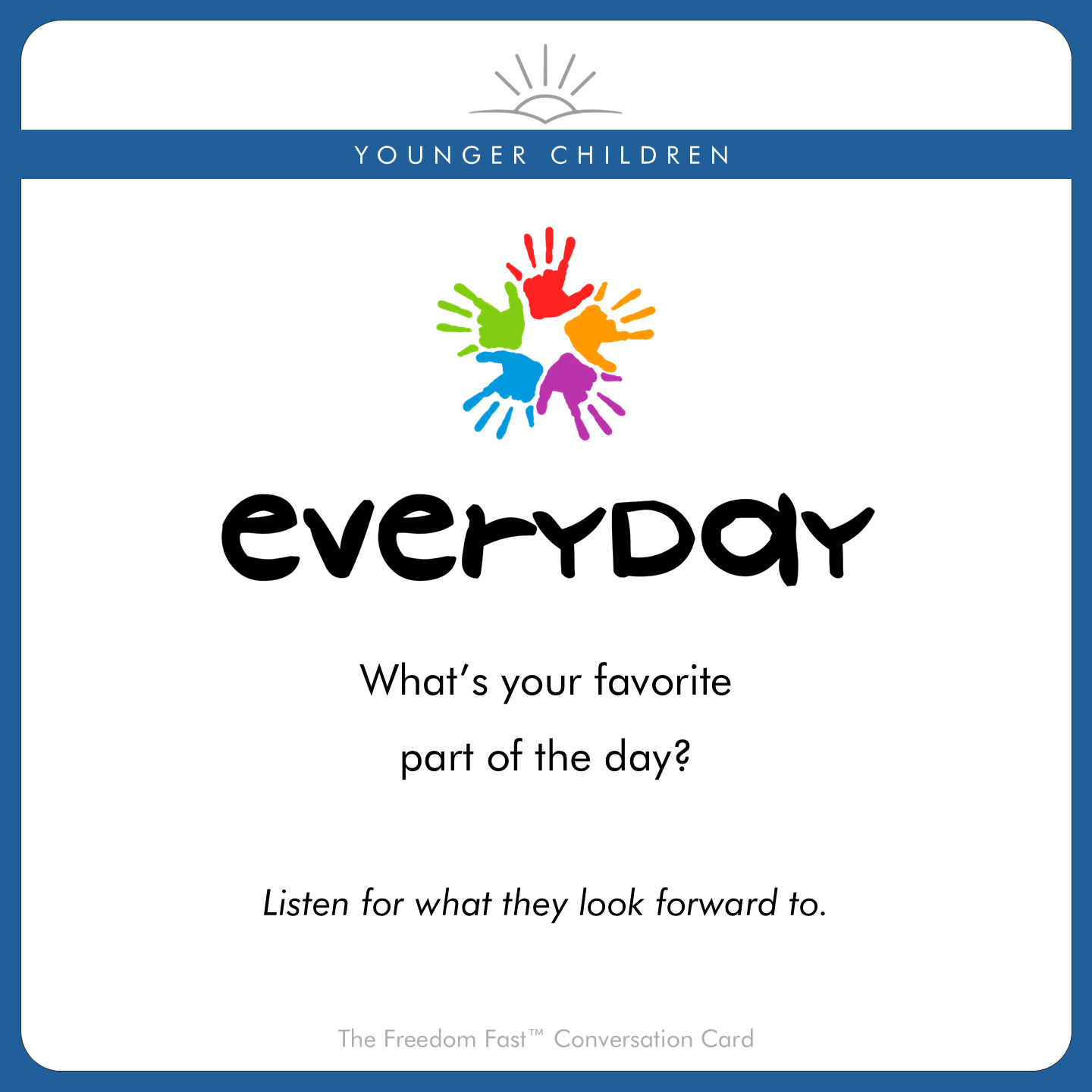
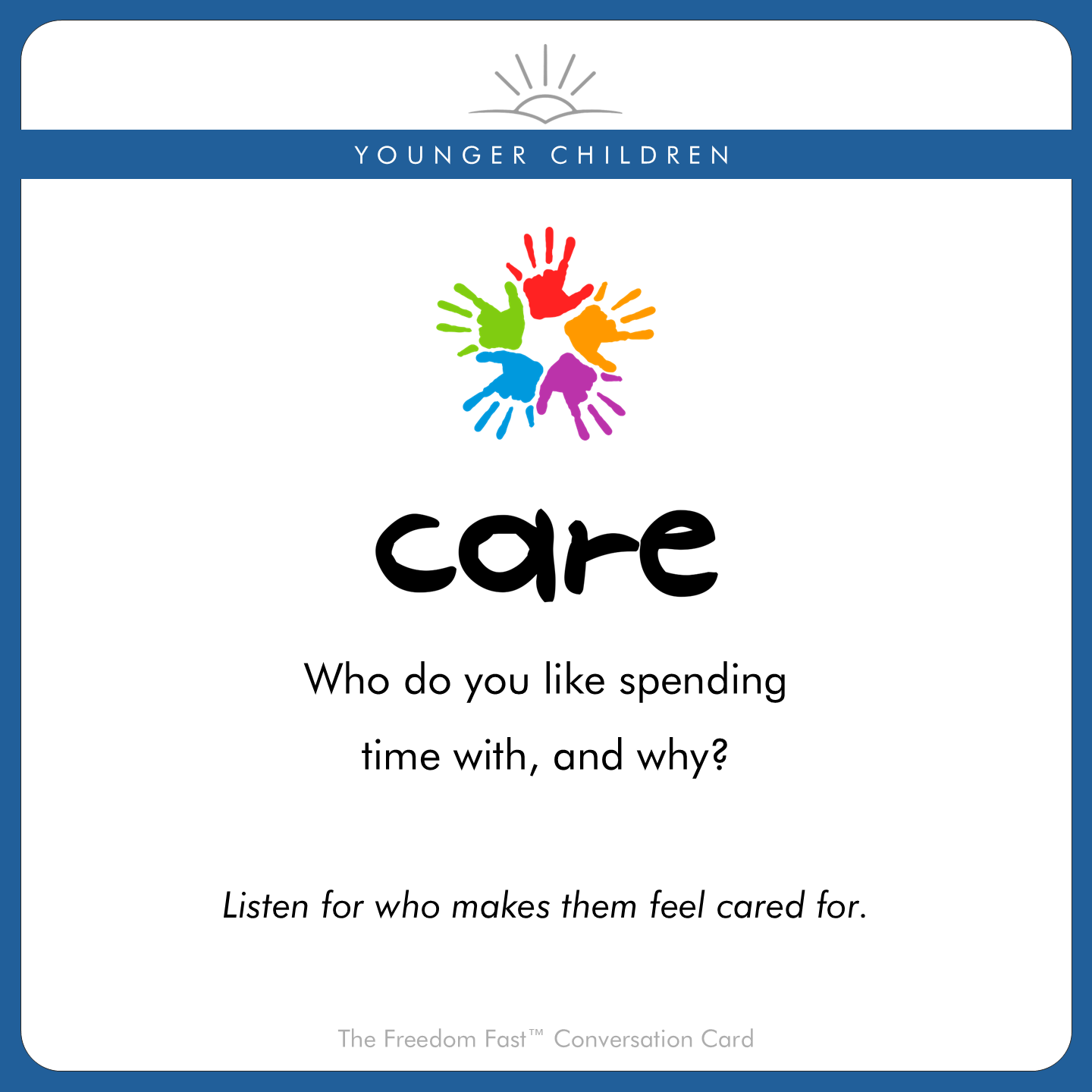
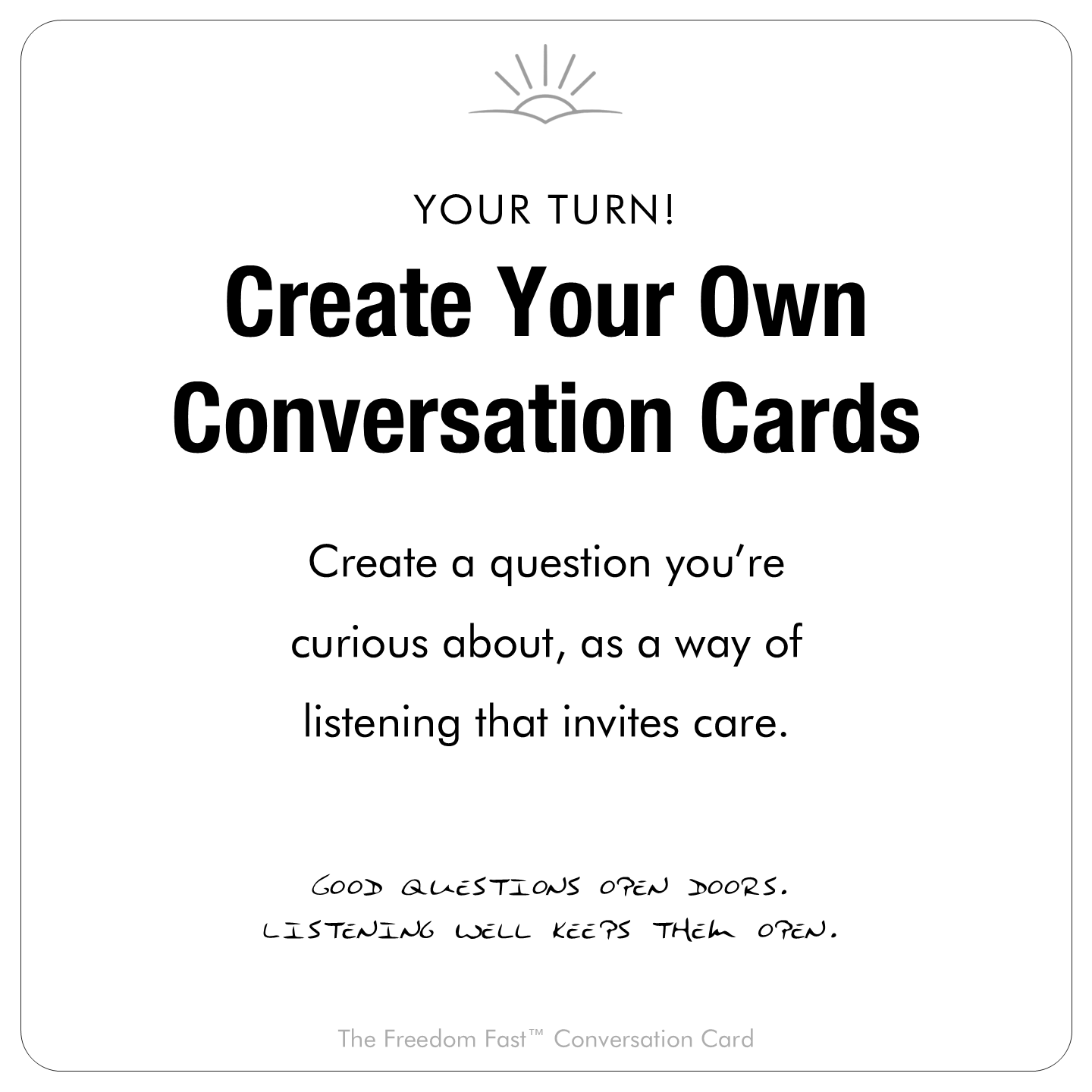
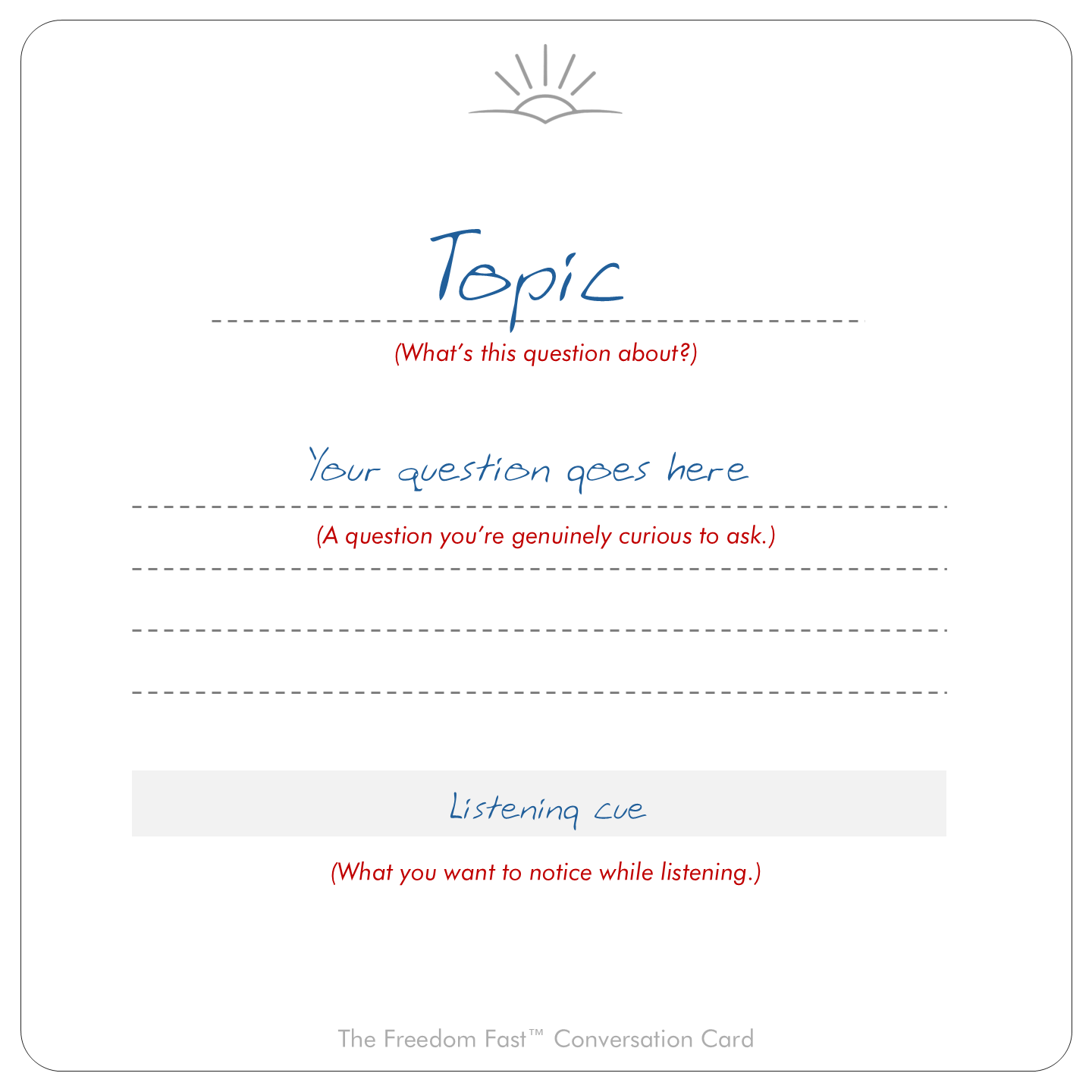
CONVERSATION CARDS
Simple to Use | Made to Be Shared
Print the conversation cards and use them to listen well with someone today.
Meaningful conversations have a way of healing what distance has created.



Building Relationships of Trust
Listening is an act of care - and when we show we care, we begin to build relationships of trust. When someone feels heard, something softens.
While listening, you can demonstrate your care and consideration by:
Acknowledging what someone shared
Making space for a quieter voice
Choosing patience where you might normally rush
Letting a moment land without fixing it
The act can be visible or quiet, immediate or later. What matters is that attention moves outward, into shared life.
Listening doesn’t require special skill or agreement, it simply asks us to be present, and to see what becomes possible when we are.

Listening
is an act of love.
When you listen to people, you are
communicating non-verbally
that they are important to you.
~ Jim George
Author and teacher on listening and communication
Dive Deeper

If you learn best by listening:
A calm audio reflection to accompany your practice of listening.

Act with Care
Listening creates opportunity.
After pausing, listening, and reflecting on your conversation(s), choose one small act of care shaped by what you noticed. Not as a performance. Not as a statement. Simply as a human response.
That might look like:
Showing kindness to someone you usually avoid
Offering help where tension usually lives
Serving someone whose views frustrate you
Choosing patience instead of escalation
Sometimes the most meaningful acts of care are quiet and unseen. But they change the tone of shared life, one relationship at a time.
Listening becomes healing when it moves us to treat one another differently.
The deepest repair happens when we
serve those we would rather avoid.
THE PRACTICE: LISTENING
What Happened When a Group of People Practiced Listening
When something is set down with care,
something else rises to meet us.
How This Practice Took Place

A week ago, a small group of people scattered across the United States chose to fast together.
Rather than abstaining from food, they set down familiar habits(speaking, judgment, urgency) and practiced listening instead.
After a week of reflection, they gathered on Zoom to share what they noticed.
They did not all agree. They did not all fast in the same way. But each person left with a gift: greater clarity, softened relationships, and a deeper sense of connection.
This is how the Freedom Fast works. You don’t need to be in the same room. You only need a shared intention—and the willingness to pause together.
The simple practice of fasting—paired with reflection, listening, and community—created conditions for hearts to soften, relationships to heal, and agency to return. Nothing was forced. Nothing was fixed. Space was made—and that space did the work.
February 5, 2026
Breaking the Fast
Discussion Summary
This Freedom Fast “Breaking the Fast” gathering created a shared space for reflection on fasting … not only from food, but from inner habits, postures, and relational patterns.
Participants described what they intentionally set down during the month and what emerged when they did. The group explored fasting as an act of choice, listening, and relationship repair, rather than deprivation.
The conversation emphasized:
Fasting as abstaining from anger, judgment, contention, busyness, mission-obsession, and distraction
Listening as both a practice and a discipline that requires letting go
The role of silence, curiosity, and intention in softening interactions
The transition from fasting to receiving: what participants wanted to carry forward into the rest of the month
The gathering closed with a symbolic breaking of the fast, expressions of gratitude, and naming the personal gifts participants received from the shared experience.
Beautiful Discoveries
That Emerged
Several quiet but profound discoveries surfaced across voices:
Fasting is not just subtraction—it is reorientation.
Letting go of anger, judgment, or contention created space for curiosity, empathy, and presence to arise naturally.Inner fasts were often harder, and more powerful, than physical ones.
Participants were surprised by how challenging it was to fast from mental habits like multitasking, judgment, urgency, or defensiveness.Choice itself was empowering.
Continuing the fast despite “good reasons not to” revealed how often people abandon agency by default. Choosing to continue became a reclaiming of authorship over one’s life.Listening changed when performance stopped.
When participants fasted from fixing, responding, or achieving, listening became relational rather than transactional.Pace matters.
Releasing hustle and completion-oriented thinking, especially in nature or family life, revealed both frustration and relief, pointing to how deeply speed is wired into modern identity.
Healing That
Took Place
The healing described was subtle, relational, and real:
Anger softened into curiosity.
One participant described moving from being consumed by anger to becoming genuinely curious about others’ stories—a visible shift noticed by their family.Contention dissolved through intention.
Fasting from contention transformed family dynamics, difficult conversations, and even politically charged interactions into moments marked by love and patience.Judgment gave way to compassion.
In one family, suspending judgment allowed a teenage child to move through emotional distress feeling held rather than corrected—an experience everyone recognized as “different” and “beautiful.”Presence replaced productivity.
Letting go of mission-driven urgency and checklist thinking led to greater freedom, calm, and relational attentiveness.Belonging was restored.
Participants named feeling connected, not alone, and part of something meaningful—highlighting that communal reflection itself was a form of healing.
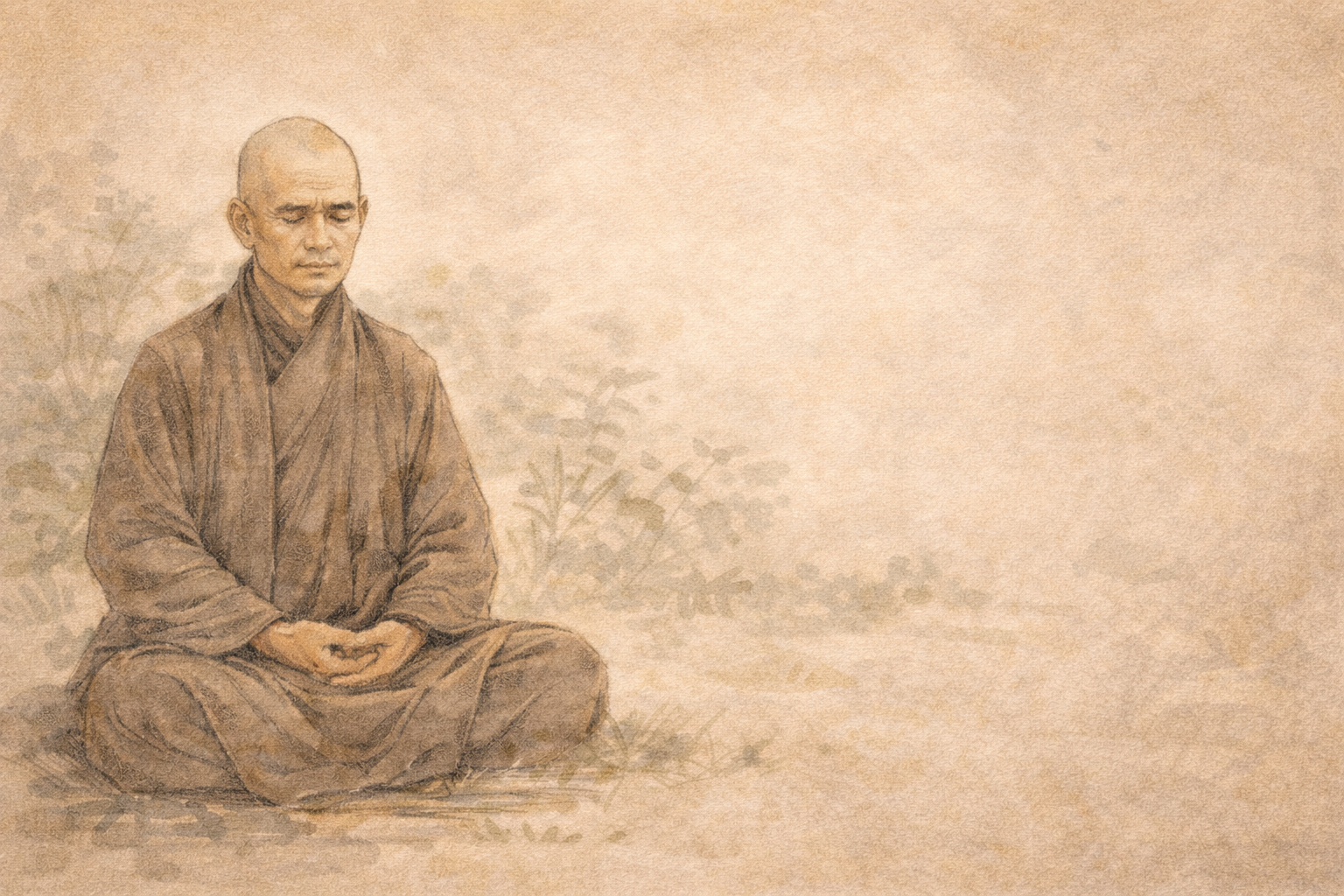
By listening with calm
and understanding,
we can ease the suffering
of another person.
~ Thich Nhat Hanh
Zen monk & teacher of mindfulness