


Dialogue
[ to relate ]
Dialogue as a
Shared Practice
Most issues hold more than one
truth at the same time.
Dialogue helps us sit with that reality without abandoning one another.
Within the Freedom Fast, dialogue sits at the center of the practice. The pause creates space for reflection. Dialogue is where we strengthen our capacity to live with complexity, and remain in relationship while we do.
Through dialogue, you speak from lived experience and listen for how others make meaning. You look first for shared values, then explore where your paths diverge. Over time, assumptions soften, understanding deepens, and relationships grow more resilient.
Dialogue is the practice of speaking from lived experience, listening for meaning, and staying in relationship long enough for deeper understanding to form, even when tension is present.
Dialogue develops through use. The more you practice it, the more natural it becomes to hold conviction without hostility, to stay steady when perspectives differ, and to engage disagreement without retreating or attacking.
Dialogue can begin wherever there is a shared willingness to be curious. What matters most is a commitment to return, to conversation, to shared values, and to one another.
This toolkit offers simple practices to help you do just that. You’ll find guidance for preparing yourself before dialogue, engaging thoughtfully during conversation, and carrying insight forward into action.
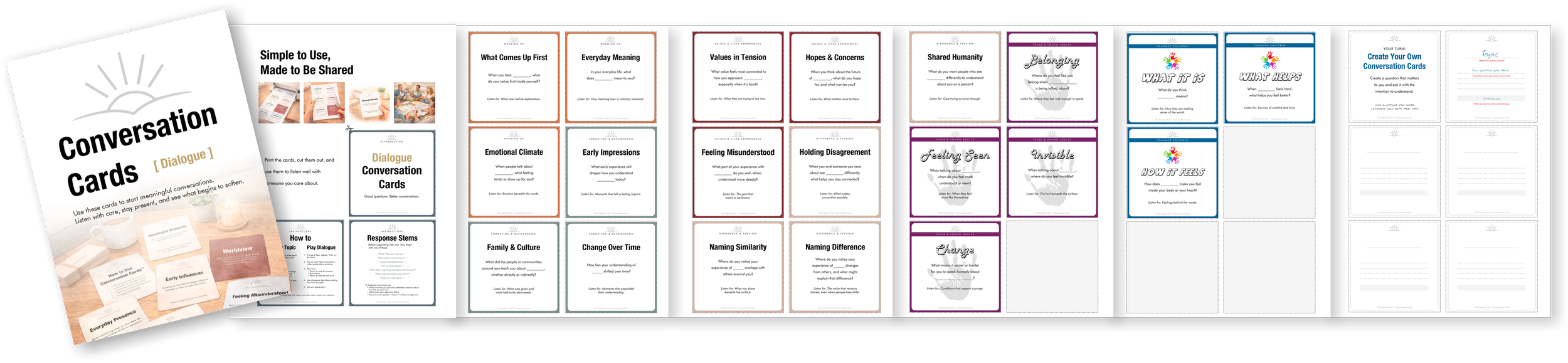
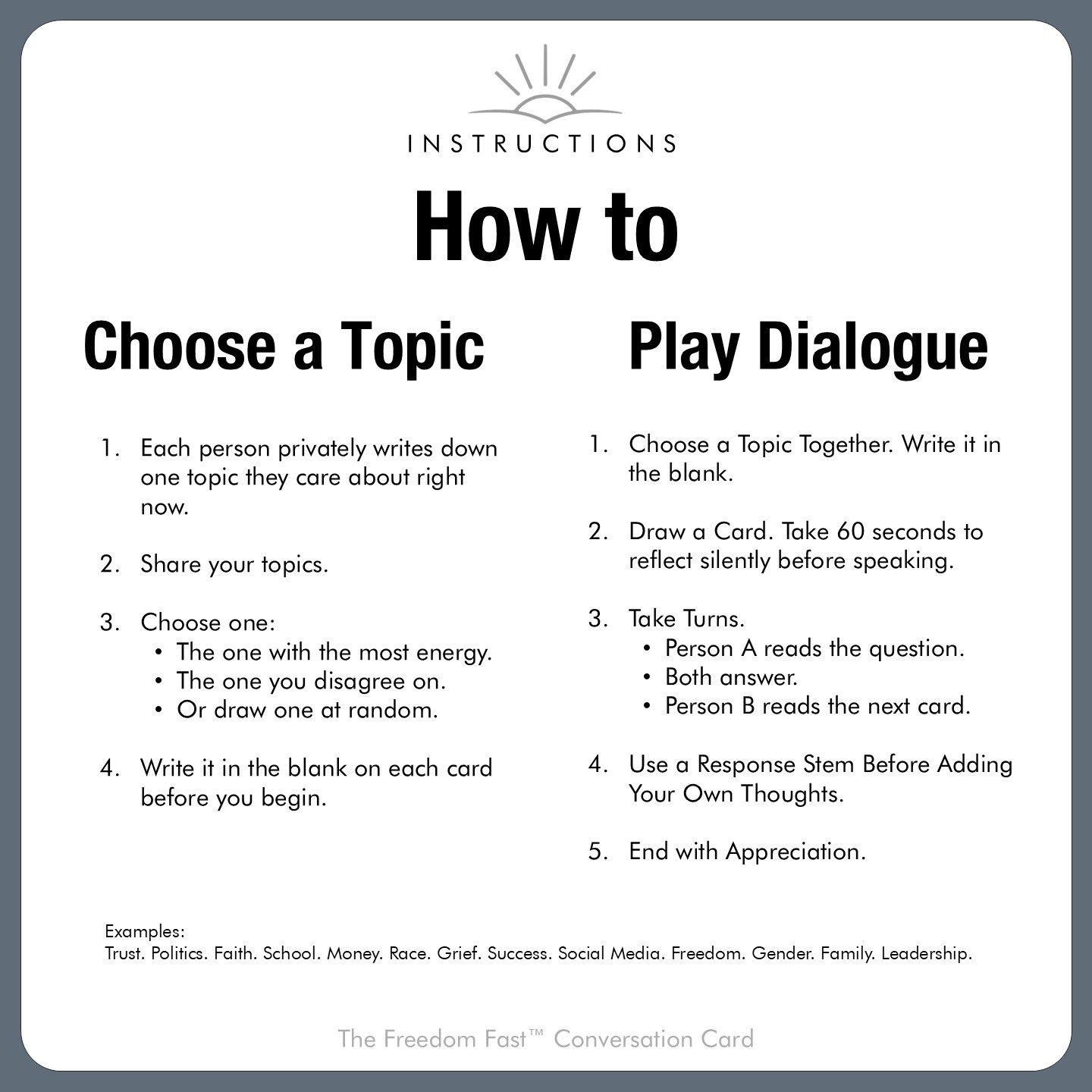
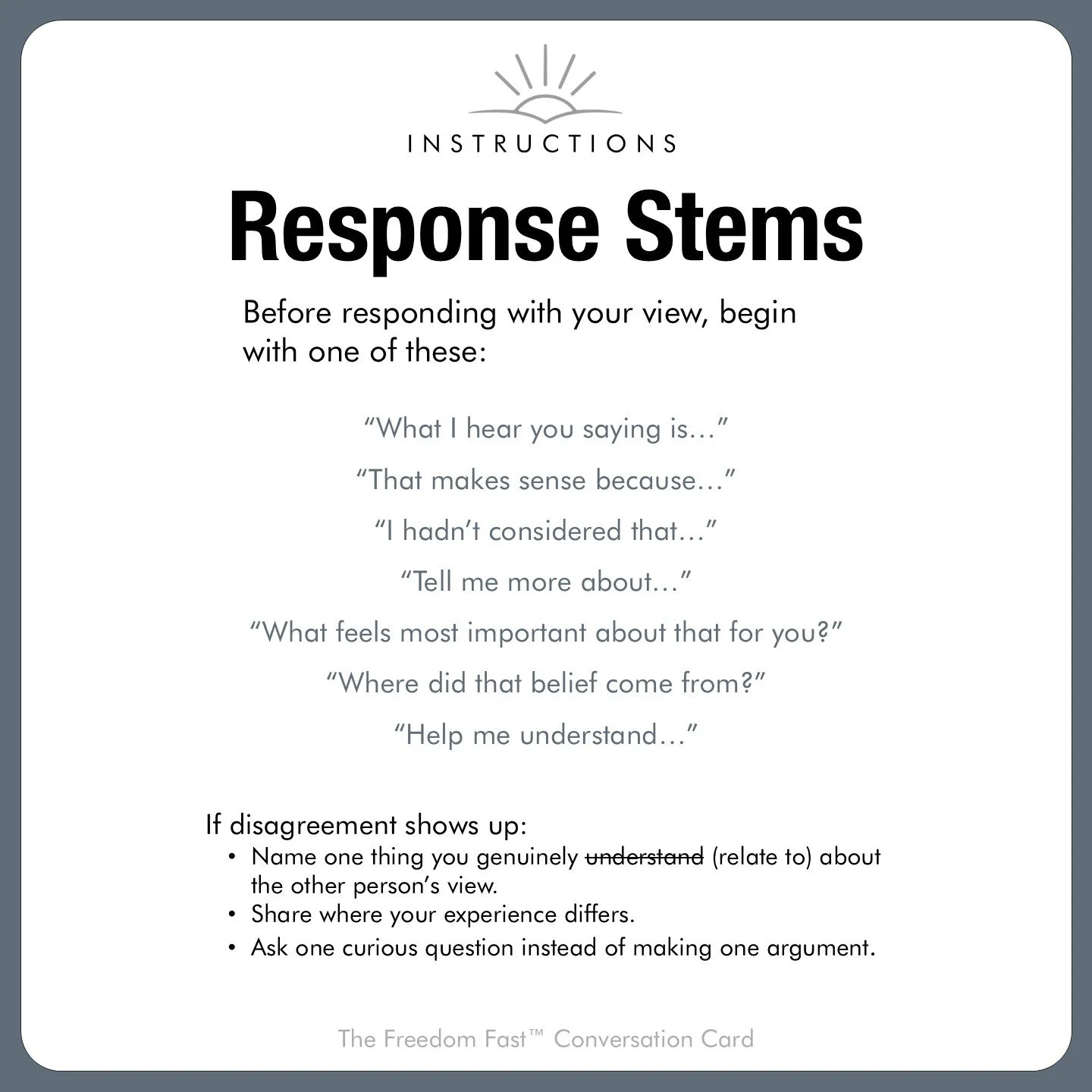
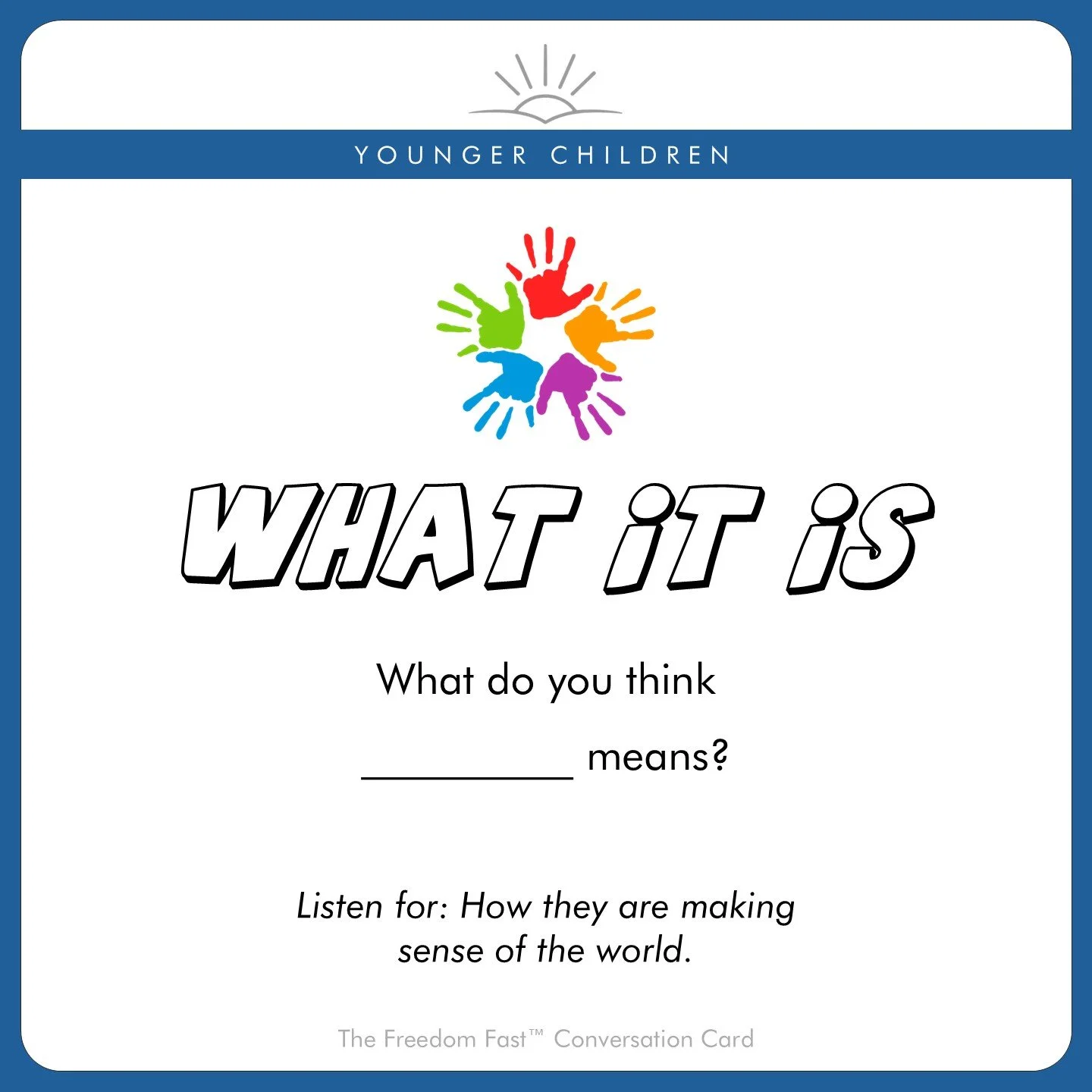
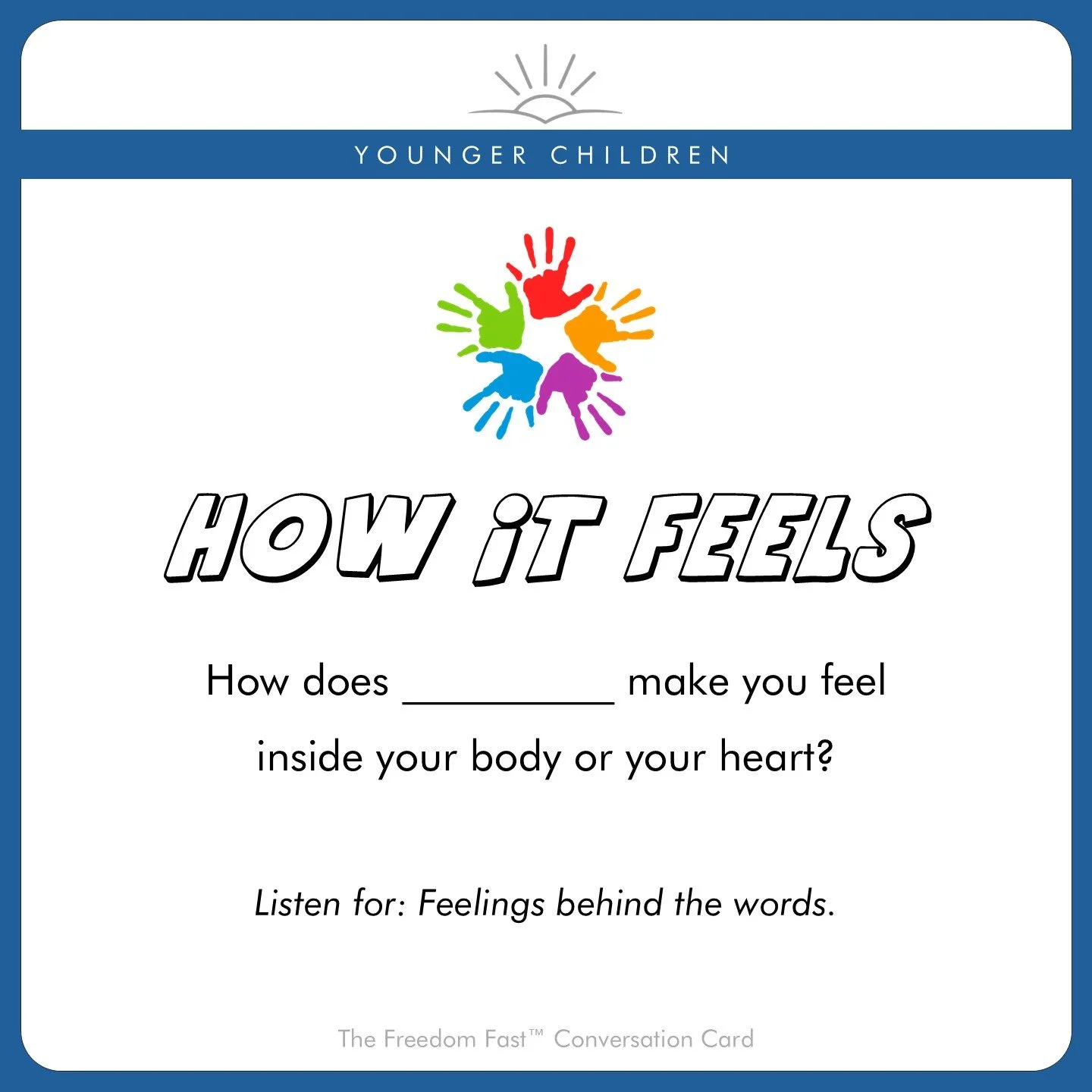
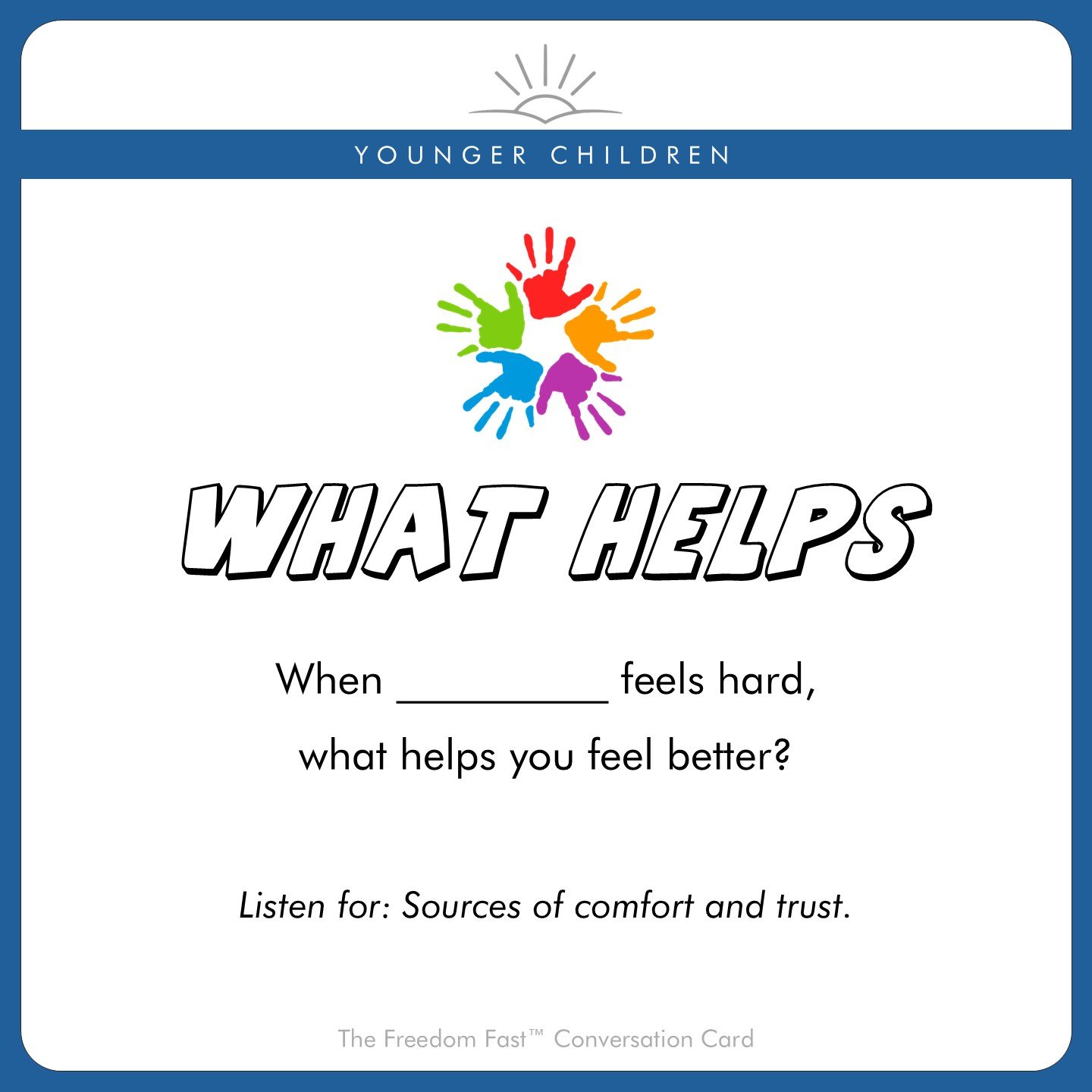
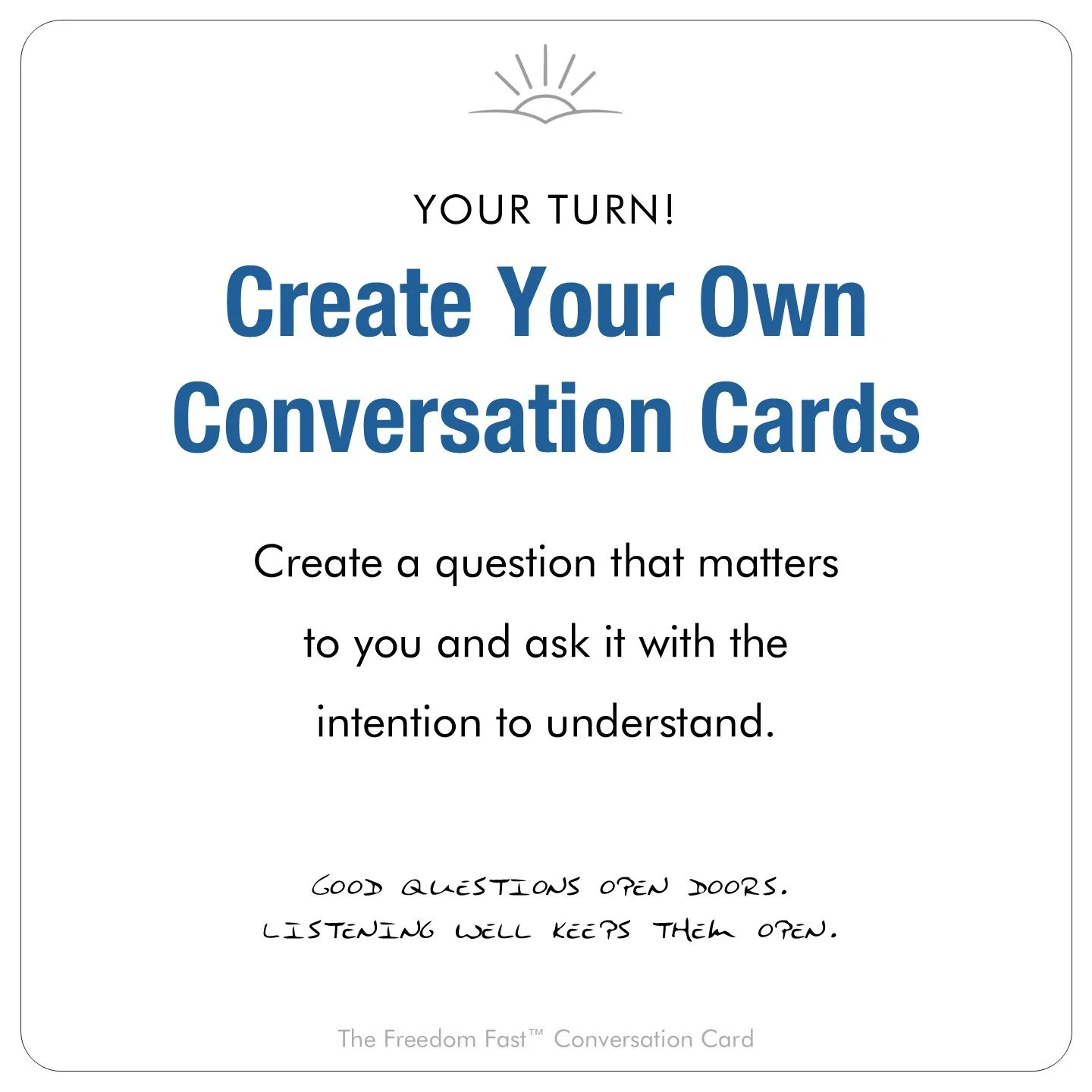
You’ll also find conversation cards to guide your exchange, along with a short audio reflection to help set the tone.
Dialogue is about
building relationships
strong enough
to hold difference.
~ Eboo Patel, American Muslim civic leader and interfaith advocater
In a culture that rushes to conclusions, dialogue slows us down long enough to see more than one truth at a time.

Dialogue and discussion both play important roles in shared life. Though often used interchangeably, they serve different purposes and require different postures.
Discussion helps groups evaluate ideas, make decisions, and determine next steps. It supports clarity, direction, and coordinated action.
Dialogue strengthens the capacity to understand before deciding. It creates space for people to speak from lived experience, listen across difference, and explore how meaning is formed. Through dialogue, people gain insight into how others see the world — and how experience has shaped those perspectives.
Discussion asks, “What should we do?”
Dialogue asks, “How are we understanding this?”
Dialogue prepares the ground. Discussion builds on it. When dialogue precedes discussion, decisions are shaped by shared understanding rather than assumption.
Both are necessary. Dialogue builds the relational strength to hold complexity. Discussion channels that strength into action. Together, they sustain shared life.
Dialogue and Discussion
How Dialogue Supports Relationship
Dialogue strengthens relationships by slowing the pace of exchange, especially when the instinct is to react, and making room for meaning to surface.
In dialogue, people remain present with difference rather than retreating from it.
Over time, this builds trust, reduces reactivity, and increases the capacity to stay engaged when conversations, and the differences within them, are complex.
Dialogue requires shared responsibility. Notice who is speaking, who is explaining, and who may need more space.
When we attend to these dynamics, dialogue helps people understand not only what others think, but how experience has shaped the way they see the world.
In this way, dialogue strengthens the relational foundation that makes honest civic life possible.
When to Begin with Dialogue
Dialogue can be especially helpful when:
There is tension or misunderstanding
Perspectives differ strongly
Trust feels fragile
People want to stay connected while exploring difference
Decisions will affect people in different ways
Dialogue creates the conditions that make future conversations, and decisions, more grounded, constructive, and durable.
We can disagree and
still love each other.
~James Baldwin,
American essayist and activist
Dialogue does not erase conviction. It preserves relationship alongside it.
Practicing Dialogue to Relate
Pause
to Reflect

What you set down to
make dialogue possible
Before entering dialogue, the Freedom Fast invites a pause. This pause creates space to reflect on what makes dialogue harder for you.
You might choose to set down one habit or posture that tends to limit connection, such as:
The urge to respond immediately
Speaking to persuade rather than understand
Preparing your next point while someone else is speaking
Rushing toward resolution
This pause is not about self-correction. It is about making room for dialogue to unfold with greater care.
Dialogue to Relate
How dialogue
is practiced
Dialogue is practiced through presence, curiosity, and responsibility in how we speak and listen.
In dialogue, you speak from lived experience and listen for how others make meaning. You remain attentive to the relationship as the conversation unfolds, especially when perspectives differ or clarity takes time.
Dialogue asks you to stay longer than your instinct to withdraw, to ask questions you genuinely want answered, and to name difference without rushing to resolve it. Understanding is allowed to emerge gradually.
Carry It
Forward

How dialogue shapes what comes next
Dialogue does not end when a conversation pauses. What is spoken and heard continues to shape how you move through daily life.
You may find yourself speaking with greater care, listening more fully, or allowing space where you once rushed. Over time, these small shifts influence relationships, decisions, and acts of care.
In this way, dialogue becomes part of how renewal takes shape — not only in conversation, but in the choices you make and the relationships you tend.
Ways to Practice Dialogue to Relate
Dialogue develops through use. These practices offer simple ways to stay connected, speak with care, and remain present when differences arise. You do not need to use every practice at once. Choose one that feels supportive and let it guide how you hold the conversation.
Practice 1:
Speak
From Lived
Experience
Ask Questions
that expand
understanding.
The Practice
Speak from your own experience rather than from labels, abstractions, or assumptions about others.
In Use
“In my experience…”
“What shaped my view was…”
“Here’s what I’ve seen firsthand…”
“This matters to me because…”
The Effect
Speaking from lived experience reduces defensiveness and increases clarity. It strengthens intellectual honesty by distinguishing between what you know, what you’ve experienced, and what you believe. This creates a more stable starting point for dialogue.
The Practice
Ask questions that help you understand how the other person arrived at their view — not just what their view is.
In Use
“What experiences most shaped your perspective on this?”
“What do you most want to protect here?”
“What concerns you most about the alternative?”
“What feels at stake for you?”
The Effect
Expansive questions deepen understanding and reveal the values beneath positions. They build curiosity and reduce the impulse to debate, making it easier to hold more than one truth at the same time.
Practice 2:
Explore
Where Paths Diverge
Practice 3:
Anchor
in Shared
Values(s)
The Practice
Shared values do not eliminate disagreement. They make it safer to explore. Before exploring disagreement, name something you both care about. Look for the value beneath the position and begin there.
In Use
“It sounds like we both care deeply about fairness.”
“We may see the solution differently, but we both want people to feel safe.”
“I can tell this matters to you. It matters to me too — maybe in a different way.”
“What do you most want to protect here?”
The Effect
Starting with shared value lowers defensiveness and builds trust. It creates a foundation strong enough to hold complexity, allowing differences to be explored without turning one another into opponents.
The Practice
After naming shared values, explore where your approaches or interpretations differ — with curiosity rather than defensiveness.
In Use
“If we both care about fairness, what leads us to different conclusions?”
“Where do you think our experiences have shaped our views differently?”
“What concerns you most about the approach I’m suggesting?”
“What feels at stake for you here?”
The Effect
Starting with shared value lowers defensiveness and builds trust. It creates a foundation strong enough to hold complexity, allowing differences to be explored without turning one another into opponents.
Practice 4:
Practice 5:
Stay Steady
in the Tension
The Practice
Remain present when the conversation becomes uncomfortable, unclear, or unresolved. Resist the urge to retreat, dominate, or force closure.
In Use
Allowing silence without rushing to fill it
Saying, “I need a moment to think about that.”
Acknowledging discomfort without withdrawing: “This feels hard, but I want to stay with it.”
Letting complexity exist without simplifying it too quickly
The Effect
Staying steady strengthens your capacity to hold paradox without collapse. It builds emotional regulation and trust, making disagreement a space for growth rather than rupture.
The Practice
Let what you discovered in dialogue shape how you act, serve, and show up afterward.
In Use
Following up with someone whose perspective challenged you
Clarifying a misunderstanding before it hardens
Choosing collaboration where you once avoided contact
Acting in service alongside someone you previously disagreed with
The Effect
Dialogue becomes more than conversation. It reshapes behavior. Over time, these small acts strengthen relationships, communities, and the shared capacity to live with complexity.
Practice 6:
Carry It Forward
with Intention.

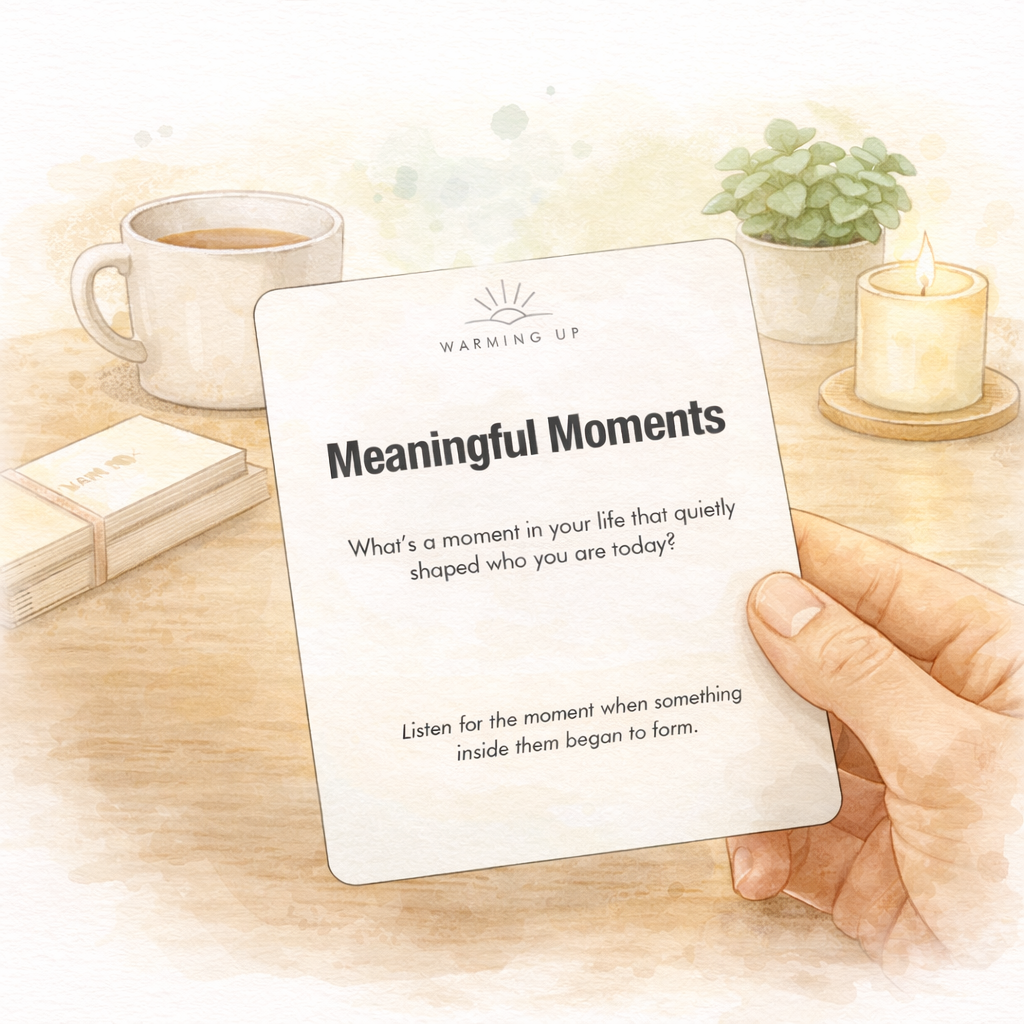
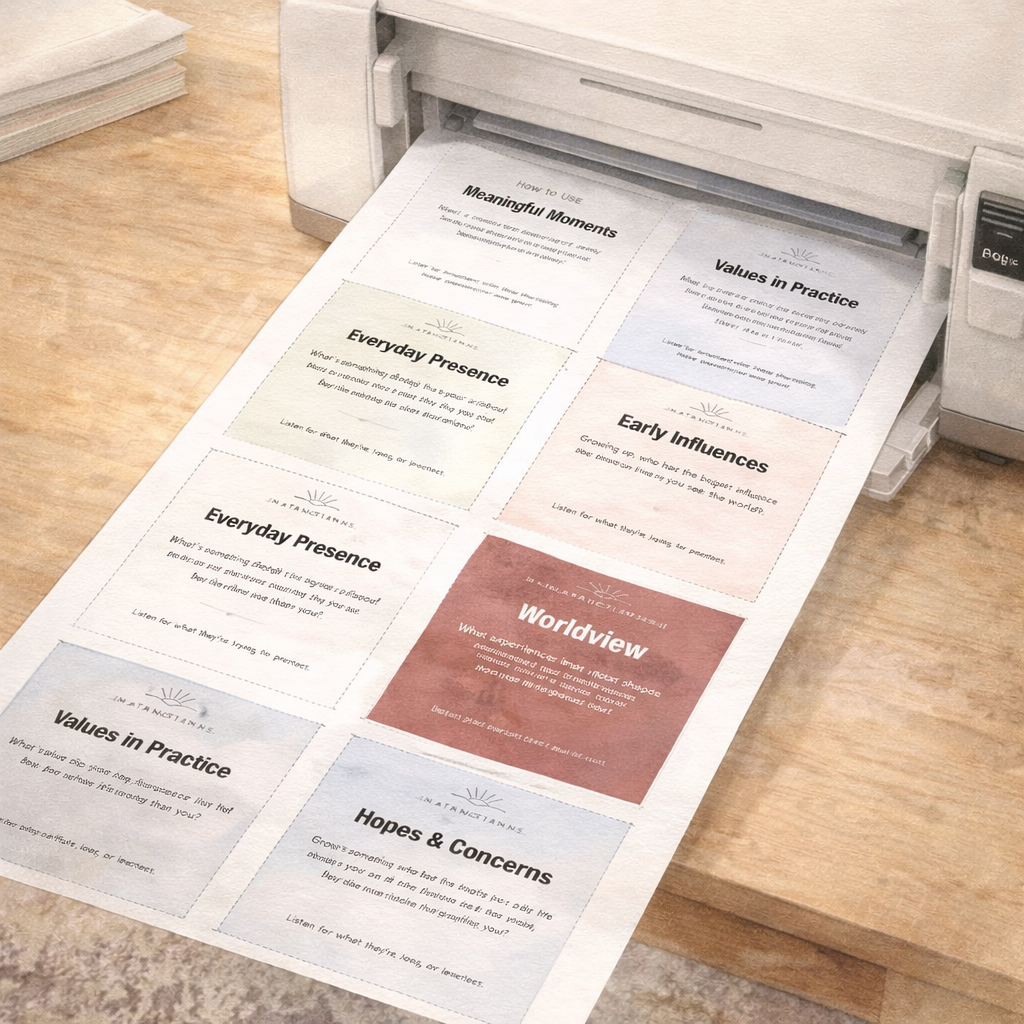
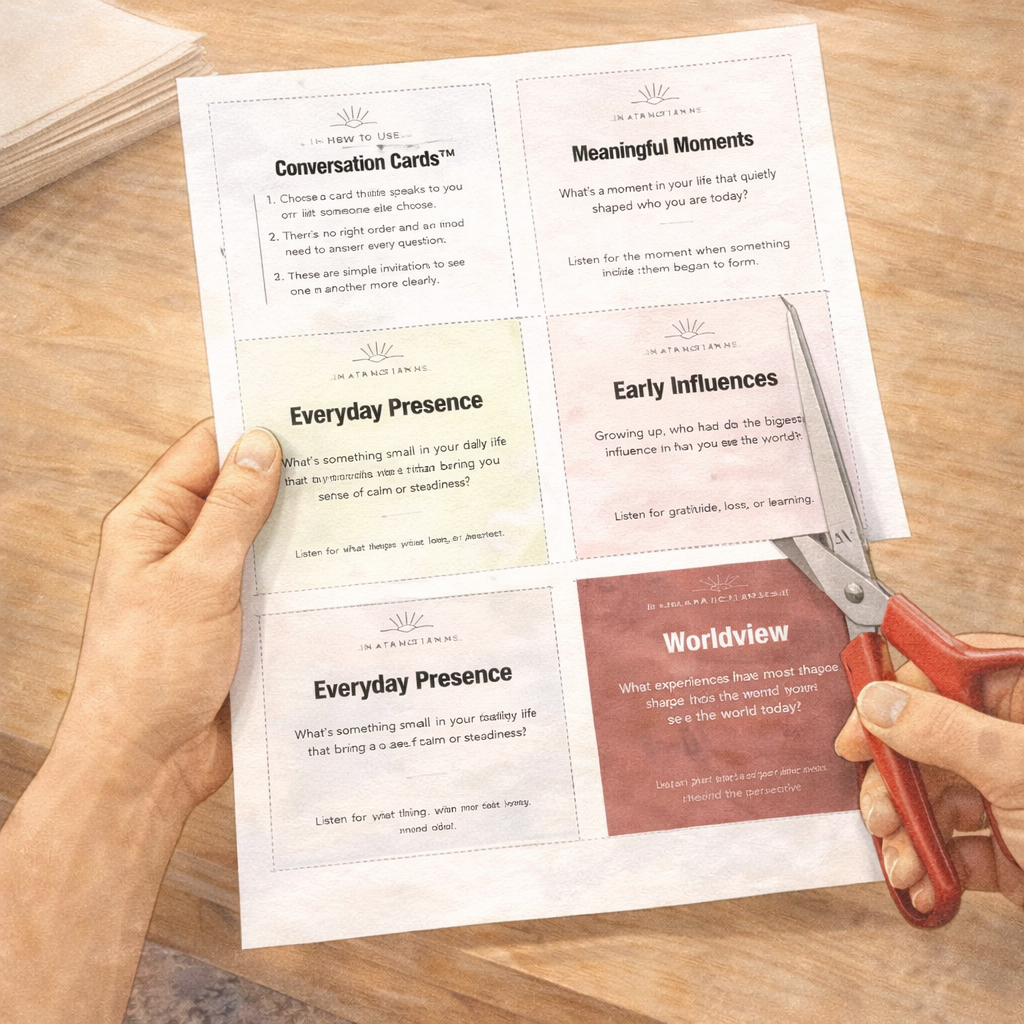
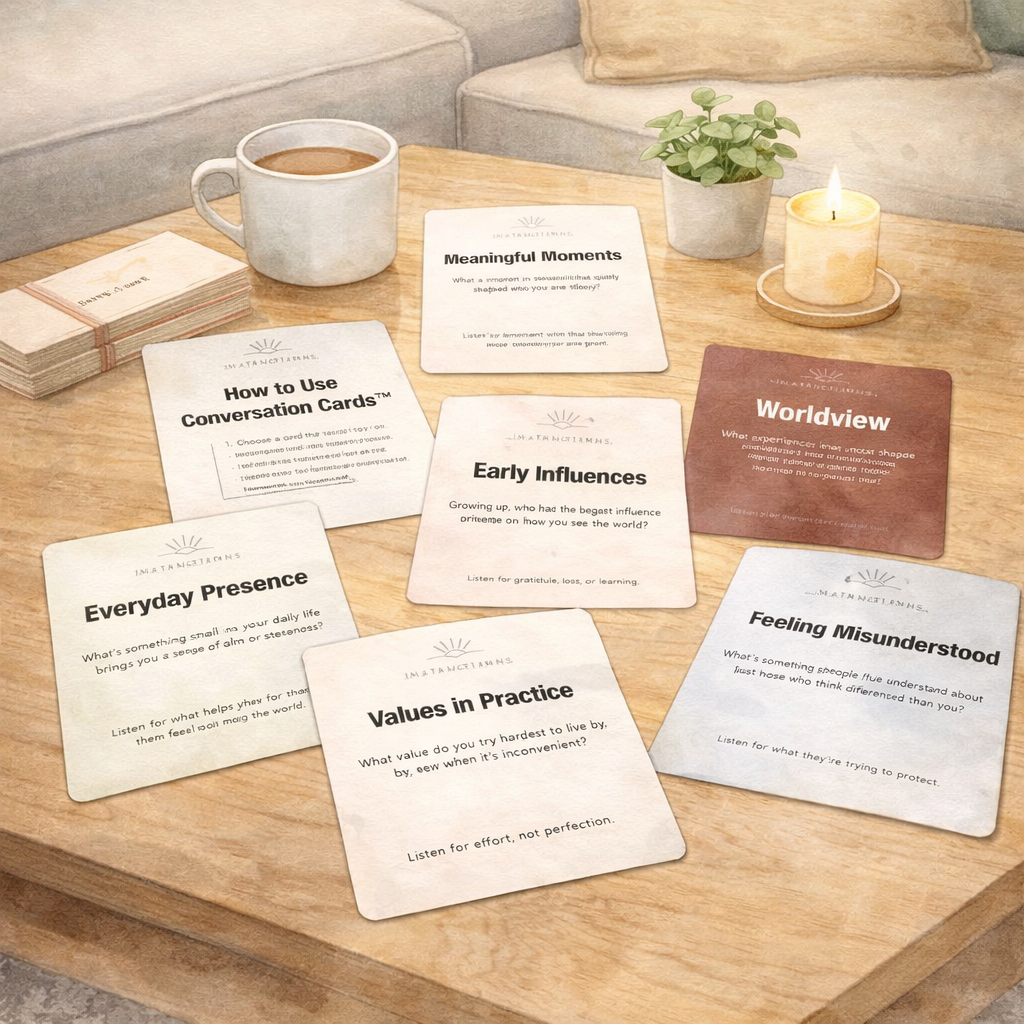
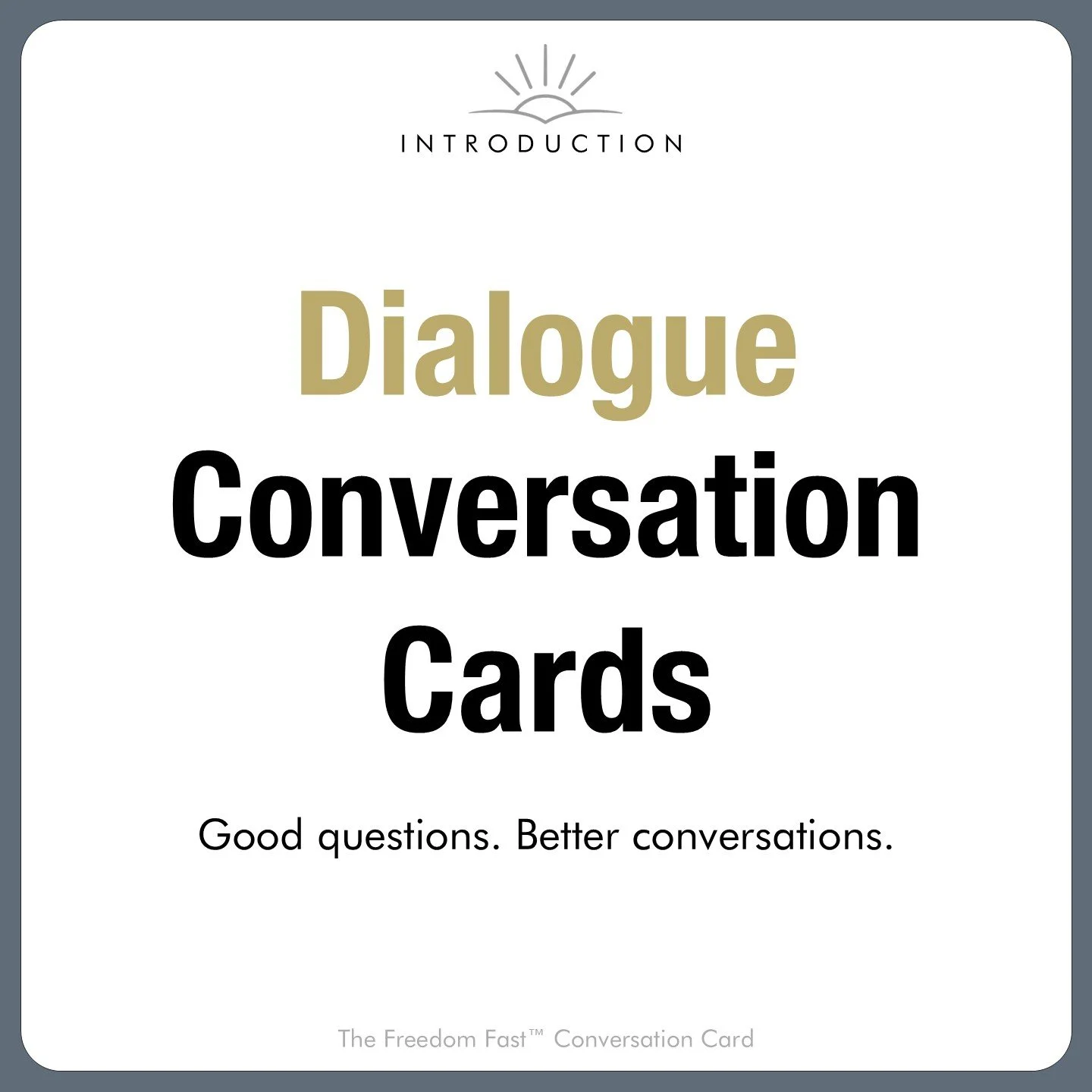
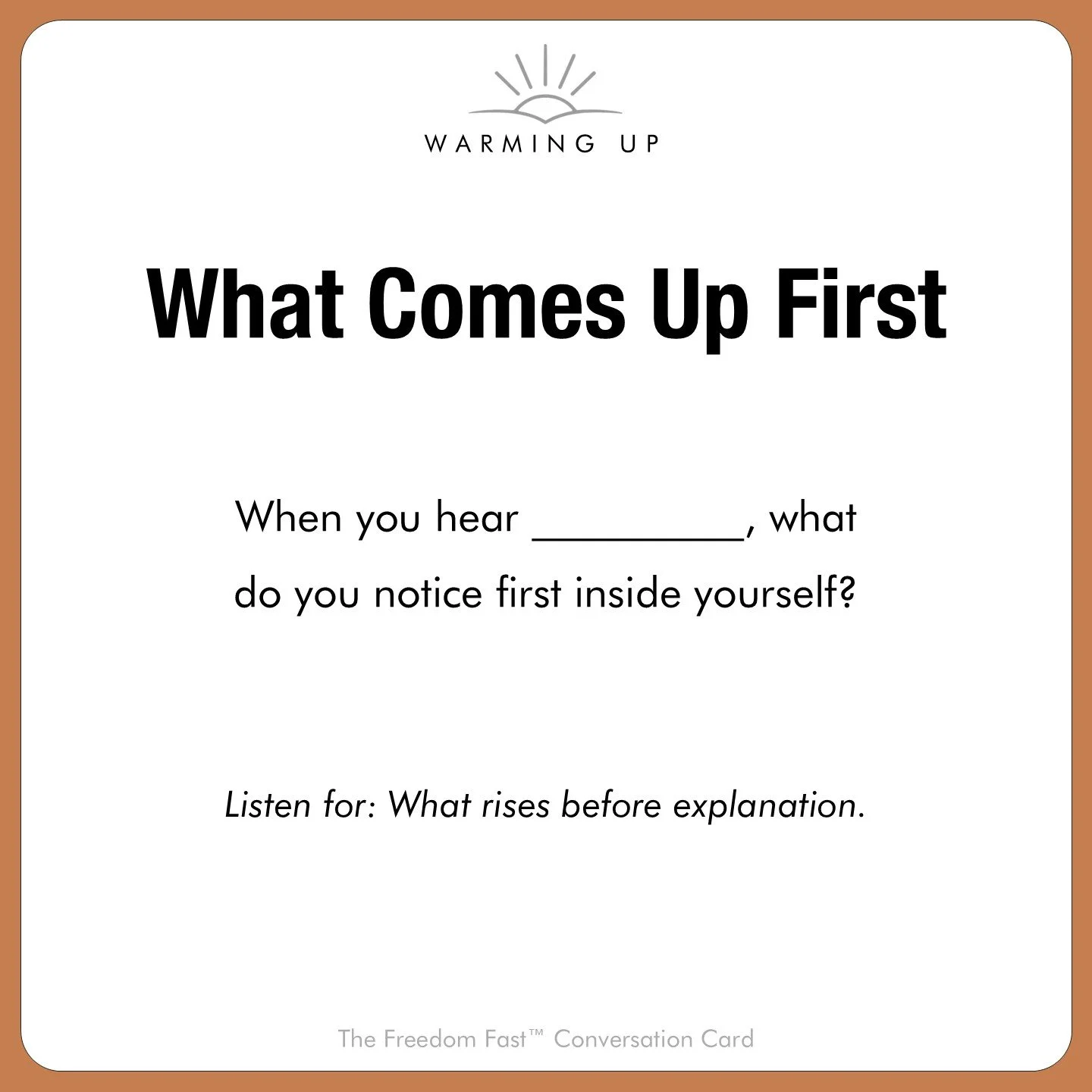
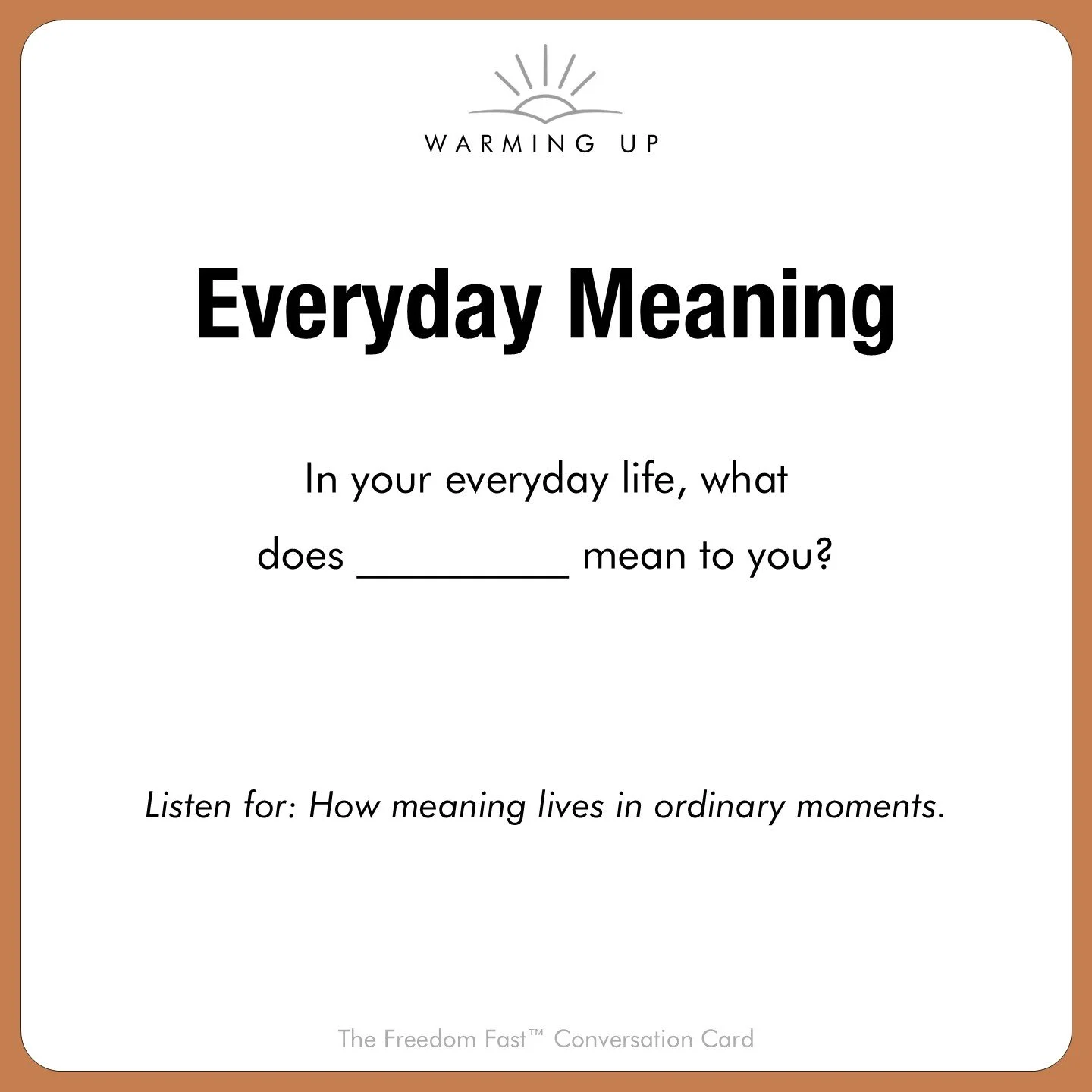
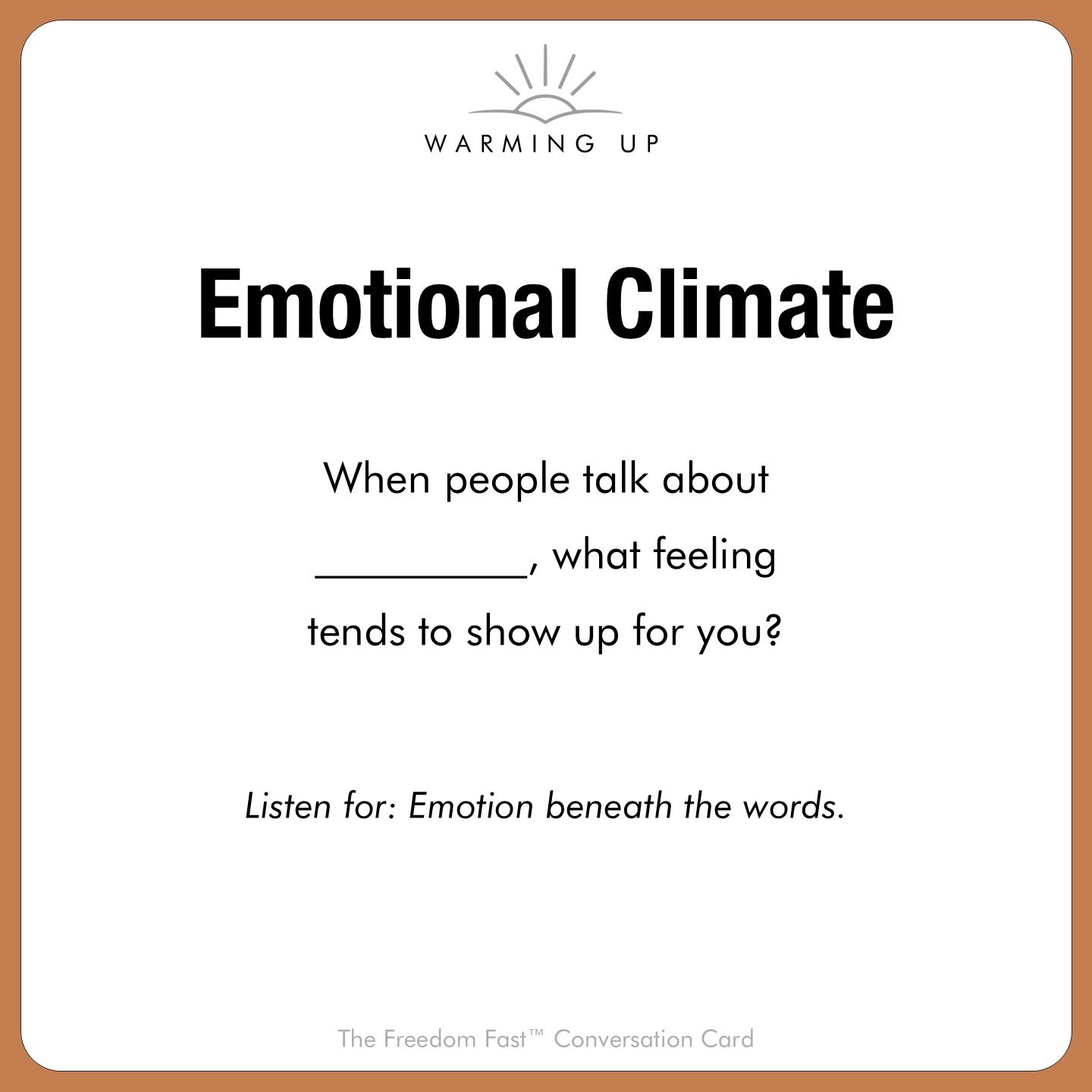
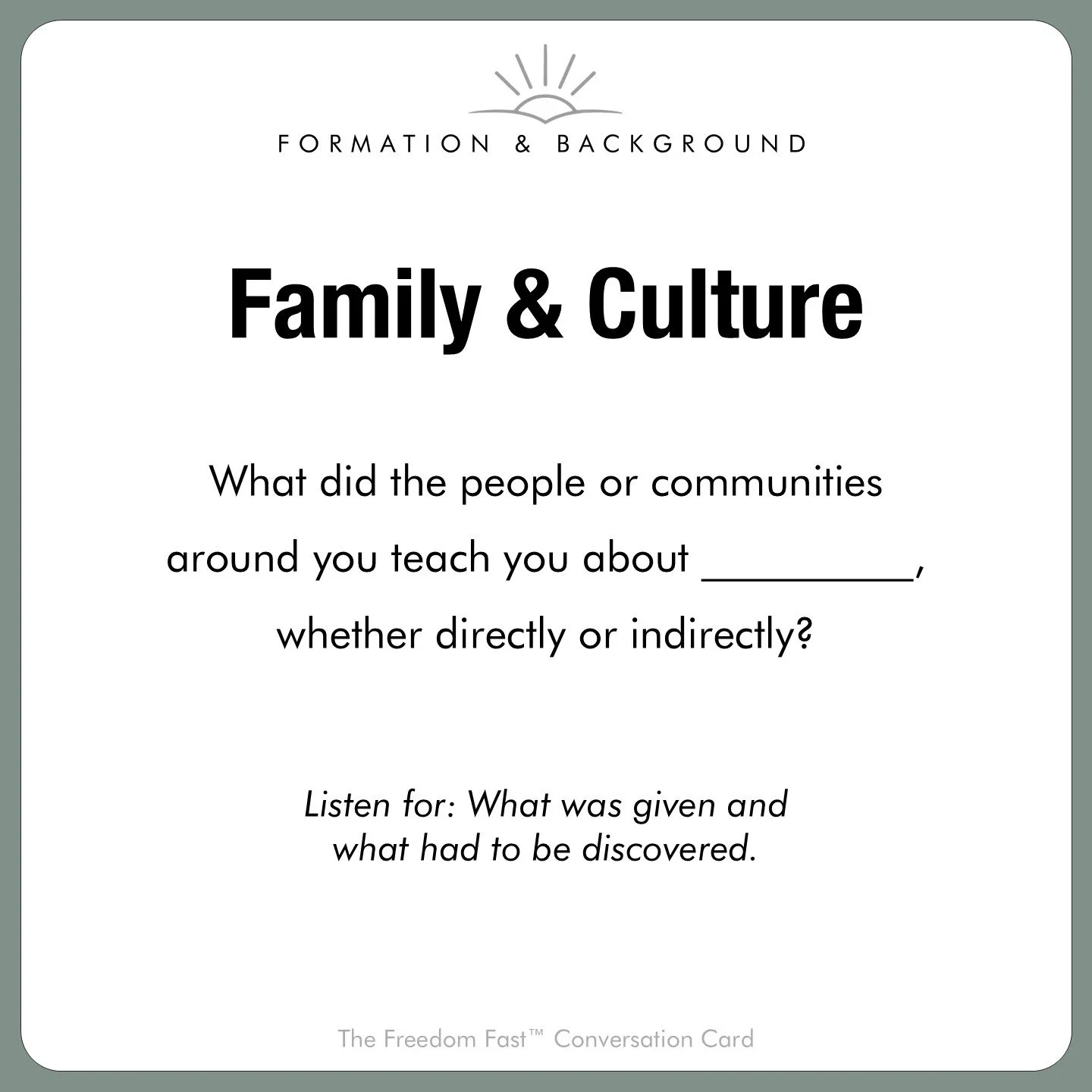
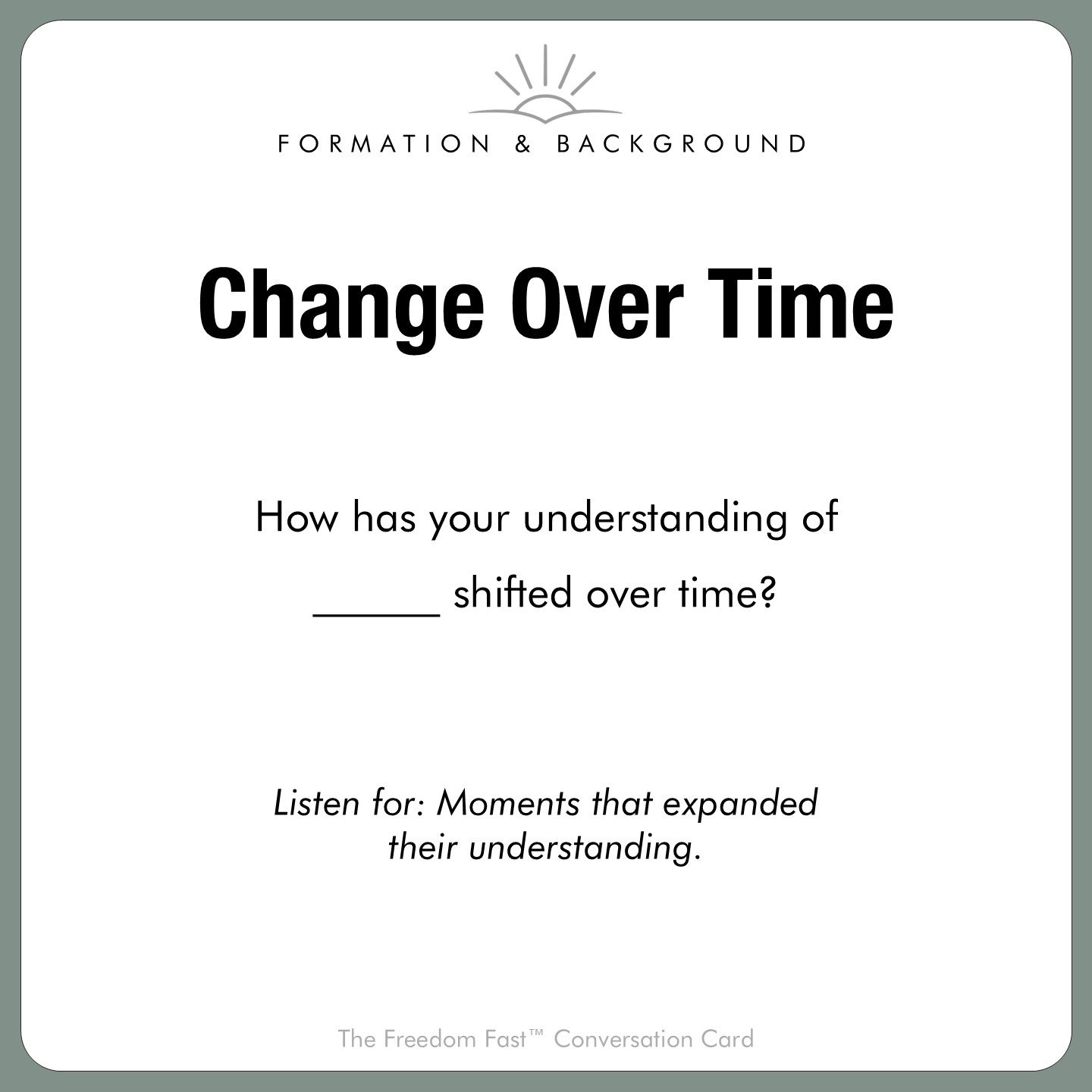
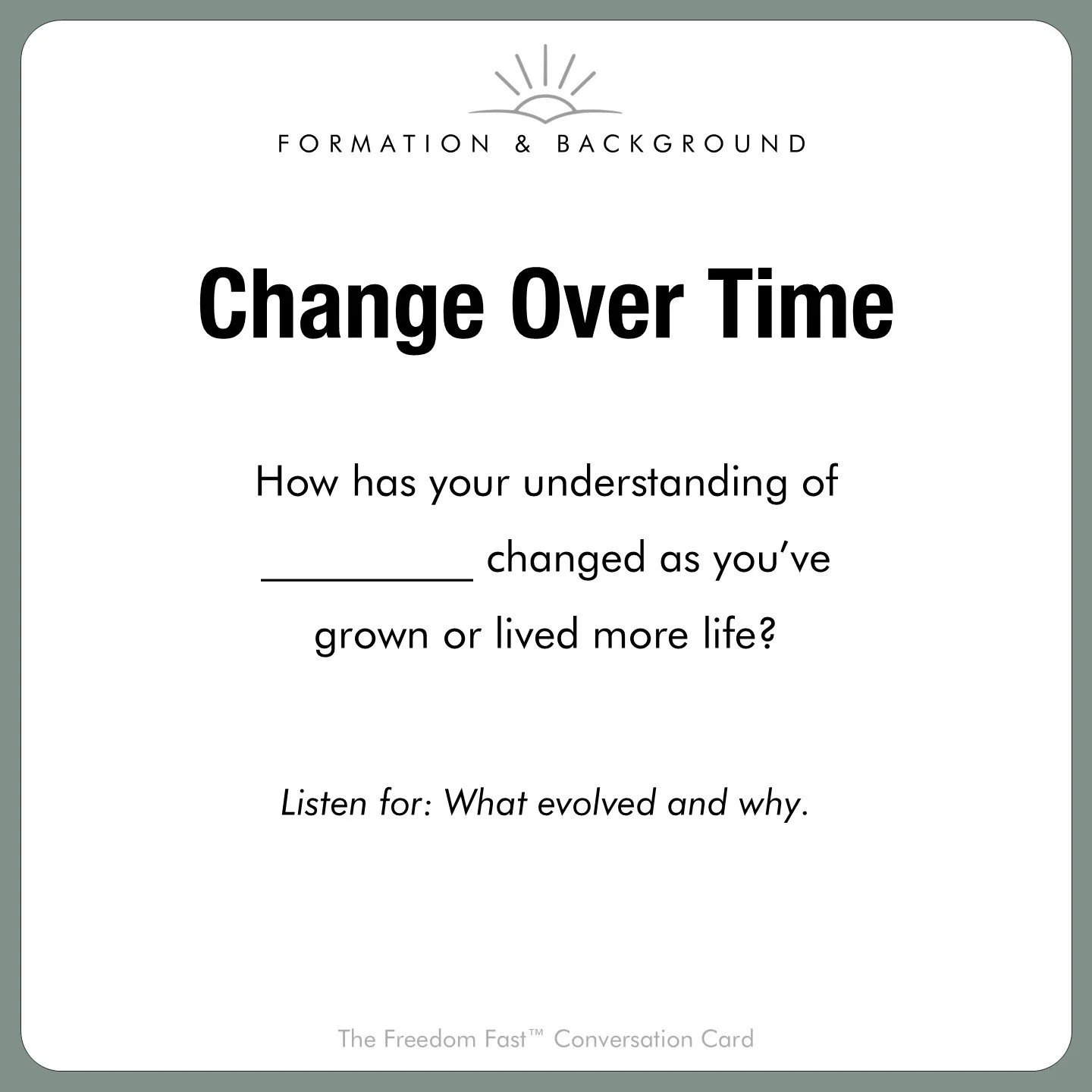
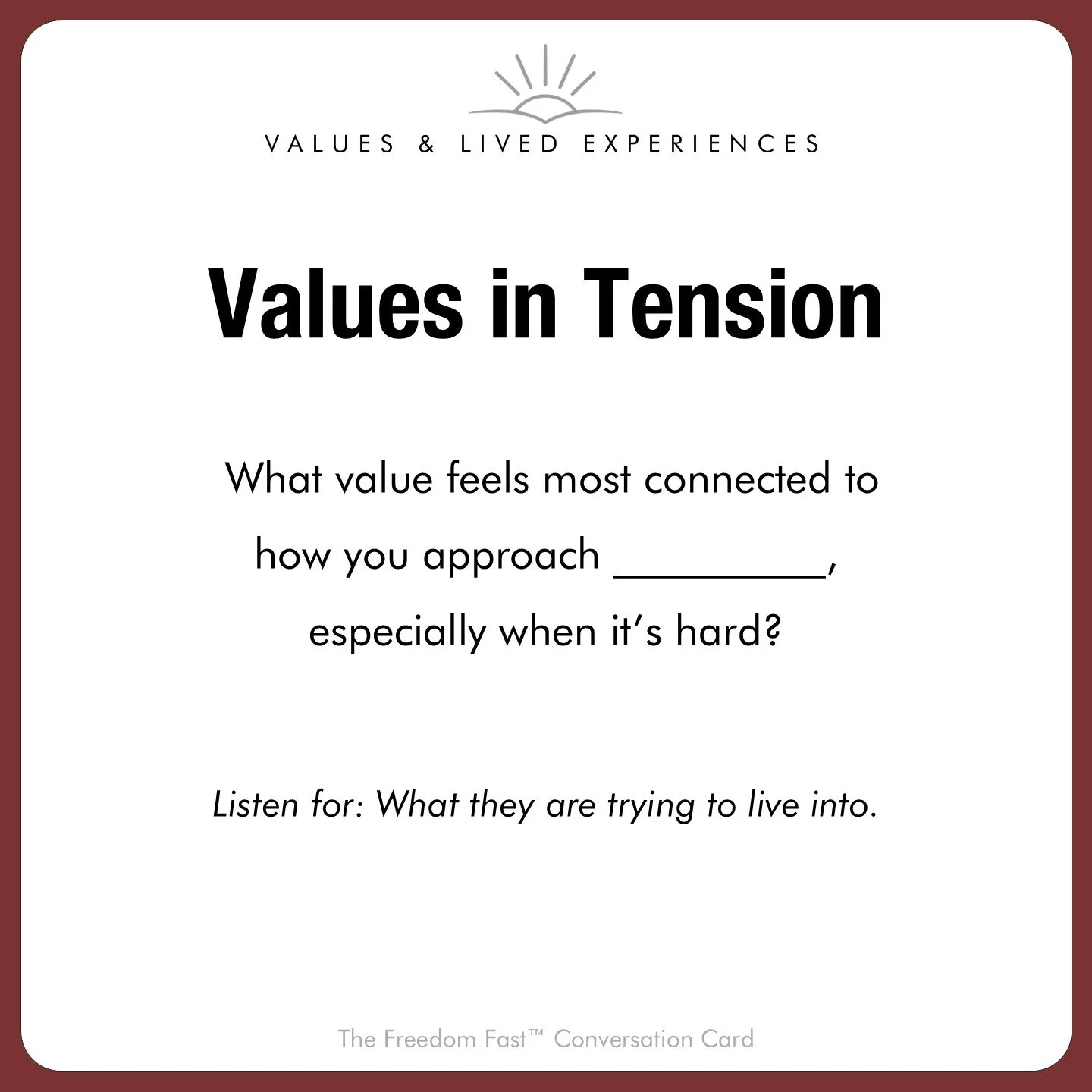
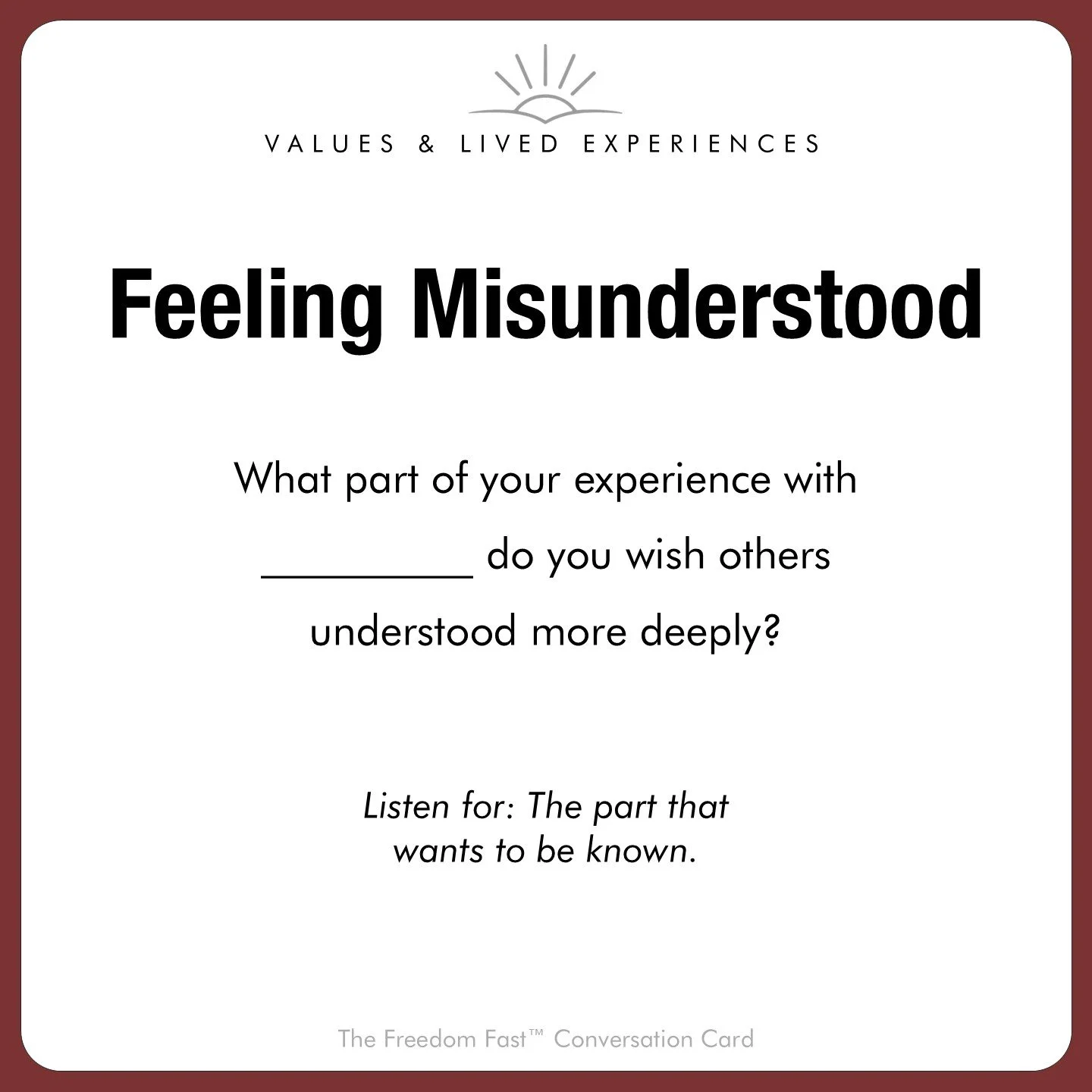
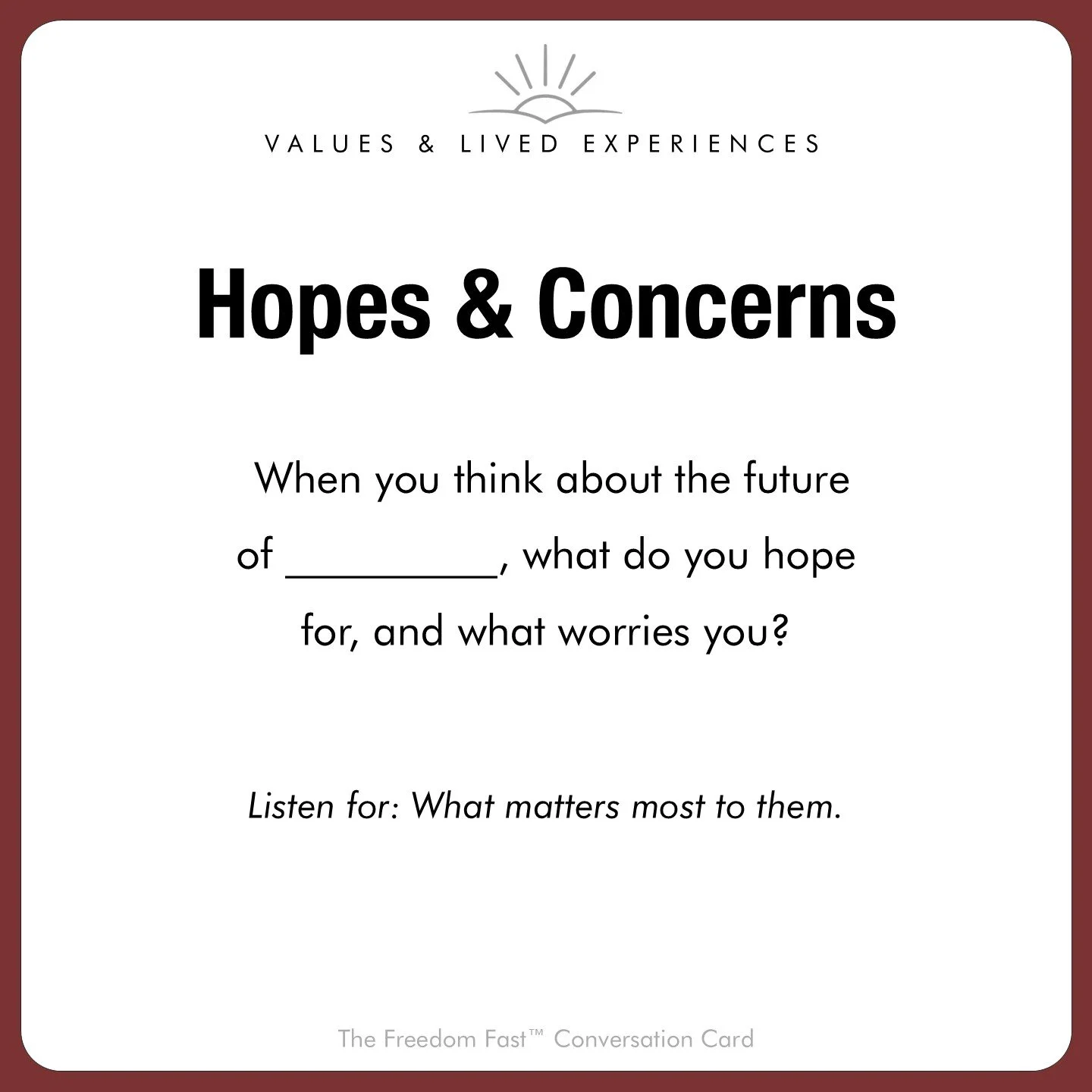
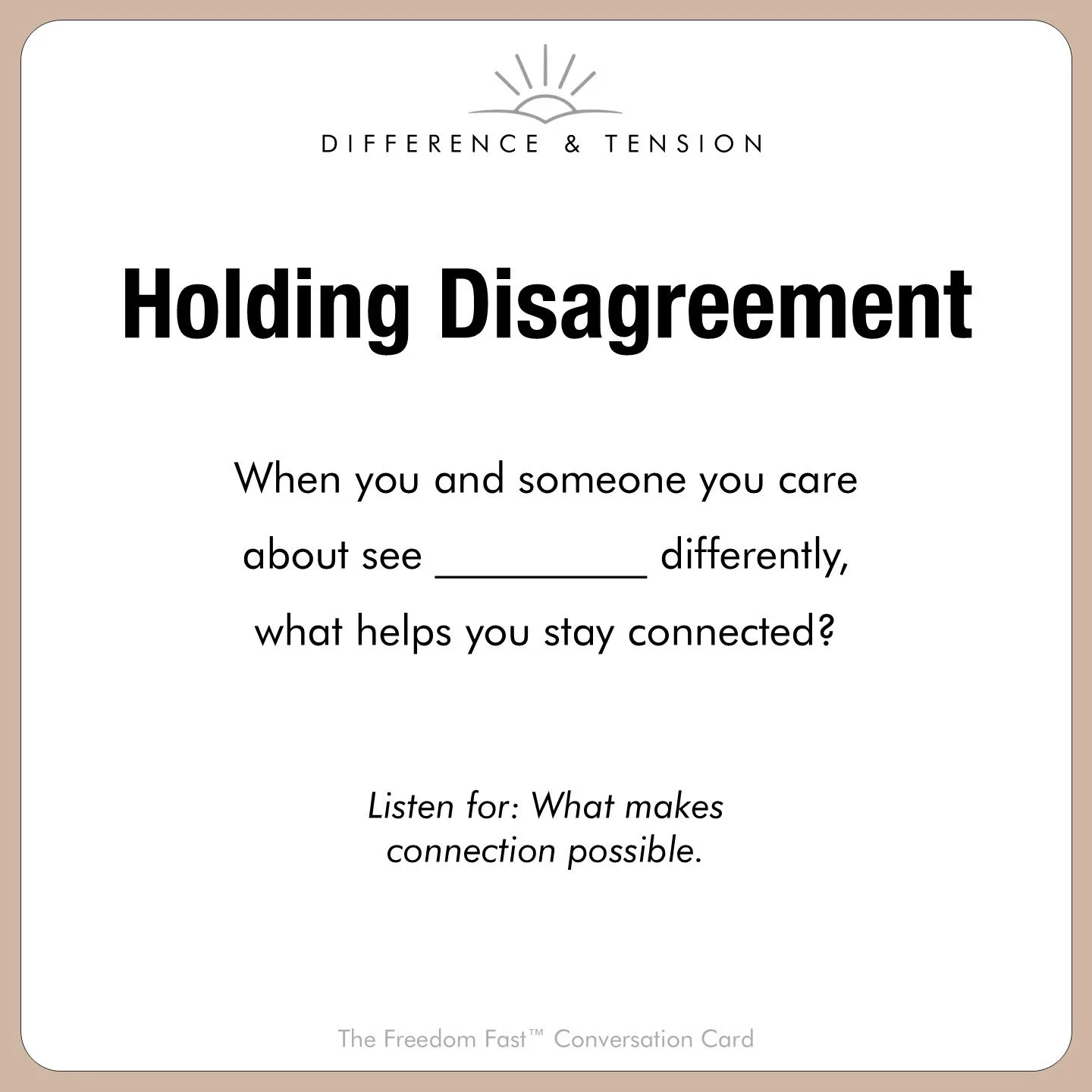
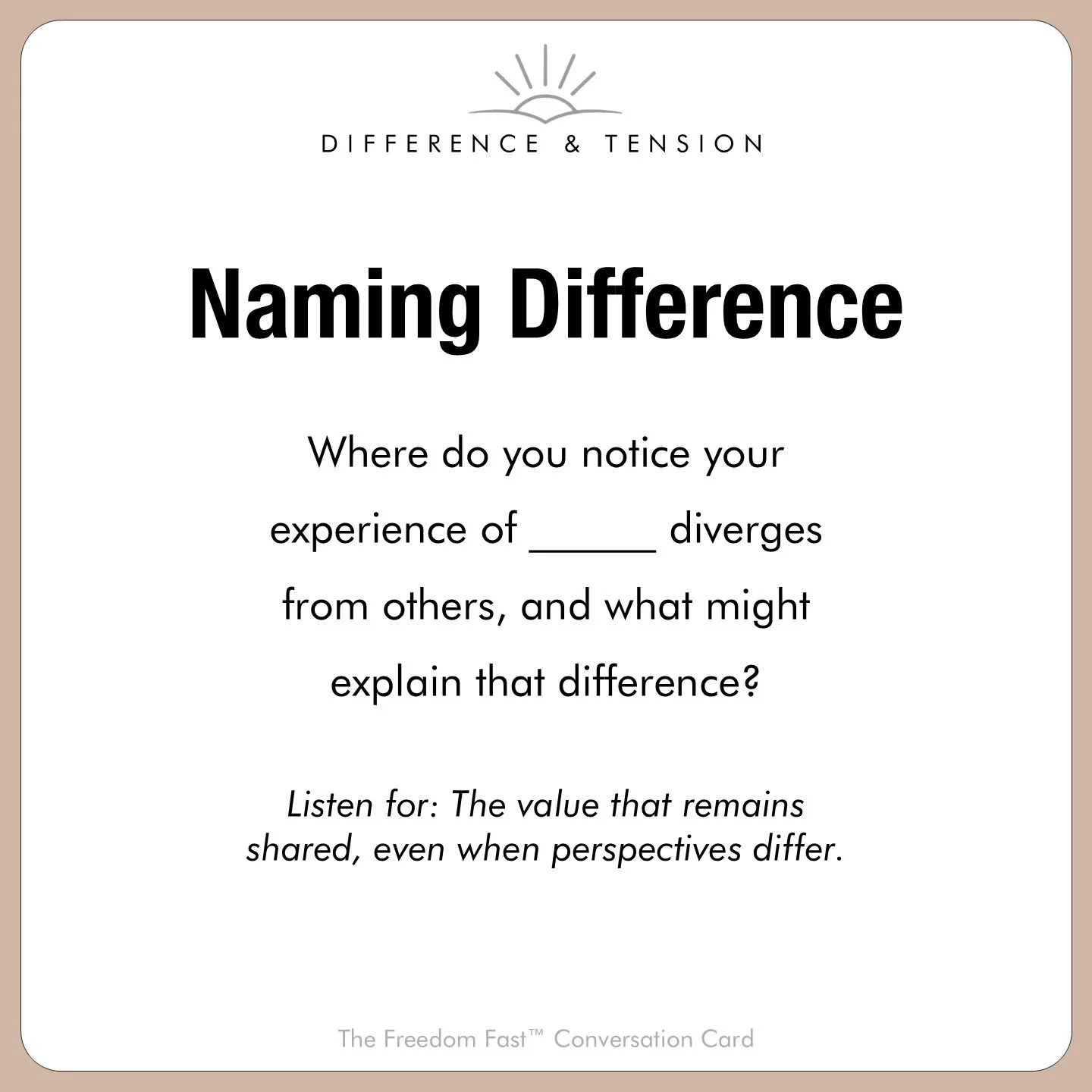
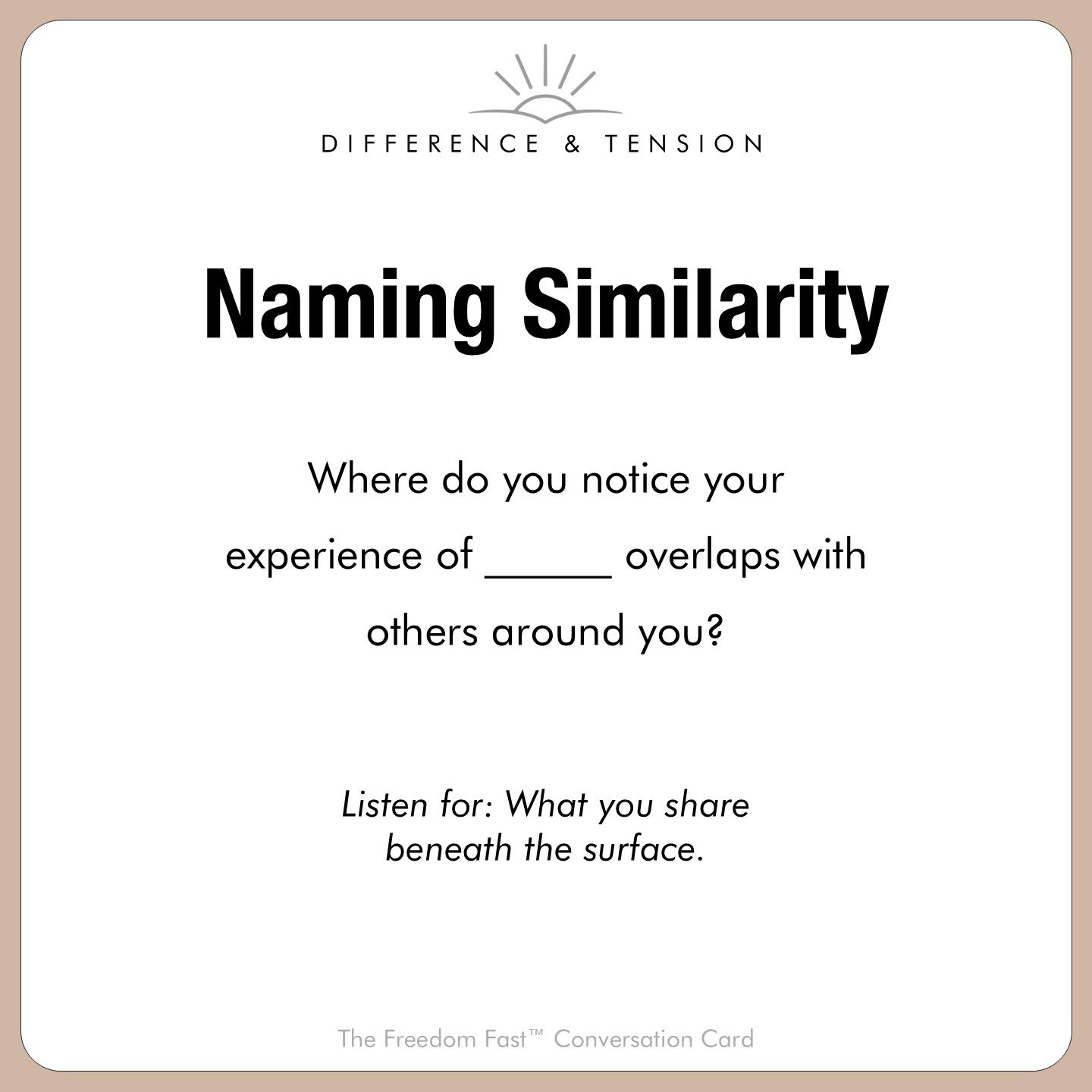
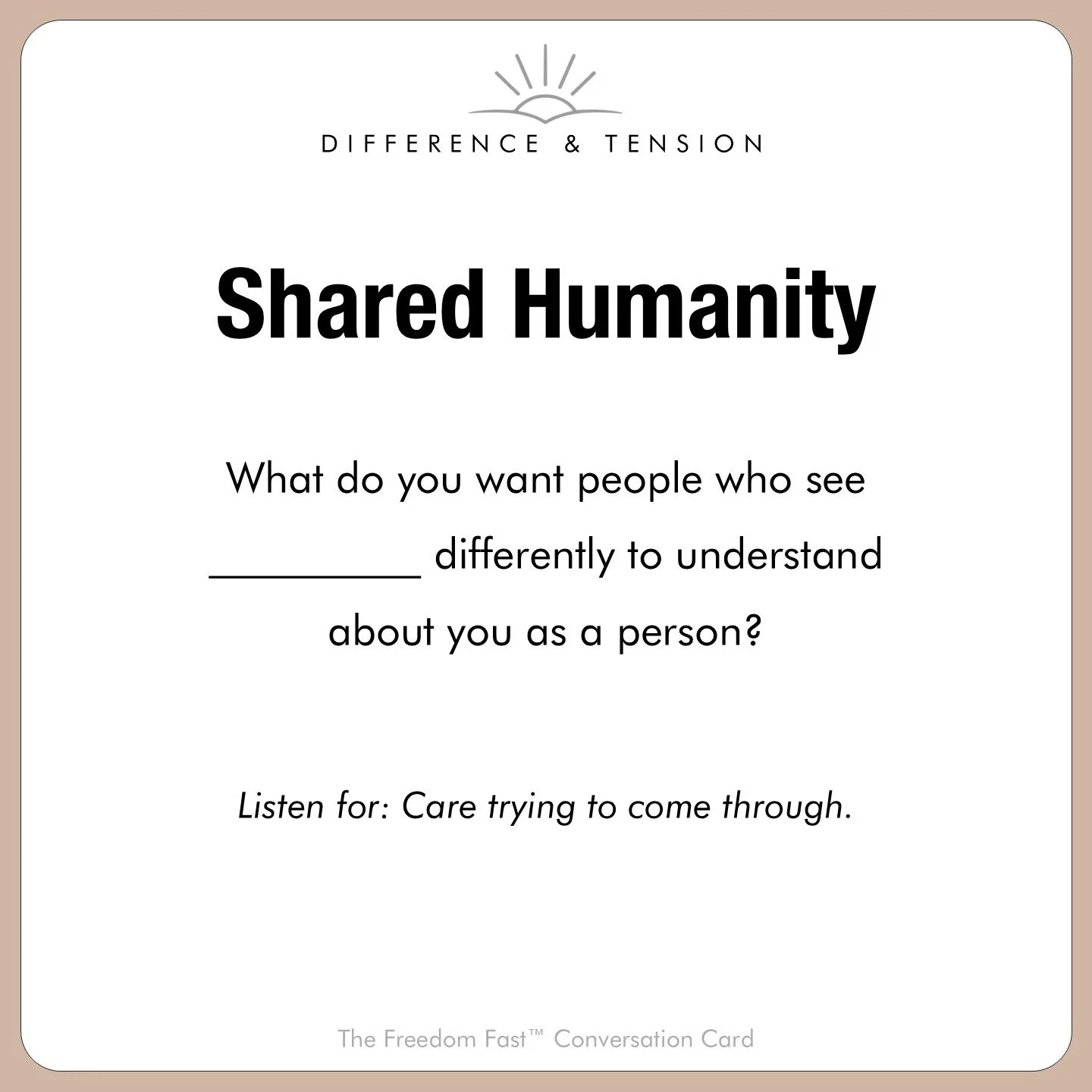
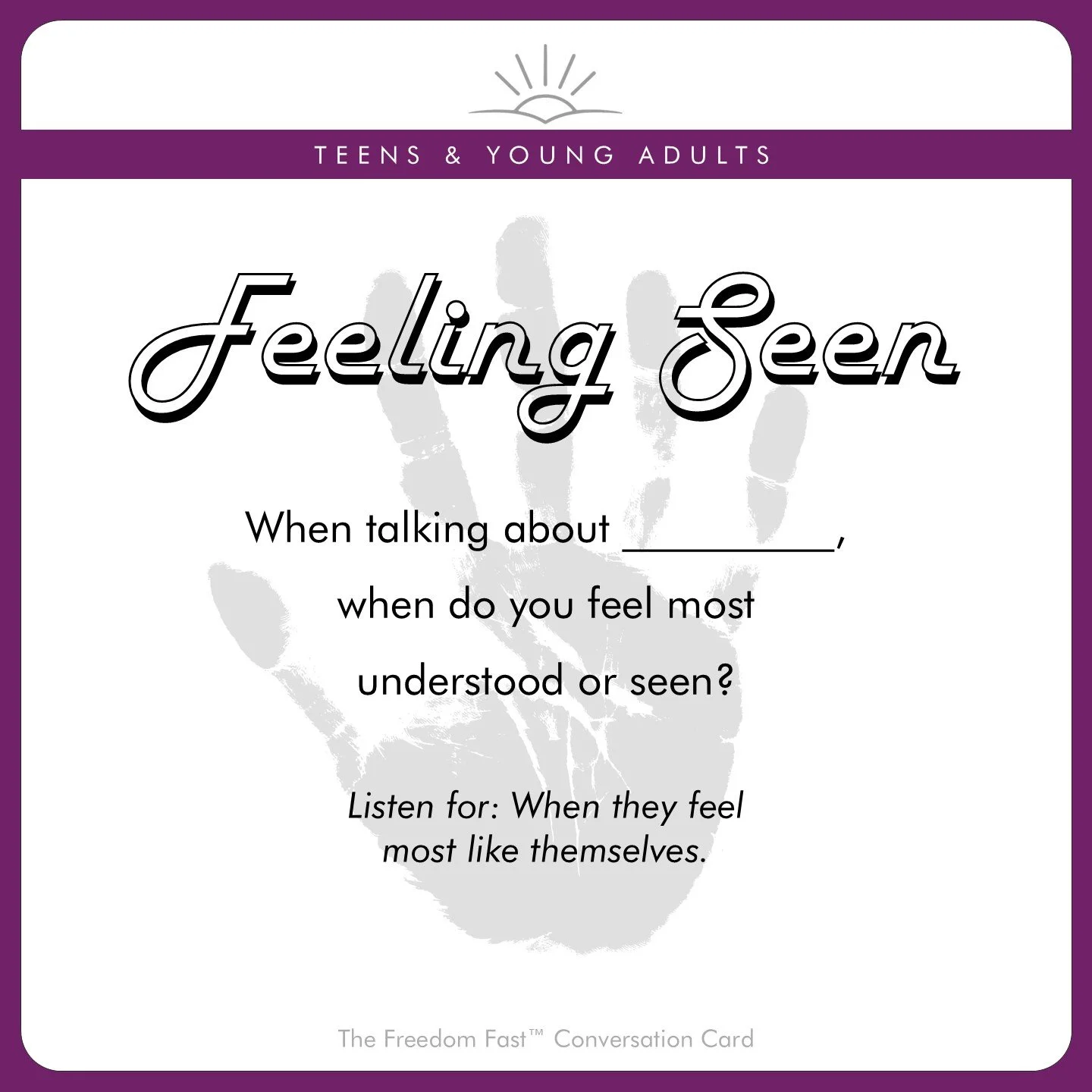
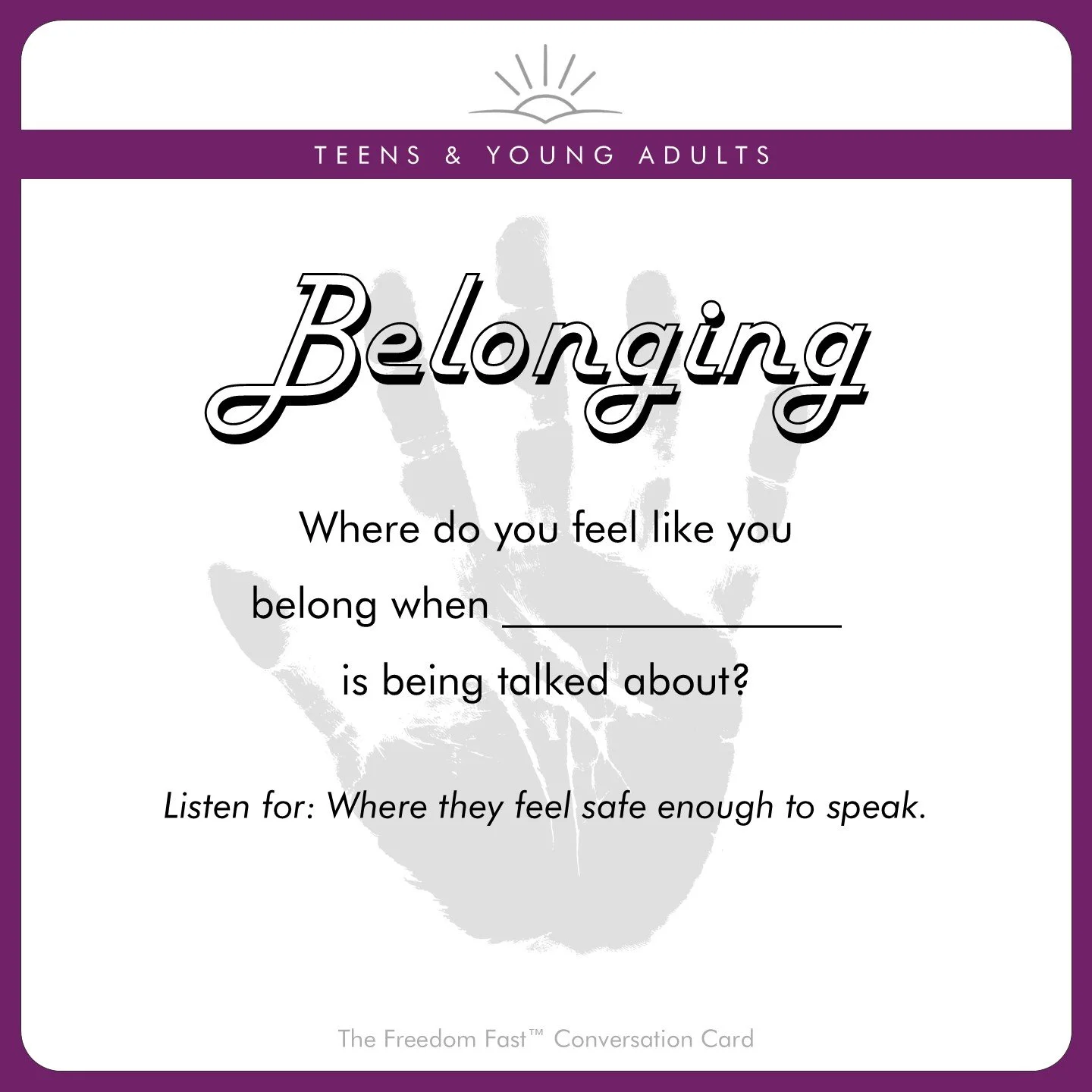
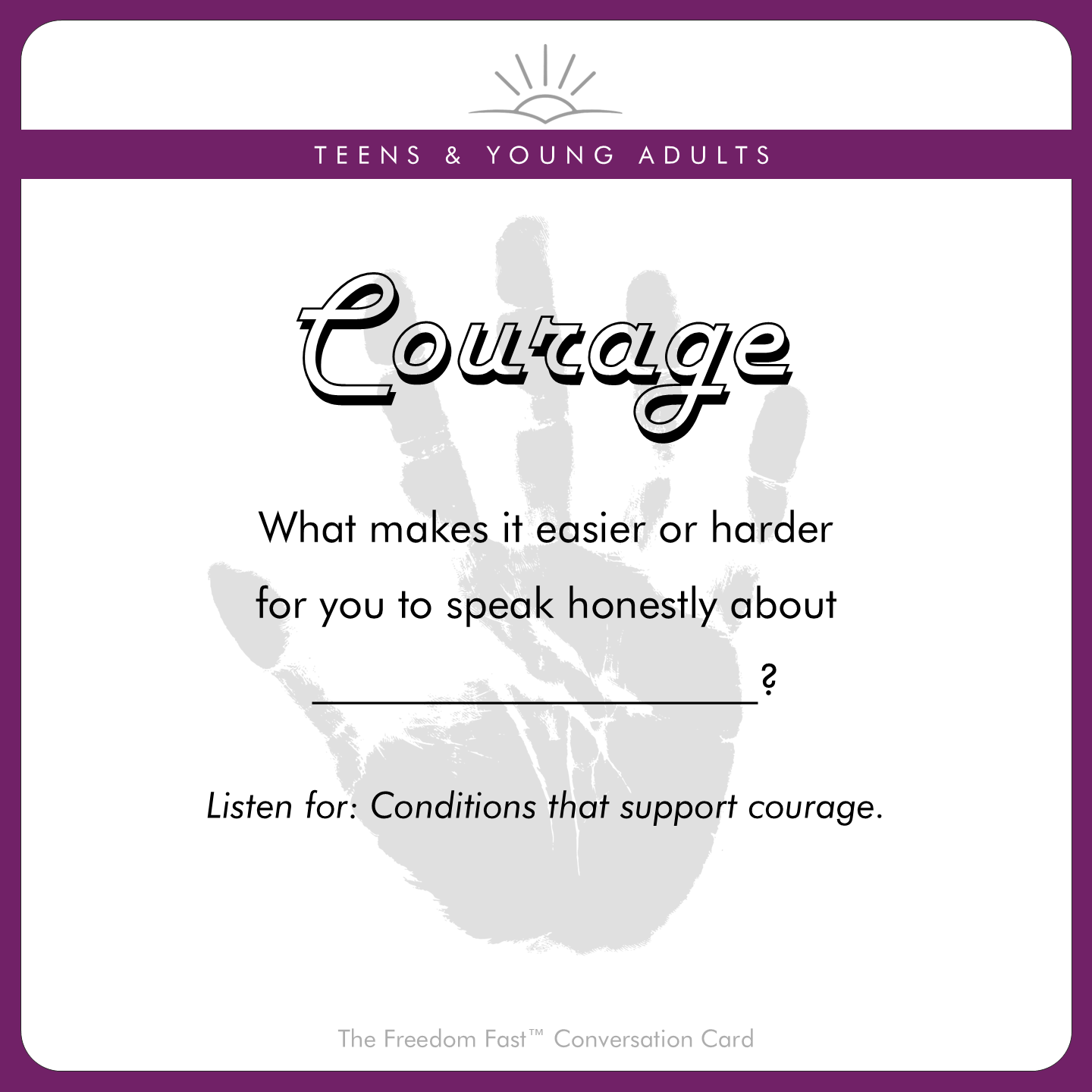
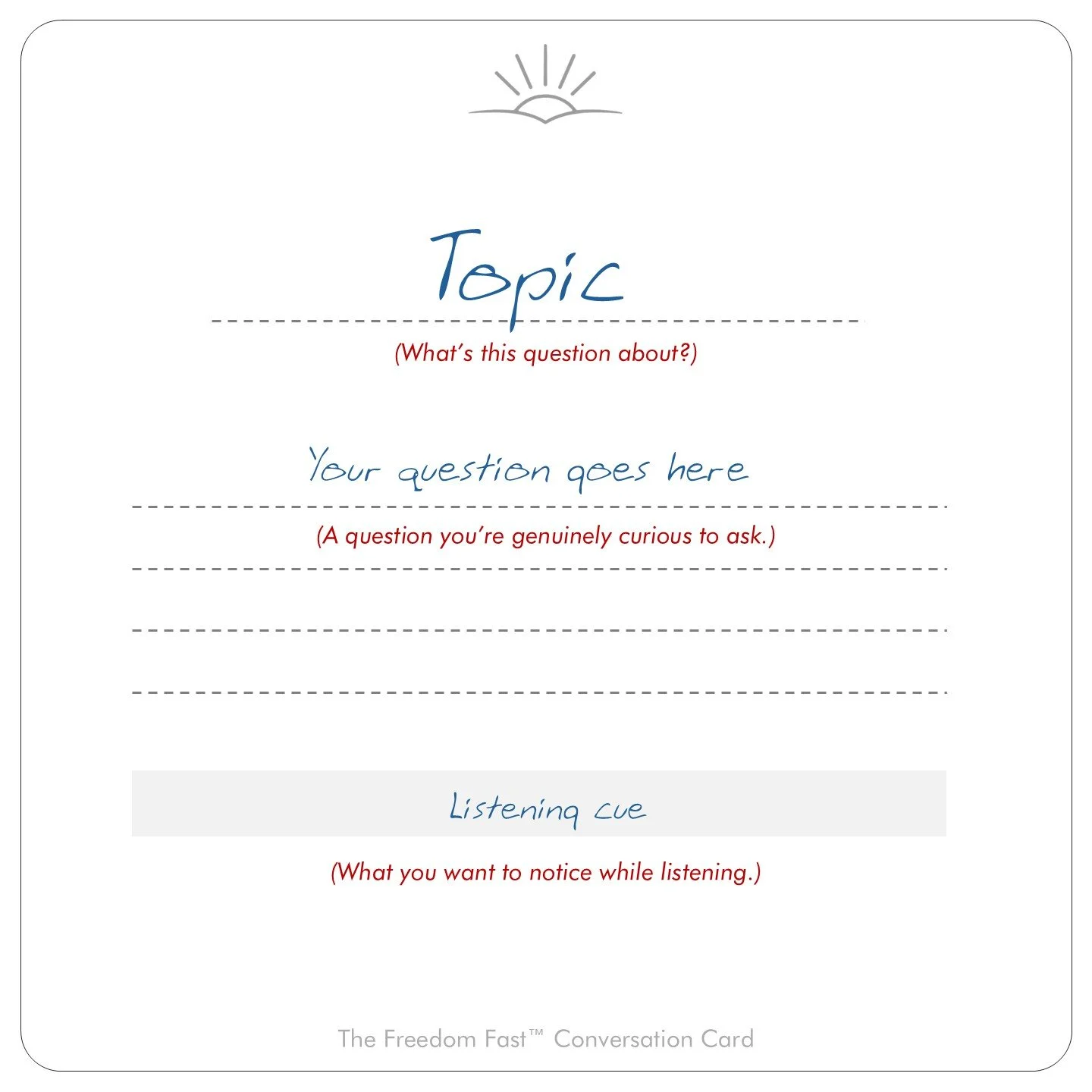
CONVERSATION CARDS™
Simple to Use | Made to be Shared
Print the conversation cards and use them to guide dialogue with others.
Meaningful dialogue has a way of strengthening connection and restoring relationship across difference.








Communication
is a process of sharing experience until it
becomes a common possession.
~ John Dewey, American educator and philosopher
Act with Care
Dialogue creates understanding.
Care turns understanding into action.
Insight is not the finish line. It is an invitation.
After you listen. After you pause. After you see more clearly, ask yourself:
What is one meaningful act I can take to show care?
Sometimes that act is simple: a message, an apology, a check-in, an offer of help. Sometimes it is harder. Real repair often begins when we move toward the person we would rather avoid.
If we only serve those we already agree with, nothing changes. If we only care for those who feel safe, nothing heals. Care is most powerful when it crosses distance.
We cannot heal a relationship, or a community, from a distance. We must act with care.
The deepest repair happens when we
serve those we would rather avoid.
Dive Deeper

If you learn best by listening:
A calm audio reflection to accompany your practice of dialogue.
Dialogue is more than conversation. It is a shared practice built on the belief that more than one truth can exist at the same time. In this reflection, you’ll explore the difference between discussion and dialogue, how to strengthen relationships that can hold difference, and why understanding alone is not enough. Listening prepares the ground.
Care puts something into it. This is an invitation to slow down, reflect deeply, and consider what it means to move toward one another — especially when it would be easier not to.
Community is the place where the person
you least want
to live with always lives.
~ Parker J. Palmer, American educator and Quaker author
from A Hidden Wholeness