

Listening
A gentle exploration of listening as a practice—how pausing, paying attention, and staying present can soften conversations and help us see one another more clearly.
Listening To Heal
Listening sounds simple. Most of us would say we do it all the time. But if we’re honest, much of the time we’re only half listening.
While someone is speaking, there’s often another conversation running quietly in our minds. We’re forming a response. We’re deciding whether we agree. We’re correcting details. We’re preparing our next point.
This doesn’t make us careless or unkind.
It makes us human.
But the way we listen shapes what becomes possible.
Listening to understand creates a different outcome than listening just long enough to reply. One builds trust and connection. The other often leaves people feeling unseen.
This practice is a gentle invitation to notice how you listen — and to experiment with listening differently.
The most basic and powerful way
to connect to another person is to listen.
Just listen.
~ Rachel Naomi Remen

Pause & Prepare
Begin by setting something down that makes listening harder for you. This might be:
The urge to respond right away
Multitasking during a conversation
Background noise or constant input
The need to explain, correct, or persuade
Rushing through moments that usually feel hurried
These are offered as possibilities, not instructions. Choose what feels relevant in your own life.
The pause itself is the practice.
Start a Conversation
Find someone you’re willing to be present with, and begin there.
Enter the conversation with one simple posture: presence.
As you listen, hold this question lightly in the background:
What do I notice in myself when
I slow down and truly listen?
Remember, you don’t need to solve anything.
You don’t need to agree.
Listening itself is the work.
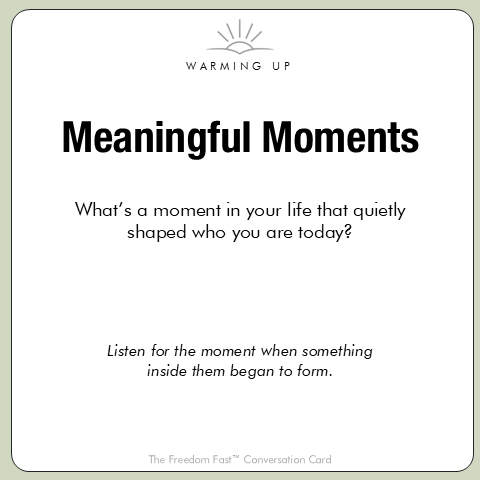
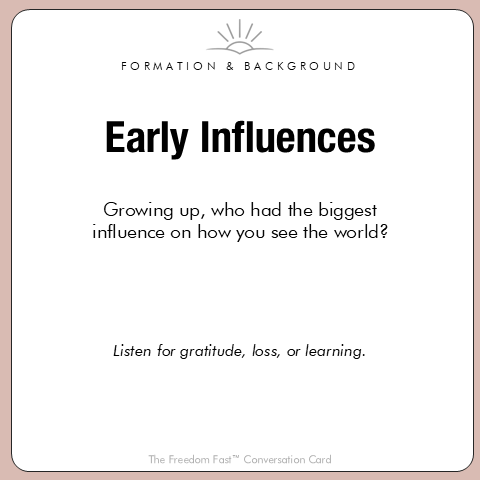
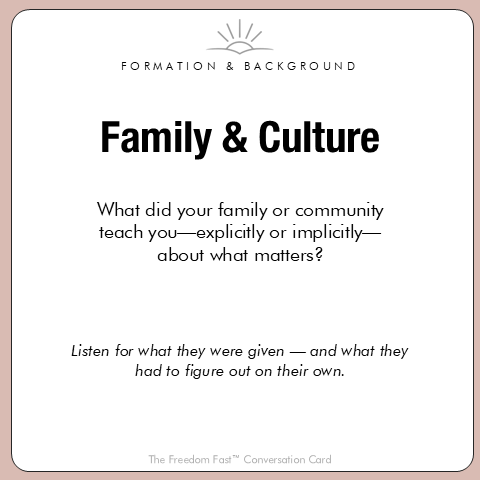
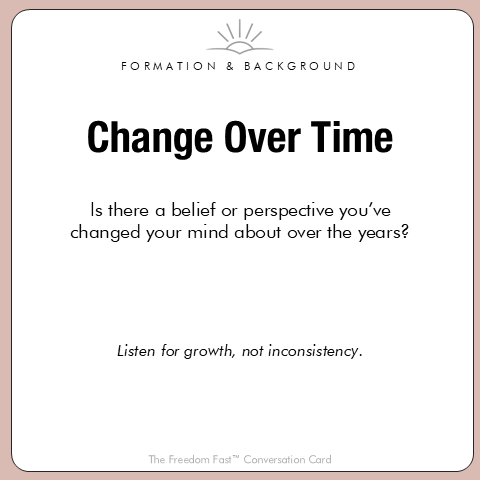


Conversation Prompts
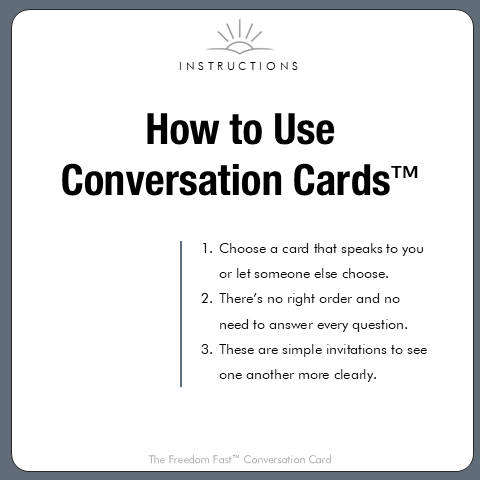
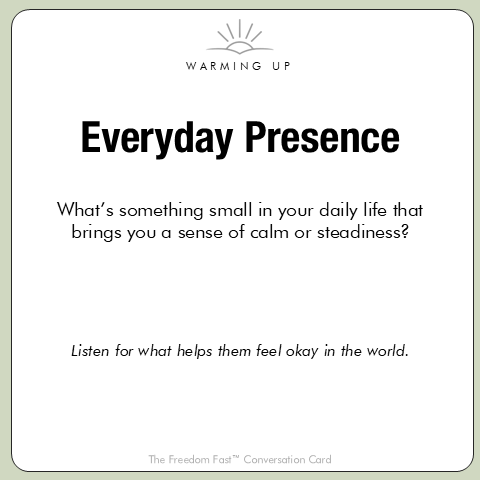
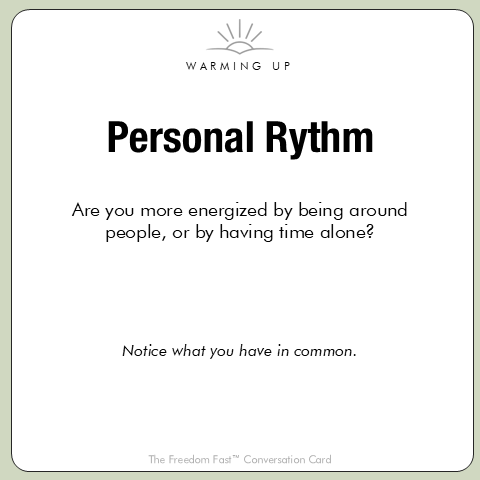
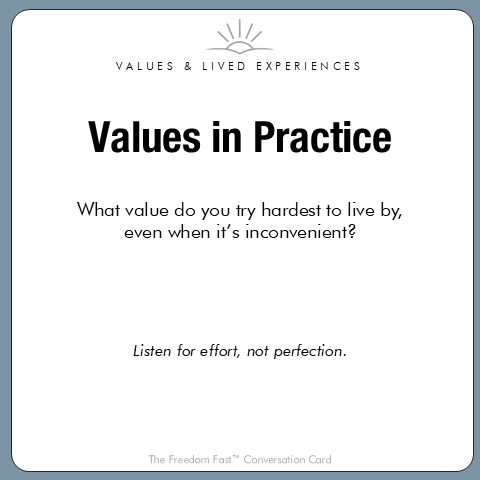
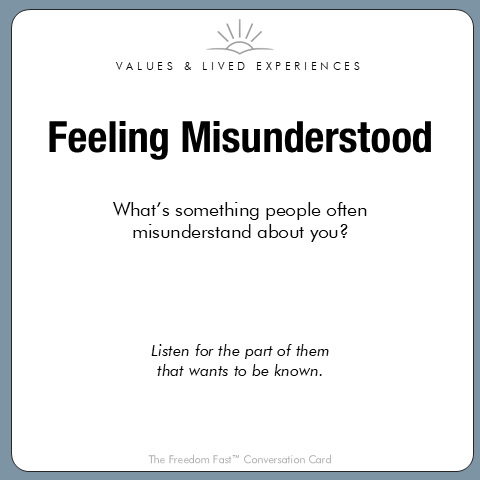
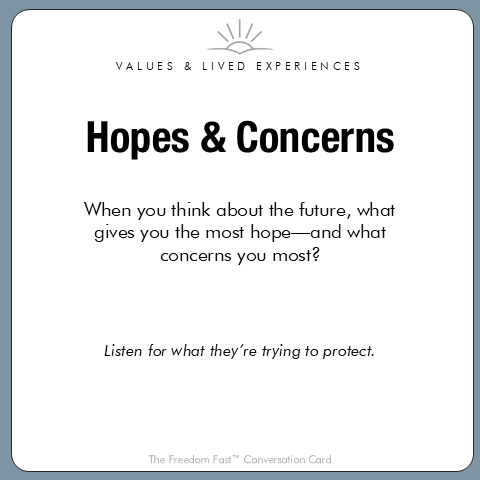
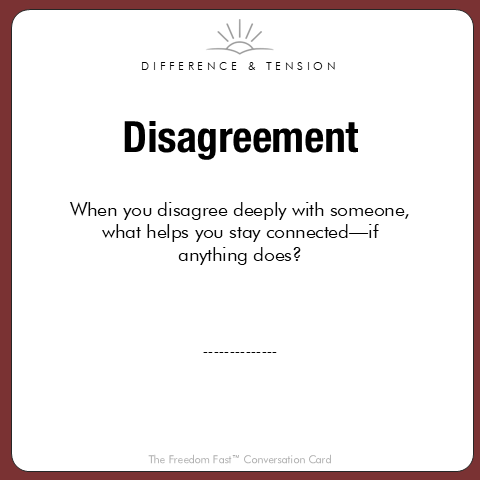
These cards offer simple questions you can use to start meaningful conversations. You can explore them digitally or download the printable deck to use in person.
There’s no right way to use them. You might begin with people you feel comfortable with, or you might choose to use them with someone whose experiences or perspectives are different from your own.
Either way, the intention is the same: to slow down, listen well, and get to know the person in front of you more fully.
Download & Print

Listening is an act of love.
When you listen to people, you are
communicating non-verbally
that they are important to you.
~ Jim George
Tips on Active Listening
Listening is an act of care. When someone feels heard, something softens.
After listening, offer one small act shaped by what you noticed. It might be:
Acknowledging what someone shared
Making space for a quieter voice
Choosing patience where you might normally rush
Letting a moment land without fixing it
The act can be visible or quiet, immediate or later. What matters is that attention moves outward, into shared life.
Listening doesn’t require special skill or agreement.
It simply asks us to be present — and to see what becomes possible when we are.
Reflect & Integrate
After the conversation, take a moment to reflect.
You might ask yourself:
Where did I see/hear myself in the other person?
Where did I recognize an earlier version of myself in someone else?
What experiences or paths might have shaped the way they see the world?
How have I changed over time — and what helped me change?
Where did I notice myself reacting instead of listening?
Reflection helps us remember that none of us arrived fully formed.
Everyone we meet is in the middle of becoming — just as we are.

Act with Care
The deepest repair happens when we
serve those we would rather avoid.
Listening creates responsibility.
After pausing, listening, and reflecting on your conversation(s), choose one small act of care shaped by what you noticed. Not as a performance. Not as a statement. Simply as a human response.
That might look like:
Showing kindness to someone you usually avoid
Offering help where tension usually lives
Serving someone whose views frustrate you
Choosing patience instead of escalation
Sometimes the most meaningful acts of care are quiet and unseen. But they change the tone of shared life, one relationship at a time. Listening becomes healing when it moves us to treat one another differently.
Dive Deeper

If you learn best by listening:
A calm audio reflection to accompany your practice of listening.
Active listening doesn’t require special skill.
It asks only that we stay open — even when it would be easier to retreat into what we already know.
Here are some tips you can use in any conversation:
-
Notice the urge to jump in — then stay with them a few seconds longer.
-
Pay attention to what matters to them, not just what they’re saying.
-
You might say, “It sounds like that really stayed with you,” rather than offering your own story or opinion.
-
If something surprises or unsettles you, treat it as information, not a problem to solve.
-
Pauses are not awkward. They often mean something meaningful is landing.