

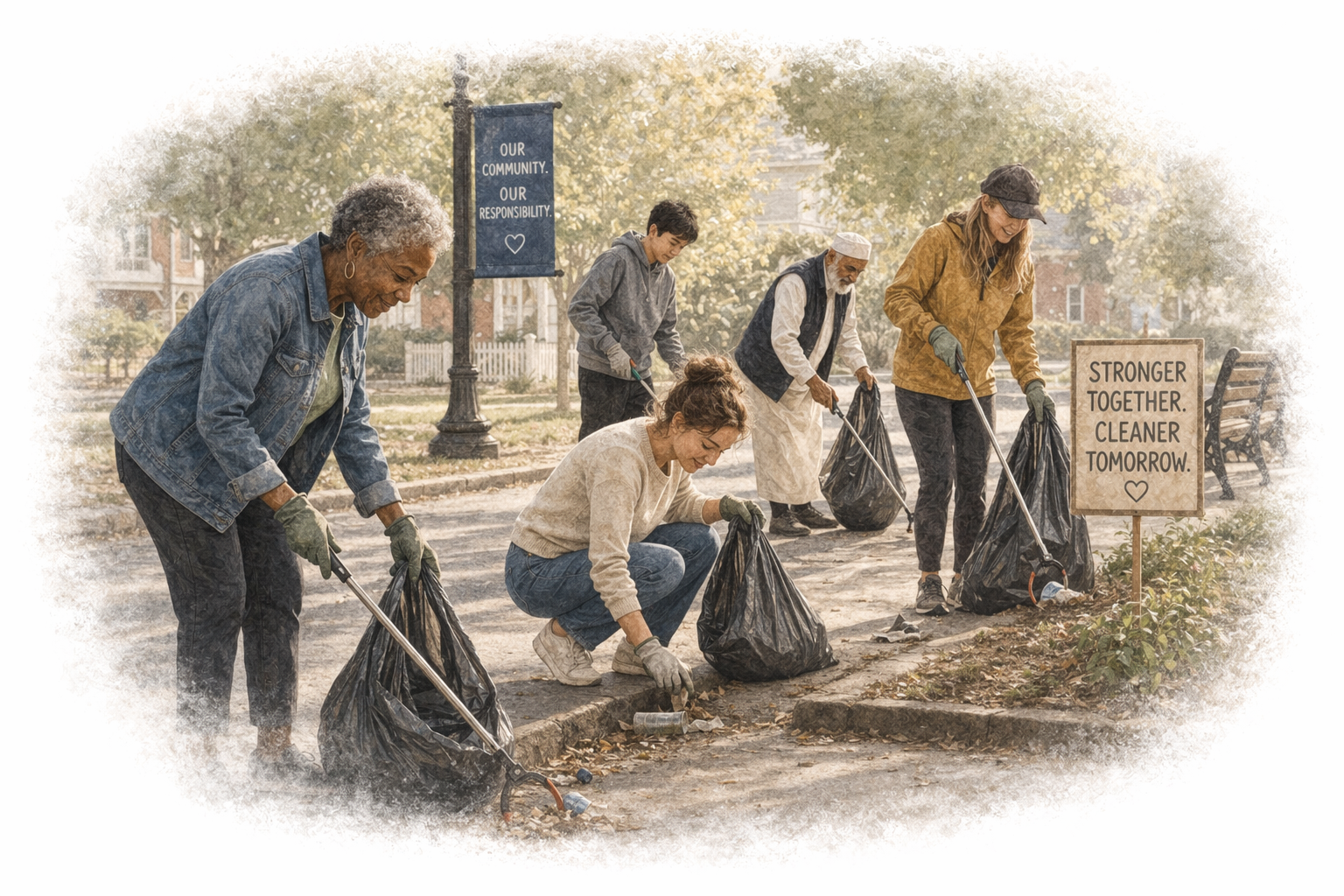
Responsibility
[ To Respond With Care ]
Introduction
We cannot love God unless we love each other, and to love we must know each other.
~ Dorothy Day, journalist and founder of the Catholic Worker Movement
The Freedom Fast unfolds through three simple movements: Pause to Reflect, Dialogue to Relate, and Serve to Heal.
Pausing creates space for reflection and humility. Through dialogue, people listen, speak from lived experience, and remain present with one another across difference. As understanding deepens, responsibility begins to grow, and people respond with care in ways that strengthen relationships and contribute to healing in shared life.
Pause to Reflect
Creates space for reflection and humility.
Dialogue to Relate
Deepens understanding across difference.
Serve to Heal
Turns understanding into acts of care.
Responsibility As Shared Practice
Responsibility grows from understanding.
As we listen and engage in dialogue, we begin to notice where care is needed, where relationships need attention, and where our own actions might shift.
Responsibility is not abstract. It is how we respond once we understand more fully.
You can think of responsibility as response-ability, the ability to respond with awareness, patience, and care.
Often, this shows up in small, everyday ways:
A conversation handled with greater patience
A relationship approached with renewed openness
An act of care offered where tension once lived
Responsibility becomes the bridge between dialogue and service.

I slept and dreamt
that life was joy.
I awoke and saw
that life was duty.
I acted,
and behold,
duty was joy..
~ Rabindranath Tagore, poet and Nobel Prize-winning writer
RESPONSIBILITY AND ACTION

Responsibility and action are related, but not the same.
Action often moves quickly toward solutions. Responsibility begins earlier. It asks what understanding is calling for before deciding what to do.
Sometimes this leads to visible service. Other times it leads to quieter shifts in how we speak, listen, and show care.
Responsibility helps ensure that what we do next reflects what we have come to understand.
HOW RESPONSIBILITY SUPPORTS HEALING
Healing rarely begins with large gestures. More often, it grows through small, consistent responses that strengthen trust and care.
Responsibility supports healing by helping people carry insight into action. When we respond with care after listening and dialogue, relationships can soften, tensions can ease, and shared life can slowly repair itself.
These responses do not need to be perfect or complete. What matters is the willingness to notice what understanding is asking of us and to respond with integrity.
Over time, these small responses accumulate and shape communities where care becomes visible.
WHEN RESPONSIBILITY EMERGES
Responsibility often becomes clear when:
• New understanding emerges through listening or dialogue
• A relationship has experienced tension or strain
• Someone’s experience or perspective has been newly understood
• A moment calls for patience, repair, or support
• People want to carry understanding forward into daily life
Responsibility creates the conditions where healing actions can grow naturally.

Ways to Practice Responsibility
Before responding, the Freedom Fast invites a moment of reflection. This pause creates space to consider what understanding is asking of us.
You might reflect on questions such as:
What new understanding emerged in this conversation?
What care might be needed here?
What response would strengthen relationship rather than strain it?
The pause allows responsibility to arise from awareness rather than urgency.
Notice What Is Needed
PRACTICE 1
Pay attention to what the moment is asking of you.
Awareness creates the foundation for action.
The Practice
Pay attention to what the moment may be asking of you.
In Use
Recognizing when someone’s experience has shifted your understanding
Noticing where tension or misunderstanding surfaced in conversation
Becoming aware of opportunities to strengthen trust
The Effect
Awareness creates the foundation for responsible action.
PRACTICE 4
Carry Insight Forward
Let what you’ve learned shape your next interaction.
Insight becomes visible in how you live.
The Practice
Allow what you have learned to shape how you move forward.
In Use
Approaching future dialogue with greater patience
Including perspectives that were newly understood
Acting with greater awareness of others’ experiences
The Effect
Insight becomes visible in everyday life.
PRACTICE 2
Offer
Repair
Where there is strain, take a small step toward repair.
Repair strengthens trust.
The Practice
When dialogue reveals strain or misunderstanding, consider how repair might begin.
In Use
Clarifying something that may have caused confusion
Acknowledging the impact of words or actions
Reopening a conversation with care
The Effect
Repair restores relationship and strengthens trust.
PRACTICE 5
Strengthen Shared Life
Contribute to spaces where people feel heard & supported.
Responsibility builds community over time.
The Practice
Recognize how individual responses contribute to collective wellbeing.
In Use
Supporting spaces where dialogue can continue
Encouraging patience and curiosity within groups
Contributing to environments where people feel heard
The Effect
Responsibility becomes part of how communities renew themselves.
PRACTICE 3
Extend
Care
Respond with small, thoughtful acts of care.
Care reduces distance.
The Practice
Respond with small acts of care where understanding has deepened.
In Use
Checking in with someone whose perspective affected you
Offering patience where tension once lived
Showing support in ways that acknowledge what was shared
The Effect
Care strengthens connection and reduces distance.

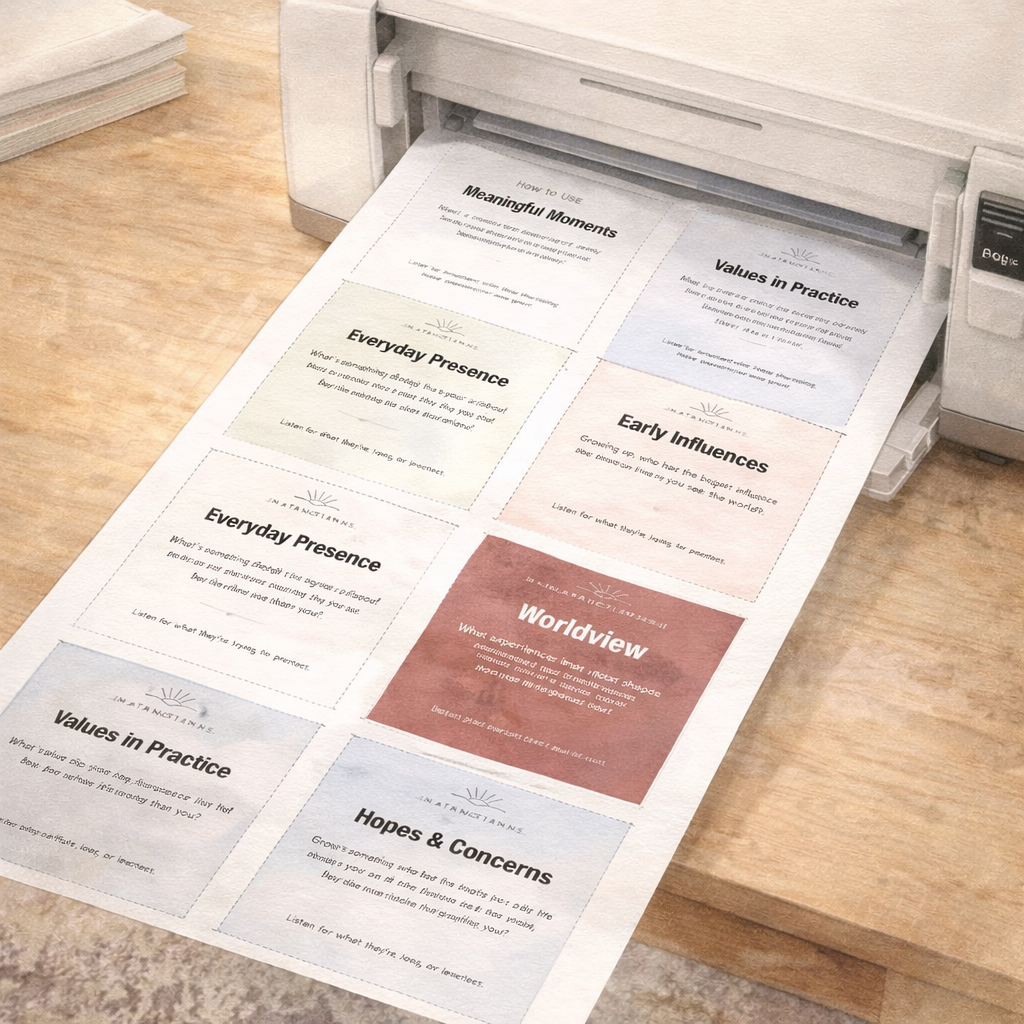
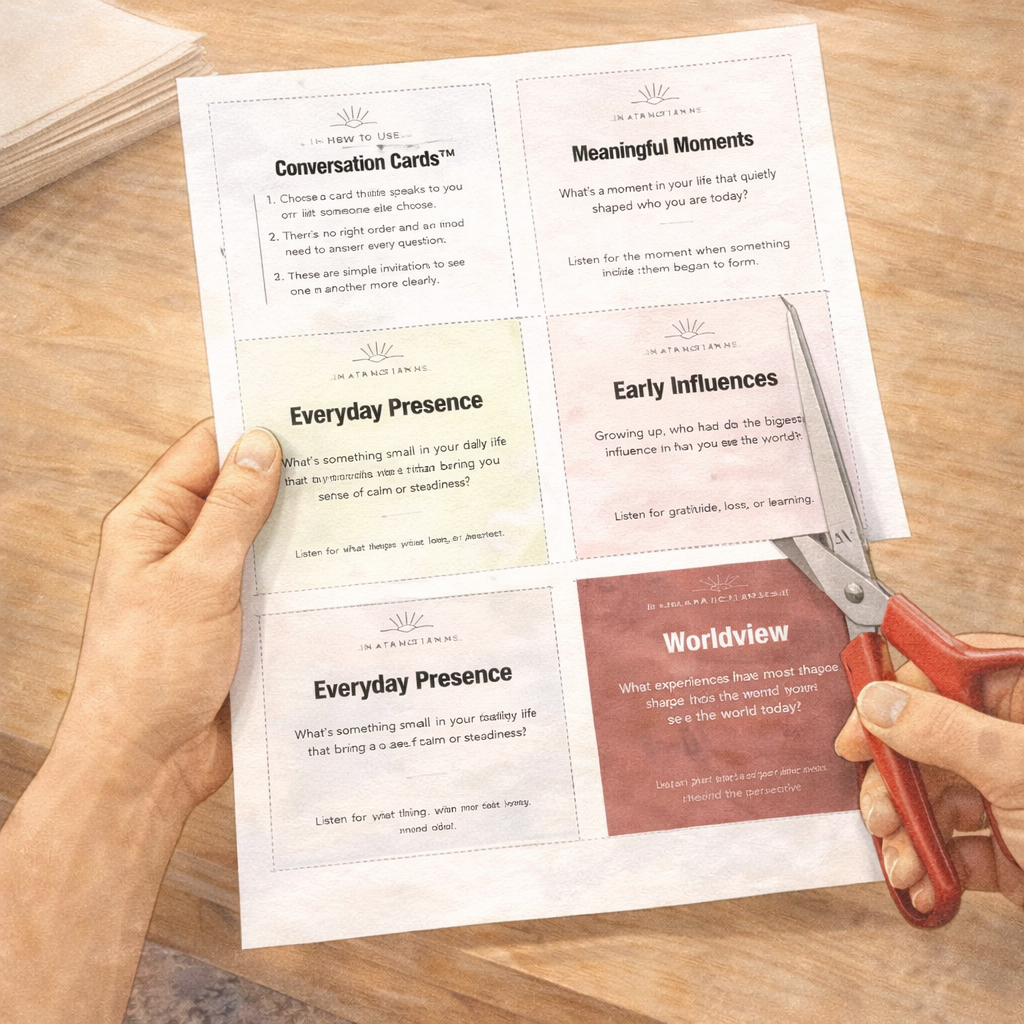
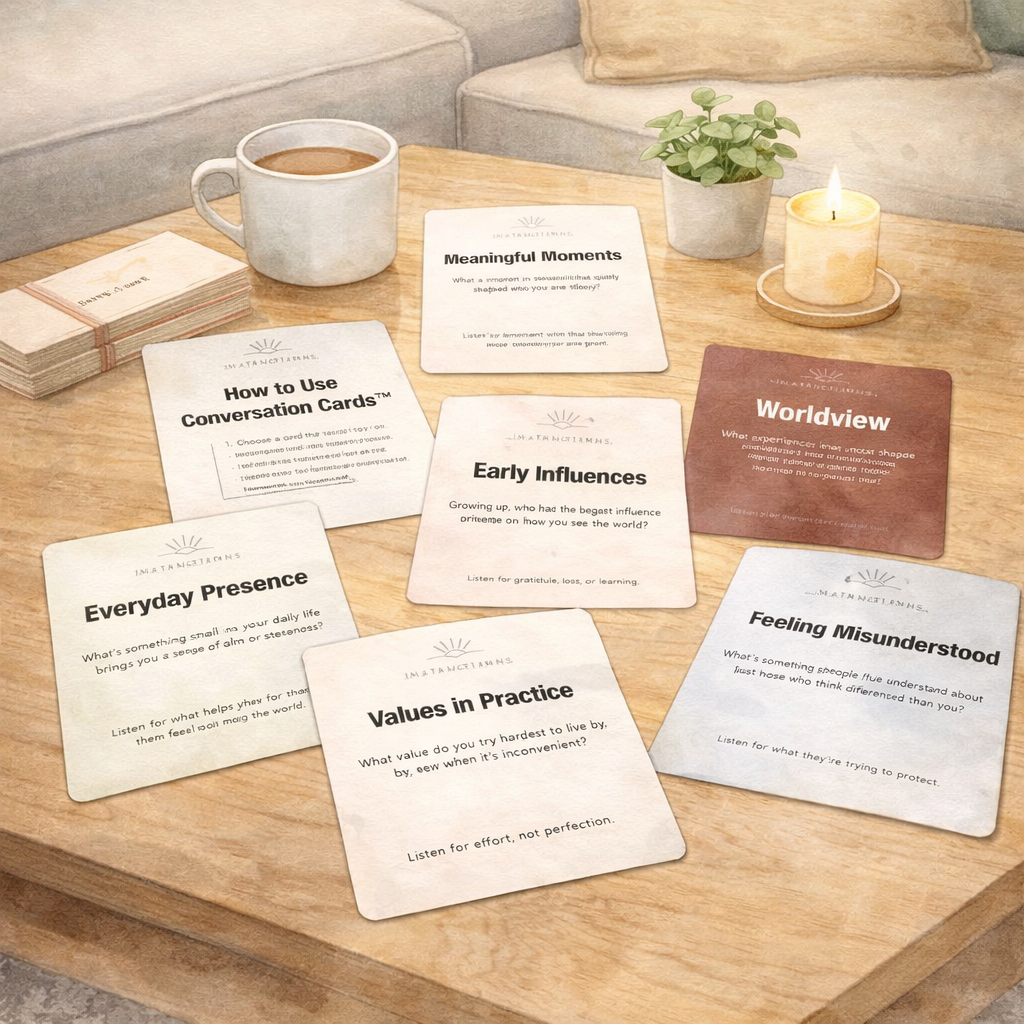
CONVERSATION CARDS™
Made to Be Shared | Simple to Use
Print the conversation cards and use them to listen well with someone today.
Meaningful conversations have a way of healing what distance has created.

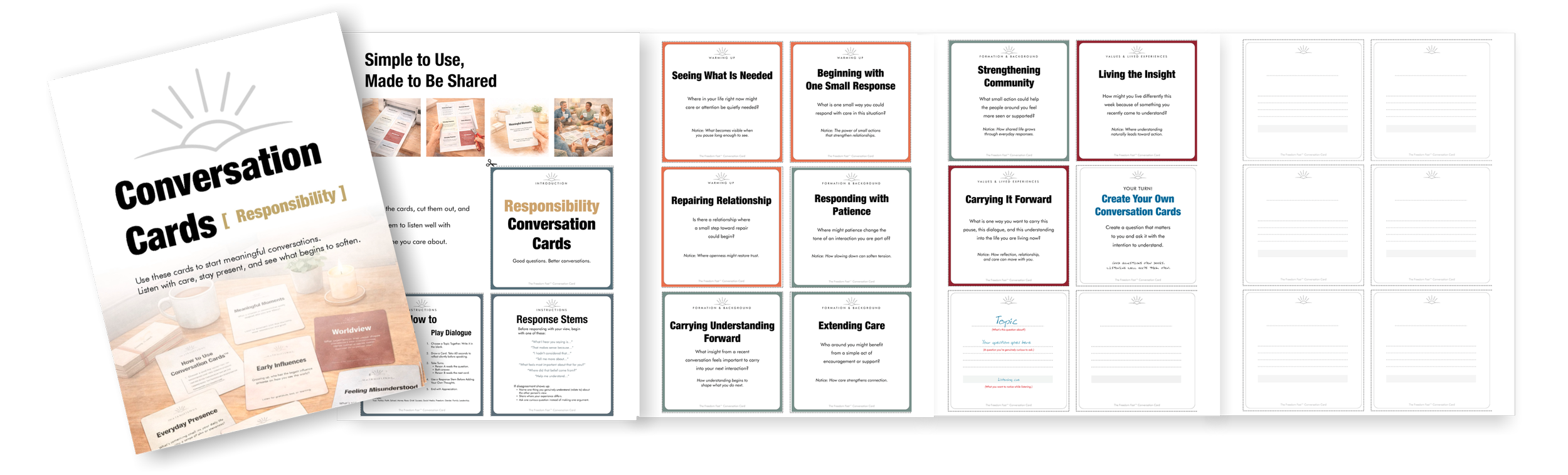

Tips on Discussing Responsibility
Start with lived experience, not opinions
Speak from what you’ve seen, felt, or struggled with. This keeps the conversation grounded and reduces the instinct to debate abstract ideas.Stay with one idea long enough to understand it
Avoid jumping between topics. Choose one question and follow it. Depth creates clarity; speed creates noise.Listen for what responsibility is asking for, not who is right
Shift from evaluation to awareness. The goal is not to win a point, but to notice what the moment might be calling for.Name what is real, and name your part in it
If something feels unresolved, surface it with care. Then go one step further: identify your own responsibility within it.
Ask yourself: What is mine to carry here? What can I do to help heal this?End with one small, specific next step
Before closing, ask: What is one way I can respond to what I’ve heard?
Keep it simple and actionable. Responsibility becomes real when it moves into action.

Look for the helpers.
You will always find
people who are helping.
~ Fred Rogers, educator and creator of Mister Rogers’ Neighborhood
CARRY IT FORWARD
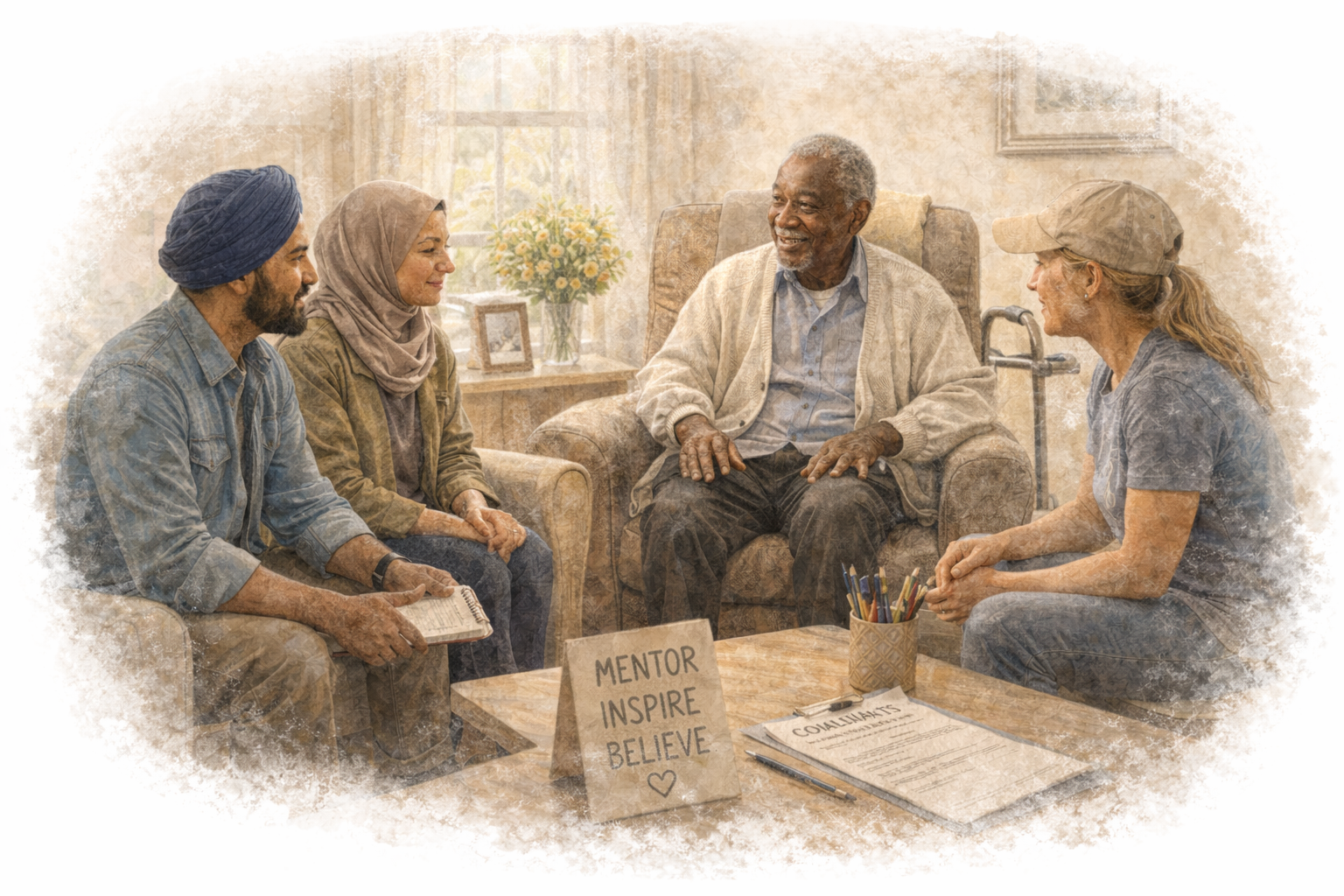
Responsibility does not end with one response, or one act of service. What we notice and learn through listening and dialogue continues to shape how we move through shared life.
You may notice changes in how you approach conversations, relationships, or moments of tension. Over time, these choices influence how trust grows and how healing takes root.
In this way, responsibility becomes part of how renewal unfolds in everyday life.
Understanding becomes healing when we respond with care.